A round push button switch gives an operator a clear, physical way to issue a command. On a machine panel, that command might start a cycle, reset an alarm or request a change of operating mode. The circular head is easy to arrange in a panel, but its shape tells you little about the electrical function behind it.
For equipment builders and replacement buyers, the useful question is not simply which button looks right. It is whether the operating action, contacts, mounting dimensions and environmental protection match the application. This guide explains the main options and the checks that help turn a catalogue choice into a workable specification.
What a round push button switch does
Pressing the actuator moves a contact mechanism inside the switch. Depending on the contact arrangement, this closes a circuit, opens a circuit or changes more than one contact state. The switch may send a signal to a controller or operate another device within its stated electrical limits.
A normally open contact is open when the actuator is in its normal, unoperated position. A normally closed contact is closed in that position. The terms describe the contacts, not the machine’s overall operating condition. A green button, for example, does not automatically mean a normally open contact or a particular voltage rating.
Round describes the visible actuator geometry. Panel cutout diameter, head diameter and body depth are separate dimensions. Check the drawing rather than assuming that a nominal switch size describes every part of the assembly.
Momentary and maintained operation
A momentary push button returns to its normal position when the operator releases it. It is commonly selected for commands such as reset or cycle start, where the control system determines what happens after the brief input. Holding the actuator usually keeps its contacts in their operated state until release.
A maintained or latching push button stays in its changed position after the first operation. A subsequent action releases it, according to the mechanism specified for that model. This can suit an enable selection or another function that calls for a persistent contact state. It does not replace the machine’s control logic or protective functions.
Do not identify these actions from a product photograph. Two buttons with the same head colour and mounting diameter can operate differently. YIJIA’s YJ-GQ16 short type page, for instance, lists momentary operation and a 1NO contact. That information belongs to the specified product configuration, not every round metal button in the catalogue.
Illuminated round push buttons
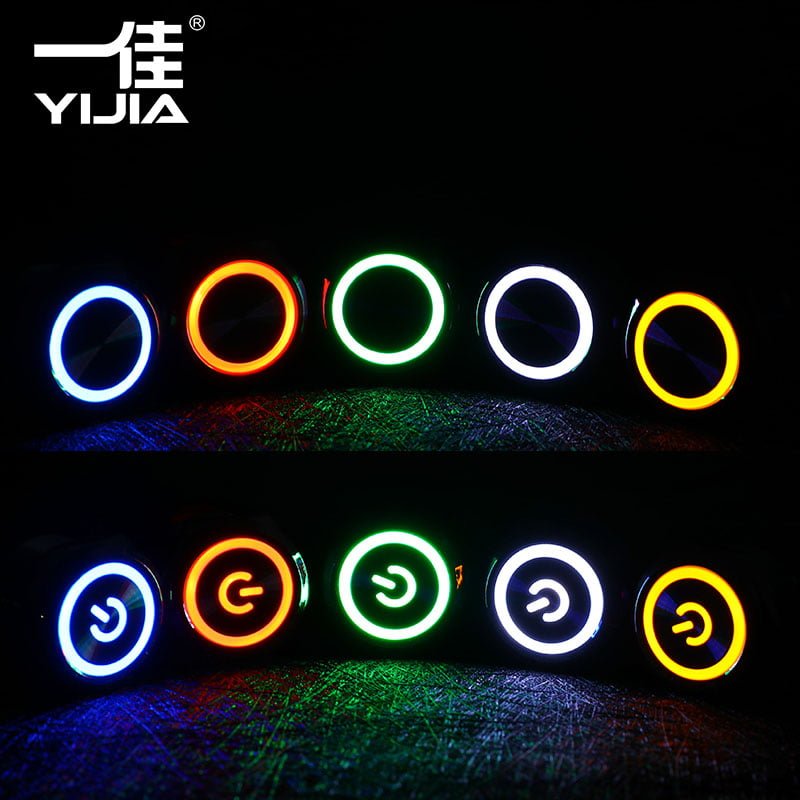
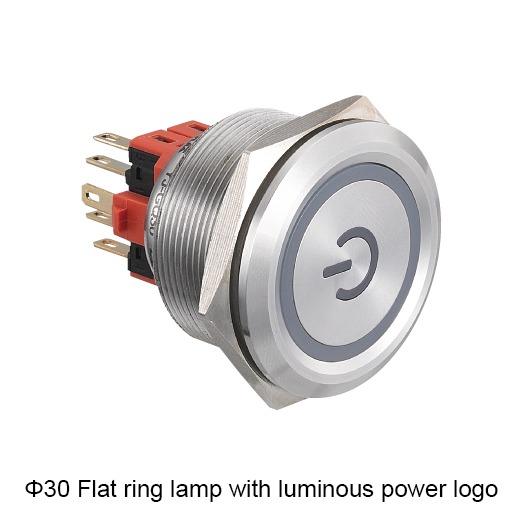
An illuminated push button combines an actuator with a visible light source. A ring or illuminated face can make the control easier to locate and can indicate a condition when connected to an appropriate signalling circuit. Decide what the light should mean before choosing its colour or supply.
The lamp circuit and switch contacts need separate checks. A button described as having a 24 V LED does not automatically have contacts suitable for switching every 24 V load. Likewise, a contact voltage rating does not identify the correct LED supply. Verify the lamp voltage, AC or DC compatibility, terminal identification and any polarity requirements in the model documentation.
Illumination alone does not prove that equipment is running or safe. If the light is intended to confirm a completed action, its circuit must receive the relevant feedback. Otherwise, it may indicate only that a command or supply is present.
Choosing materials and environmental protection
Metal actuators are often selected for exposed panels, frequent handling and a consistent finish. Material choices can include stainless steel, plated brass and aluminium alloy, depending on the series. Consider the actual alloy or finish, cleaning agents and surrounding environment. The word metal is not a guarantee of corrosion resistance under every condition.
Check the actuator and housing separately when specifying a metal switch. A stainless steel face does not necessarily mean the housing uses the same material. Rear insulating parts have a function; evaluate the complete construction rather than judging quality by the visible finish.
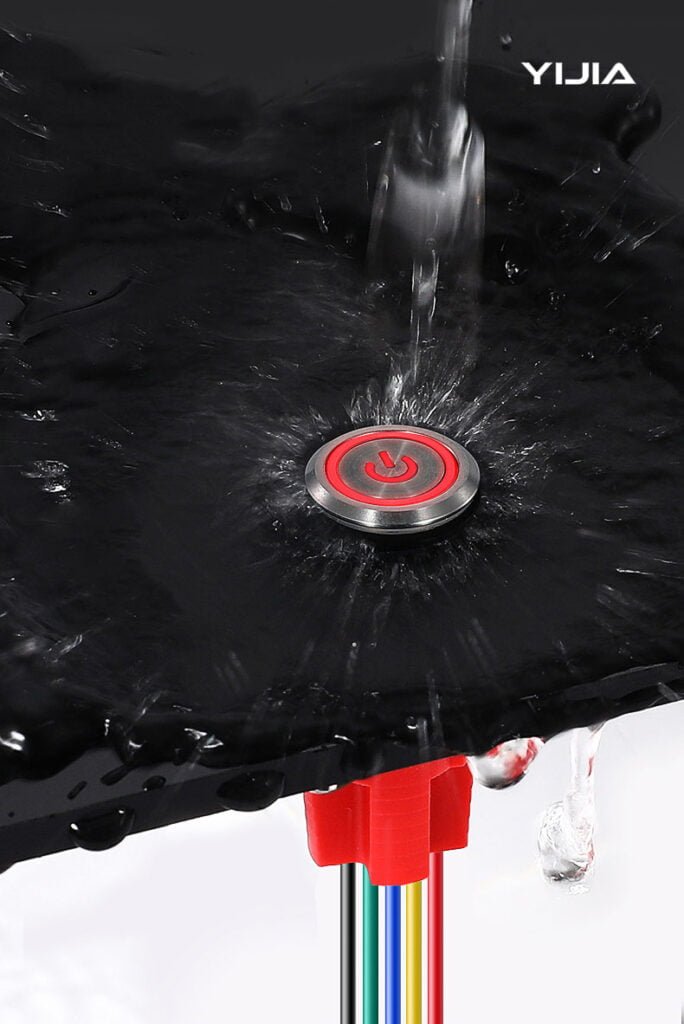
A gasket or protective cover can contribute to ingress protection, but the complete installed assembly matters. Confirm the stated IP rating, its scope, panel condition and installation requirements. A rating for the front of a correctly mounted switch does not necessarily protect exposed rear terminals. Do not treat a waterproof description as approval for immersion or pressure washing.
For public equipment, assess impact and tampering requirements separately. A metal face by itself does not establish a tested anti-vandal rating. Request the relevant evidence when those conditions are part of the specification.
Matching the switch to the panel and circuit
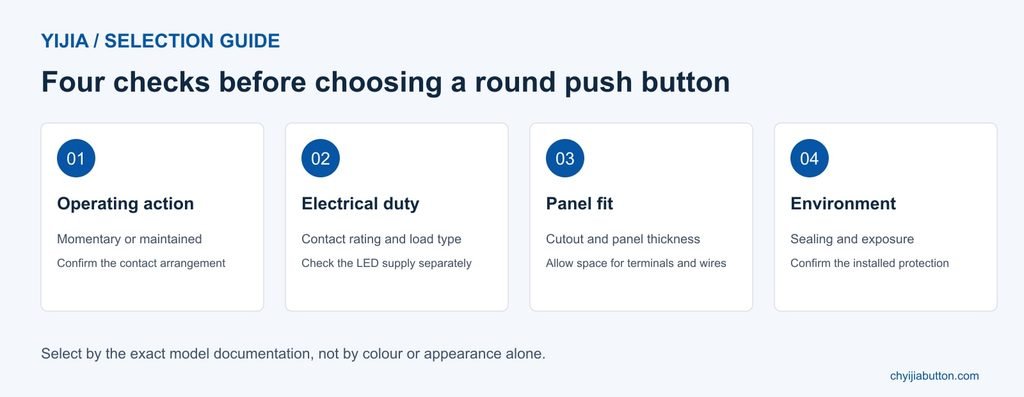
Start with the mechanical drawing. Confirm the cutout, permitted panel thickness, mounting hardware and clearance behind the panel. Leave room for terminals, connectors and cable bends. Closely spaced buttons also need enough finger clearance and readable legends, particularly where operators wear gloves.
Next, define the contact arrangement and load. Record the operating voltage, current and whether the circuit is AC or DC. A resistive load, relay coil and controller input place different demands on contacts. Check the applicable rating rather than selecting from the largest current printed in a product summary. Low level inputs may also require confirmation of reliable switching at the intended signal level.
Choose a termination method that fits assembly and servicing. Screw, solder and connector arrangements have different space and handling requirements. Follow the selected model’s instructions for conductor size, tightening or soldering. A convenient terminal layout is useful only if the completed connection remains secure.
Before approving a replacement, compare the whole specification with the original part. Matching the front diameter and colour is not enough. An incorrect contact state or lamp voltage can create a fault even when the new button fits neatly into the existing opening.
Where round push buttons are useful
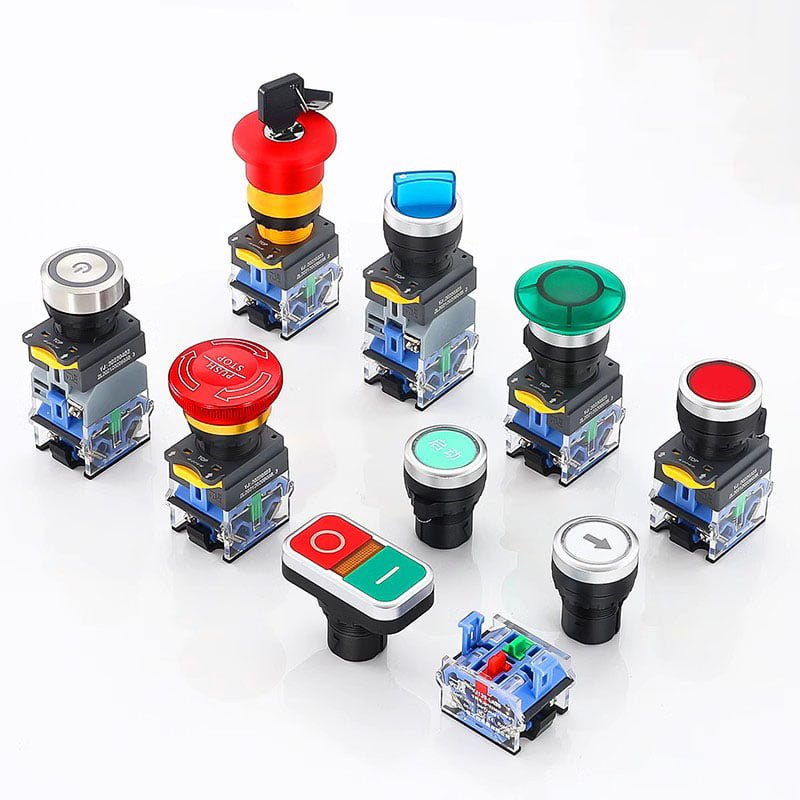
Industrial control panels use round actuators for clearly labelled operator commands. Compact equipment may favour a shorter body where rear clearance is limited, while a larger or raised head can be easier to operate in a particular panel layout. Check both access and accidental operation risks during the design review.
Commercial equipment and public interfaces may need visible illumination, robust mounting and clear symbols. Outdoor installations add exposure to water, sunlight and temperature changes. These are application requirements to verify, not capabilities that can be assumed from a product category name.
For safety related functions, ordinary appearance and colour are insufficient selection criteria. An emergency stop requires a suitable device and a properly designed safety function. Do not substitute a general purpose red round button merely because it resembles the original control.
Inspection and replacement planning
Include the push button in the equipment’s routine inspection plan. Look for a loose mounting nut, damaged legends, sticking movement or a cracked seal. Arrange checks with the equipment isolated under the site’s procedures. Intermittent operation needs investigation of both the switch and its wiring; replacing the actuator alone may leave the original fault unresolved.
Keep an approved spare where downtime matters. Record the full ordering code, connector arrangement and any accessories supplied with the switch. Before changing to another series, review the drawing and circuit requirements again. A different rear body or terminal orientation can complicate a seemingly simple replacement. After installation, verify the intended command and indication through the equipment’s normal commissioning procedure, with the responsible technician checking the result before returning the machine to service.
Specifying a YIJIA round push button
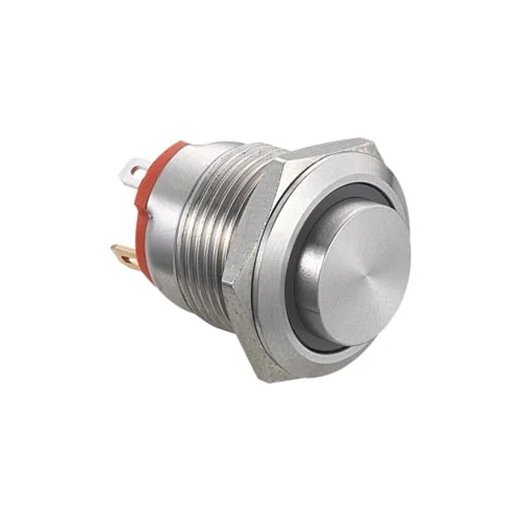
Use the YIJIA push button range to identify a suitable starting point, then check the exact configuration. The YJ-GQ16 short type offers a round metal option for a nominal 16 mm installation. Its stainless steel actuator and choice of shell materials allow buyers to compare finishes for their application. Available combinations must be confirmed against the selected model.
For a useful enquiry, provide the panel drawing, operating action, contact arrangement, load details, lamp supply and expected environment. Include the required quantity and a photograph or part number when replacing an existing switch. Ask YIJIA to confirm the matching model and current technical documentation before ordering samples.
Evaluate the sample in the intended panel, including operator access, indication and wiring clearance. Record the approved part number and configuration so repeat orders refer to the same assembly rather than a general description such as round illuminated button.
FAQ
Are all round push buttons momentary
No. Round describes the head shape. Momentary and maintained mechanisms can have similar appearances. Check the operating action in the exact model description and confirm how the actuator returns or releases.
Can an illuminated button replace a separate signal lamp
Sometimes, if its indication serves the same purpose and the circuit provides the required feedback. A separate signal lamp may be clearer when operators need status information away from the control itself.
Is a stainless steel push button automatically waterproof
No. Stainless steel describes a material. Water protection depends on sealing, construction, installation and the declared rating. Check whether the rating covers the panel front, the complete device or another specified condition.
How long should a push button switch last
Use the manufacturer’s stated mechanical and electrical endurance for the selected model and test conditions. Actual service life depends on switching duty, load, environment and installation. A general promise of several years is not a reliable selection criterion.
What should I check before buying a replacement
Compare the mounting dimensions, action, contact arrangement, electrical ratings, lamp specification and terminals. Confirm environmental requirements too. If the old marking is incomplete, provide photographs and the machine’s circuit information rather than guessing from appearance.
Title: Round Push Button Switches Types and Selection | YIJIA
Description: Compare round push button switch types, materials and illumination. Learn how to check contacts, panel fit and protection before choosing a YIJIA model.
SPST push button switch structure The single-pole single-throw (SPST) push button switch is a simple switching mechanism whose structural design enables it to control the on and off of a circuit. The SPST button switch mainly consists of the following parts: Button (Actuator): This is the part that users directly contact and operate. When the button is […]
What is a waterproof push button switch? A waterproof pushbutton switch is an electrical switch designed to work in humid or underwater environments to prevent moisture or liquid from entering the device through the button. These switches are commonly used in marine and outdoor environments where they are frequently exposed to liquids such as rain. […]
A push button switch is a common electrical switch that can turn a circuit on or off by pressing or releasing a button. Push button switches have a wide range of applications, from calculators, telephones, kitchen appliances in daily life, to mechanical equipment and safety systems in industrial production, etc., all of which are inseparable […]
We use cookies to enhance your browsing experience, serve personalised ads or content, and analyse our traffic. By clicking "Accept All", you consent to our use of cookies.