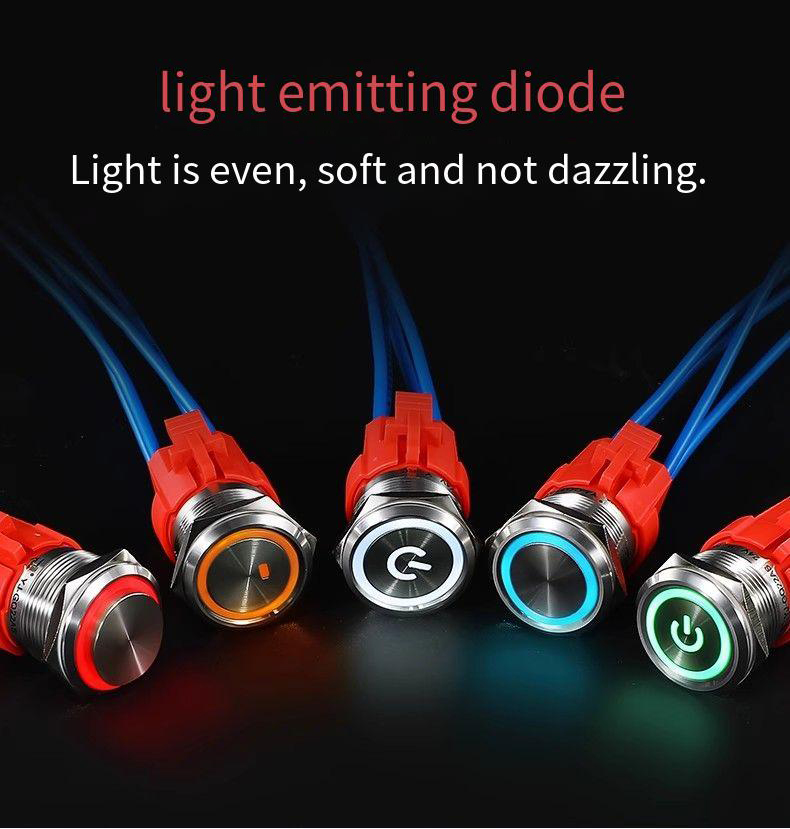
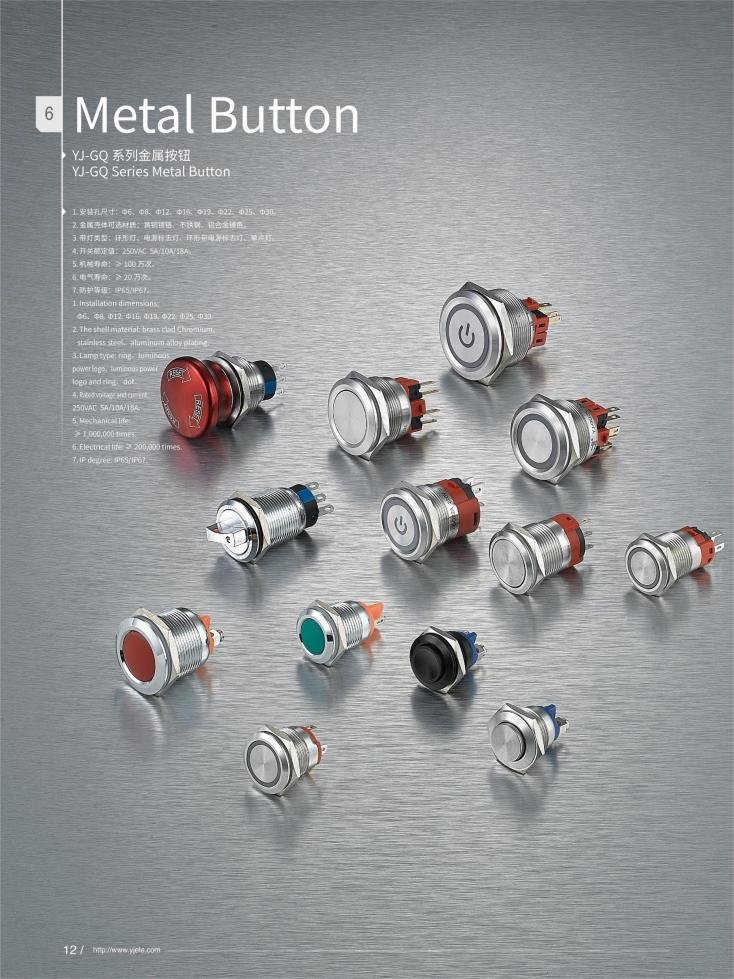
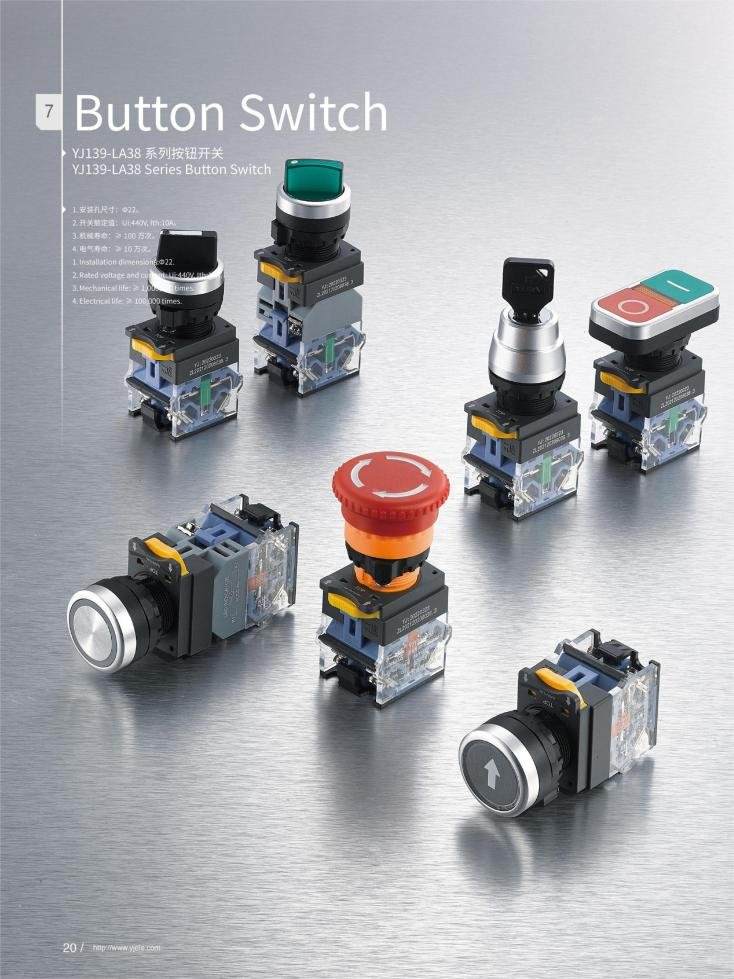
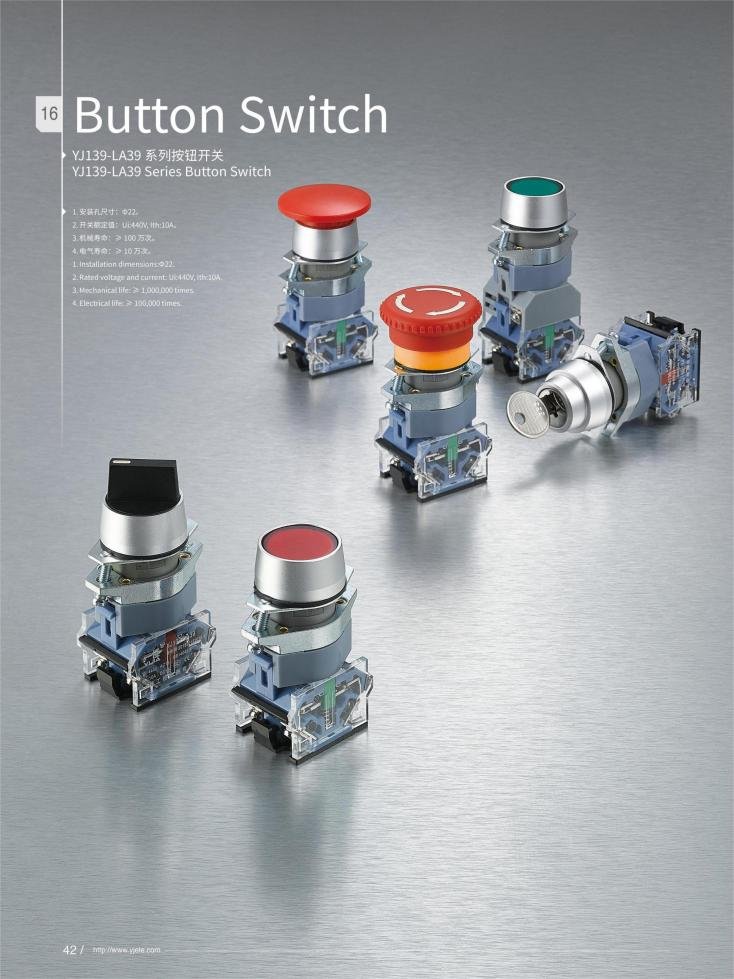
When buyers search for emergency stop button switch China, they usually do not want a lecture. They want to know three things fast: how to wire it, how to choose it, and whether the supplier can deliver the right version without turning a simple RFQ into a detective novel. I get it. I have had enough panel-door surprises to know that a beautiful switch that does not fit the cutout is just a shiny paperweight.
The reason this topic matters is simple. Chinese push button switch manufacturers actively promote emergency stop products with export-friendly certifications such as CE, CCC, UL, REACH, and RoHS, and some GQ-series products are positioned for compact installations where panel depth is tight. At the same time, emergency-stop devices are not ordinary stop buttons: standards and industry references emphasize latching action, positive opening behavior, and the familiar red actuator on a yellow background so the device is visible and deliberate in an actual hazard.
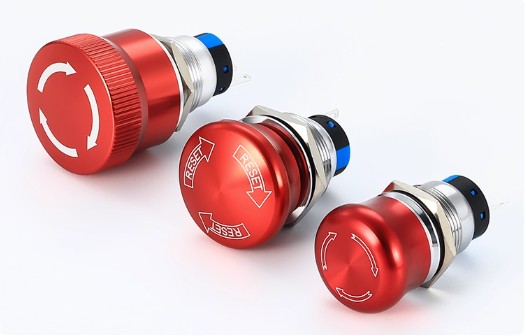
If your project is built around a compact GQ16B style product, the opportunity is clear. You are not just buying a red mushroom head; you are buying panel space, operator visibility, wiring logic, and compliance confidence. In other words, this is one of those small components that can save a big machine from a very expensive “oops.”
Why compact E-stops win projects
For many control panels, the real debate is not whether you need an emergency stop. You do. The debate is whether you need a standard 22mm body or a more compact option that fits a tighter door layout, a slim HMI enclosure, or a retrofit where every millimeter already has a landlord.
A compact 16mm emergency stop button switch China option makes sense when the machine is small, the front panel is crowded, or the OEM wants a cleaner industrial design. I have seen buyers chase 22mm hardware by habit, then realize the enclosure door is already full of pilot lights, selectors, and a touchscreen that thinks it owns the whole neighborhood. A smaller control panel emergency stop button can solve that problem without forcing a full mechanical redesign.
This is also why long-tail search terms matter in B2B content. Phrases such as 16mm emergency stop button switch China, compact emergency stop switch for control panel, and emergency stop switch for industrial machinery attract buyers who already know roughly what they need. They are no longer browsing. They are comparing drawings, lead times, and whether the supplier sounds like a factory or a copywriter with too much coffee.
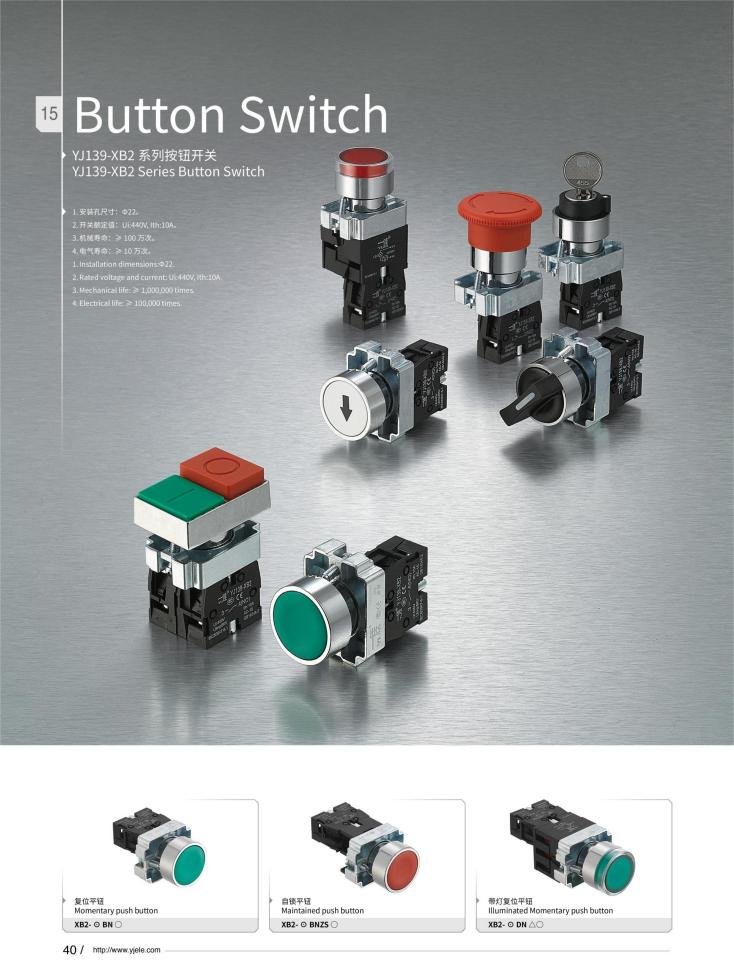
Another point worth noticing is where the supply base sits. Multiple China push button switch suppliers and manufacturers listed in the market are located in Yueqing, Zhejiang, a well-known cluster for industrial electrical components. For B2B buyers, that usually means better OEM support, familiar export documentation, and easier sourcing of matching components such as indicators, buzzers, and standard push buttons from the same ecosystem.
Wiring logic on real panels
Now we get to the part buyers actually care about: how this thing is wired when the machine is real and the production manager is standing behind you. I like to keep the conversation brutally simple. An emergency-stop device must open the stop path reliably, stay latched after actuation, and release only by a deliberate reset action.
In practice, I usually tell buyers to spec the contact logic before they spec the cosmetics. If the machine only needs the emergency chain interrupted, a proper NC path is the priority. If the PLC also needs to know that the operator hit the button, then a 1NO1NC emergency stop switch becomes more attractive because the NO side can be used as a signal or event input while the NC side handles the stop function. The market already shows compact 16mm versions with 1NO1NC contact arrangements, which is why that configuration appears so often in RFQ.
A clean panel concept often looks like this in the real world: the NC contact is placed in the control stop loop, and any auxiliary NO contact is sent to a PLC digital input, tower light logic, or a maintenance alarm. I am not trying to be dramatic, but this is one area where “close enough” wiring becomes “why is the machine not stopping” wiring. The good news is that the logic is straightforward when the buyer defines the circuit role early.
Reset behavior is another place where purchasing teams sometimes get caught. Emergency-stop references make it clear that the device should latch after actuation and require a deliberate release action such as twisting or another defined reset method. That means your RFQ should not just ask for “red stop button.” It should ask for the release mode, contact form, mounting size, and whether the switch is part of a safety chain or only an auxiliary stop-related function.
If you are buying a waterproof emergency stop button switch for a food-adjacent skid, outdoor cabinet, or dusty utility box, mention the environment in the first email. Seriously. A supplier cannot guess whether your machine lives in a clean control room or in a washdown line that treats switches like submarine parts.
Picking the right configuration
This is where a lot of B2B deals are won or lost. Buyers often compare products that all look similar in photos, but the actual decision should be built around panel cutout, operating mode, contact form, release method, ingress protection, and target market approvals. A red head is easy. A correct specification is harder.
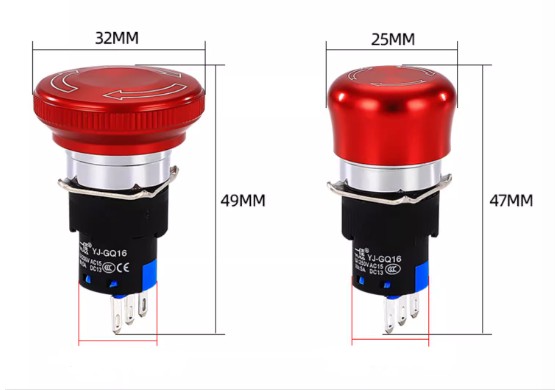
Let me put it plainly. If you are choosing a compact model such as a GQ16B emergency-stop style product, you are usually optimizing for space and appearance. If you are choosing a classic 22mm or larger emergency stop button, you are often optimizing for standardization across a broader machine fleet. Market examples show both directions: compact 16mm emergency-stop products are available in China, while other emergency-stop devices use 22.3mm or larger mounting standards and larger heads.
The next step is matching the device to the machine, not to the catalog photo. For a compact HMI box, a metal emergency stop switch manufacturer with short-body options is often the better fit. For outdoor service equipment, the buyer should push harder on sealing, housing material, and test data. For export OEM work, the smarter search term becomes OEM emergency stop button switch or emergency stop push button supplier China, because now you are evaluating document readiness as much as product shape.
I also advise buyers to be specific about whether they want illumination, label rings, custom symbols, harnesses, or private logo packaging. That sounds fussy until you are 2,000 units into production and discover the switch body is perfect but the back-end terminals collide with the wire duct. I have nothing against optimism, but I prefer drawings.
One more practical note: compact does not always mean compromise. Related China listings show that even smaller-diameter emergency-stop products can be offered with aluminum alloy housings, latching action, and IP67 protection. So if your project needs a waterproof emergency stop button switch in a smaller format, the request is realistic; it just needs to be specified clearly.
Buying from a China supplier
The reason B2B buyers search emergency stop button switch China is not only price. It is also flexibility. Chinese suppliers in this category often combine standard catalog items with OEM support, mixed certification portfolios, and multi-market export experience. That is useful when the project needs both a compact emergency stop and matching indicators or push buttons in the same industrial design family.
When I assess a potential emergency stop push button supplier China source, I do not start with “What is your best price?” I start with “What exactly are we buying?” That means I ask for cutout size, panel thickness range, contact form, operating voltage, ingress rating, housing material, release method, approvals, and whether the switch is stocked or built to order. Price matters, of course. But a cheap wrong part is still expensive.
This is especially true for bulk YJ-GQ16 Emergency Stop Button Switch China purchases. In volume orders, small specification gaps become warehouse-sized headaches. You do not want half the lot with screw terminals and half with solder tabs. You do not want one batch with a yellow legend plate and the next batch without it. And you definitely do not want the sales rep to answer your technical question with “dear friend, all is okay.” I enjoy optimism, but not as a quality system.
The good suppliers usually understand this. They already sell to global markets and list approvals such as CE, UL, CCC, REACH, and RoHS across related products, while also supplying other control components from the same family. That matters because many B2B buyers are not purchasing a single switch; they are standardizing a panel platform.
If the project is active now, send the supplier a short but complete RFQ: annual quantity, panel cutout, target market, contact form, reset method, cable or terminal preference, logo needs, and environment. I would much rather quote a clean specification once than spend three weeks playing industrial bingo by email.
FAQ
Not automatically. Compact 16mm emergency-stop products are sold in China, and GQ-style compact bodies are marketed for limited installation space.
If the device is part of the stop path, the opening contact behavior is the priority; if you also need PLC status, a 1NO1NC version can be useful where available.
Common listings in this category mention CE, CCC, UL, REACH, and RoHS, but the exact approval mix should match your destination market.
Twist release, pull release, and key release are all seen in emergency-stop references depending on the device design.
Yes, when the machine faces dust, splash, or outdoor exposure; related metal pushbutton families and compact E-stop listings in China often advertise IP67-level protection.