A motion sensor push button can make sense when operators need to issue a deliberate command without touching the control surface. The best choice is the one that recognizes an intended hand approach, rejects surrounding activity and delivers the signal the controller expects. Detection range, output behavior and installation conditions should therefore lead the buying decision.
For equipment manufacturers, that decision also depends on the supplier behind the panel components. YIJIA combines more than twenty years of industrial control manufacturing experience with ISO9001 quality management, engineering resources and an established range of push buttons and signal lamps. This guide explains how to evaluate touchless operation and prepare a useful control specification for discussions with YIJIA.
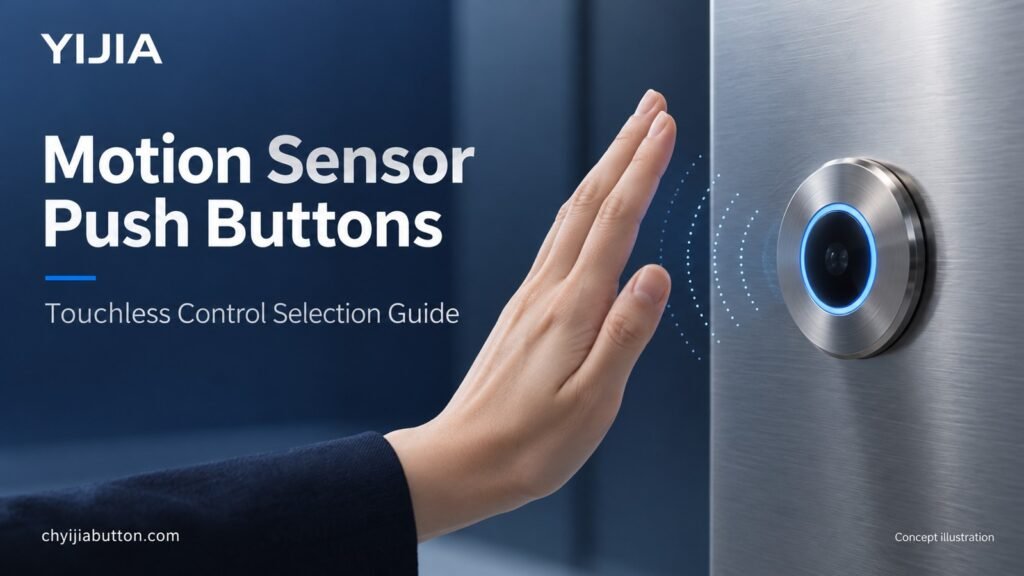
YIJIA | Touchless hand activation concept illustration
What a motion sensor push button actually does
In this application, “motion sensor push button” usually describes a touchless activation device. A hand enters a defined sensing area and the electronics generate an output. A physical press is unnecessary, and the device does not necessarily contain a mechanical push button underneath its sensor.
This differs from room occupancy control. A wall button normally needs a deliberate, localized action. A room sensor may be intended to recognize people moving across a much wider area. Specify which behavior the application requires before comparing products with similar names.
Understand the sensing method before selecting a device
Optical touchless switches can detect reflected light. With time of flight sensing, the system measures the light’s travel time to determine distance. Other touchless actuators use different technologies, including microwave sensing. The sensing principle influences the installation and evaluation requirements; the product name alone does not identify it.
Passive infrared motion sensors detect changes in infrared radiation associated with movement. They should not automatically be treated as interchangeable with a short range hand activation control. Ask the supplier to identify the sensing technology, detection pattern and conditions under which its stated range applies.
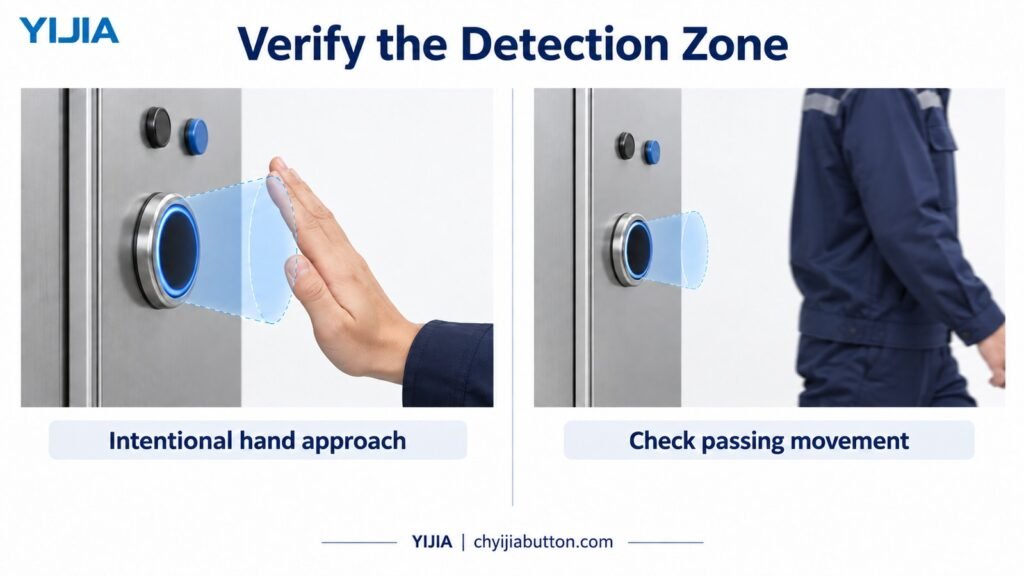
YIJIA | Detection zone evaluation concept illustration
Define the detection zone around an intentional gesture
More range is not always better. A sensor near a walkway should not respond merely because someone passes the panel. Equally, a detection zone that is difficult to find can lead users to wave repeatedly or touch the face anyway.
Describe the intended hand movement and mounting position in the enquiry. Include the distance from nearby controls, the direction of approach and any objects normally carried by operators. Check whether range and timing are fixed or adjustable for the selected device. Record approved settings so that a replacement can be configured consistently.
Make the electrical output part of the specification
Confirm the supply voltage, current consumption, output type and switching limits. A relay contact and an electronic output have different interface requirements. The controller input, wiring diagram and proposed switch must be reviewed together rather than matched only by voltage labels.
Define what happens after detection. Does the application need a brief pulse, an output maintained for a set time, or a state that changes with each gesture? Also establish when the device becomes ready for another command. These details determine whether one hand movement creates one event or several unintended events in the control program.
Ask how the output behaves during startup, loss of supply and a continuously obstructed sensing window. Include indicator wiring and its meaning in the approved drawing. A light confirming detection should not be mistaken for proof that the machine has completed the requested action.
Evaluate convenience without overstating the benefits
Touchless operation reduces the need to contact a shared control surface. That can be useful at frequently used interfaces, but it does not sterilize the panel or replace cleaning. Keep the operating face and surrounding enclosure accessible for the required maintenance routine.
Removing a repeated physical press also changes the wear mechanism. Electronics, seals and wiring still need an appropriate operating environment. Compare service requirements for the complete installation rather than assuming that contactless operation eliminates maintenance.
Energy savings depend on the controlled equipment and its operating logic. A touchless button itself requires power. If savings are part of the project objective, compare total consumption and actual operating hours before and after the proposed change. Do not treat the presence of a sensor as an energy performance result.
Validate the installed panel rather than an isolated sample
A sample responding on a desk is only the start of evaluation. Mount it in the intended panel and check the sensor opening, surrounding material, rear clearance and cable arrangement. For outdoor or wet locations, review the specified environmental limits and installed sealing conditions.
Test deliberate hand approaches alongside nearby movement. Include the gloves used on site, different approach angles, normal lighting changes and the planned cleaning routine. Where relevant, evaluate reflections, dust accumulation and moisture under the supplier’s stated conditions. Record both missed commands and unwanted activations.
Agree the acceptance criteria before testing. Identify who will assess the results, which settings are permitted and how the approved configuration will be documented. A clear record makes comparison between candidates more useful than a short demonstration video.
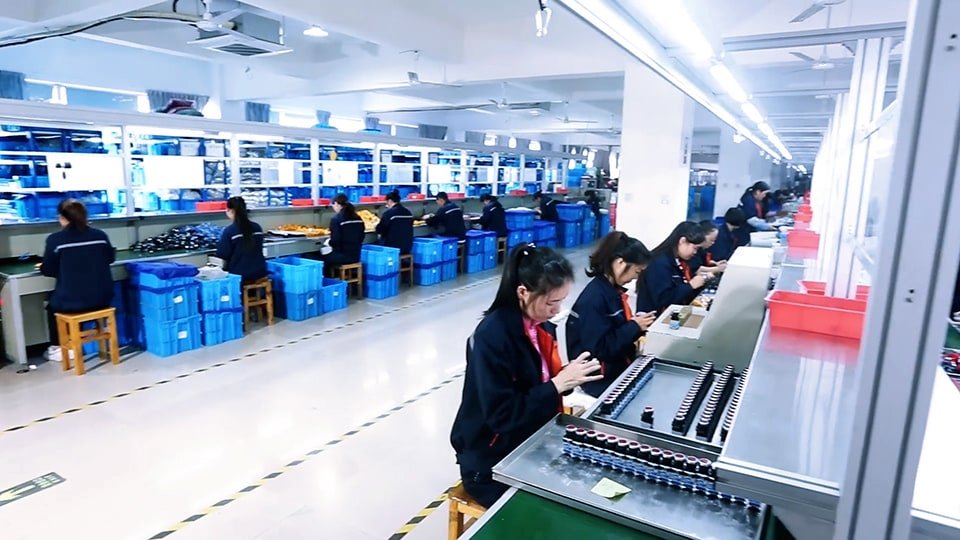
YIJIA industrial control production workshop
YIJIA factory capability gives buyers a concrete basis for evaluation
YIJIA’s industrial control manufacturing resources include seven production lines, fifteen R&D engineers and twenty-nine QA/QC inspectors. Injection molding machines, punching machines and automatic assembly facilities form part of its production equipment. These are practical capabilities for buyers to review when evaluating a long term source of panel controls.
Quality arrangements include full visual and functional inspection of finished products, common inspection instructions and raw material traceability. For repeat orders, those controls matter because purchasing teams need a defined specification and a way to investigate differences between batches. ISO9001 quality management complements that discussion without replacing the evidence required for an individual product.
YIJIA supports OEM and ODM projects, including customization from designs and samples. Buyers can use this capability to discuss the requirements of an overall control arrangement, including appearance, installation and component selection. Its established push button and indication range also provides options where conventional operation remains the better fit.
A capable manufacturing partner helps turn a requirement into a reviewable purchasing specification. Bring the application and acceptance criteria into the conversation early, then confirm the suitable product, documentation and sample approval process before placing an order.
Selection example for a shared equipment interface
Consider a proposed acknowledgement control beside an operator station. Users should be able to signal that they have read a message without pressing a shared surface. People also walk past the station, so the evaluation must include ordinary traffic as well as intentional gestures.
The project team first defines a single command event and a clear confirmation indicator. It then checks the sensing area and reset behavior in the installed position. If passing movement produces an input, the team revises placement or settings and tests again. This example shows why a successful purchase depends on the surrounding workflow as much as the button itself.
Compare quotations on the same installed scope
Ask each quotation to identify what is included: the actuator, connector, cable, indication and any interface hardware. Include installation work and configuration time in the comparison. A lower component price may not represent a lower installed cost if extra electronics or additional assembly steps are required.
For a repeat purchase, retain the approved drawing revision, connection details and parameter settings. Agree how substitutions or configuration changes will be handled. Receiving inspection can then compare the delivered item with a defined reference instead of relying on a matching bezel or package label.
Give users clear confirmation of their command
A touchless control has no physical travel to confirm actuation. Choose feedback that users can recognize from their normal position, and define whether it indicates detection or an accepted command. Keep the instruction brief and visible beside the sensing area.
Test the interaction with representative users. Observe whether they hesitate, repeat gestures or accidentally activate adjacent controls. Those observations can reveal installation problems that a specification sheet alone cannot resolve. Include these observations in the sample approval record.
Frequently asked questions
Is a motion sensor push button the same as a room motion sensor?
No. A touchless button is generally intended for a deliberate action within a localized area. A room sensor may monitor movement over a much larger space. Compare the sensing method and detection pattern instead of relying on the word “motion.”
Can operators use it while wearing gloves?
Possibly, depending on the sensing technology and application. Evaluate the actual gloves, hand position and approach movement with the installed device. Glove compatibility should be an acceptance requirement, not an assumption based on contactless operation.
Will cleaning or nearby movement activate the control?
The response depends on the device and configuration. Include wiping, passing traffic and any nearby moving objects in sample evaluation. Agree a cleaning procedure and operating arrangement that avoid unintended commands, and verify them before approval.
Can a touchless button replace an emergency stop?
An ordinary touchless activation device should not be substituted for a specified emergency stop. Emergency functions require purpose designed components and a validated safety system. Keep convenience inputs separate from protective functions when preparing the control specification.
What information should an enquiry include?
Provide the intended function, panel drawing, power supply, output requirements, environment and order quantity. Add the desired gesture, sensing distance, indication and acceptance tests. These details help the supplier respond to the application rather than quote a superficially similar component.
Discuss your panel control requirements with YIJIA
Share your drawings and operating requirements with YIJIA to review suitable industrial control products and customization needs. Begin with the command the operator must give, then work through interface compatibility, installation and sample evaluation. YIJIA’s manufacturing experience and quality resources provide a concrete starting point for that discussion. A documented, approved configuration gives purchasing and engineering teams a stronger basis for repeat orders than appearance or price alone.
Description: Compare motion sensor push buttons, detection zones and output requirements. Explore YIJIA factory capabilities for industrial control sourcing.
Yijia Product Brochure.zip In the field of industrial production, the degree of automation is getting higher and higher, and industrial robots, as an important production tool, have been widely used in various industries. In order to meet the demanding control requirements of industrial robots, Yijia has introduced the GQ16 (Short Type) series of push-button switches […]
A push button can fit a panel perfectly and still be wrong for its circuit. The contacts may operate differently, the LED may require another supply, or the rear terminals may leave too little room for a secure connection. These details matter more than the number of wires visible in a product photograph. If you […]
Relay Switch.pdf Relay Switch According to the color of the LED signal lamp, we can identify the AC coil or DC coil. The type of coil is printed coil specifications, so the recognition is higher. All products have mechanical indicators. High reliability Automotive electronic control has high requirements for the reliability of relays. YiJia relays […]
We use cookies to enhance your browsing experience, serve personalised ads or content, and analyse our traffic. By clicking "Accept All", you consent to our use of cookies.