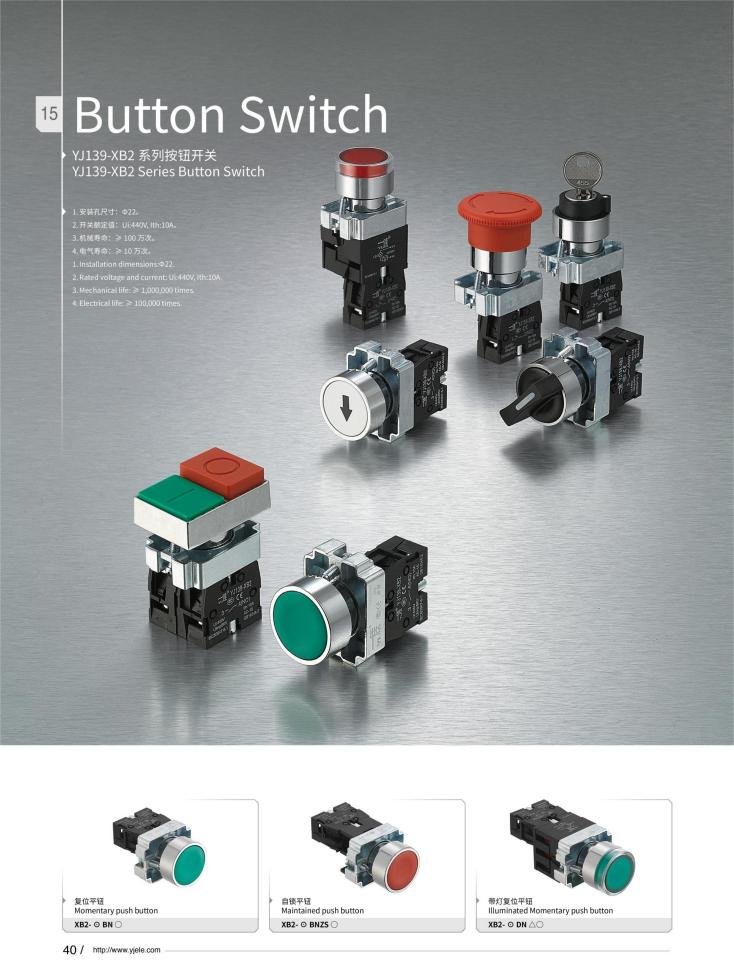
When you design or source components for vehicles, you need switches that can survive vibration, dust, moisture and constant use. YJ metal push button switches are well‑suited for many automotive applications, from engine start buttons to light control, as long as you select the proper rating, sealing and installation method for your project.
Why Automotive Engineers Choose YJ Metal Push Button Switches
Metal push button switches are widely used in modern vehicles because they look clean, feel solid and handle harsh environments better than many plastic alternatives. For B2B buyers, they offer a good balance of durability, safety and design flexibility.
In automotive dashboards, center consoles, steering columns and auxiliary panels, metal push buttons are often used for engine start/stop, fog lights, auxiliary LED bars, horn triggers, winch controls and more. They also appear in off‑road and marine‑grade vehicle conversions where waterproof performance is critical.
Typical automotive use cases
| Application area | Example function | Why a metal push button? |
|---|---|---|
| Dashboard / cluster | Engine start/stop, fog light, hazard light | High reliability, premium look, clear status indication |
| Center console | Seat heating, driving mode, tailgate release | Compact size, good tactile feedback, customizable icons |
| Racing / off‑road panel | Ignition, fuel pump, auxiliary LED bars | Shock and vibration resistance, IP‑rated sealing |
| Aftermarket accessories | Horn, light bar, winch, air suspension | Easy 12 V integration, momentary or latching options |

Are YJ Metal Push Button Switches Suitable for Cars?
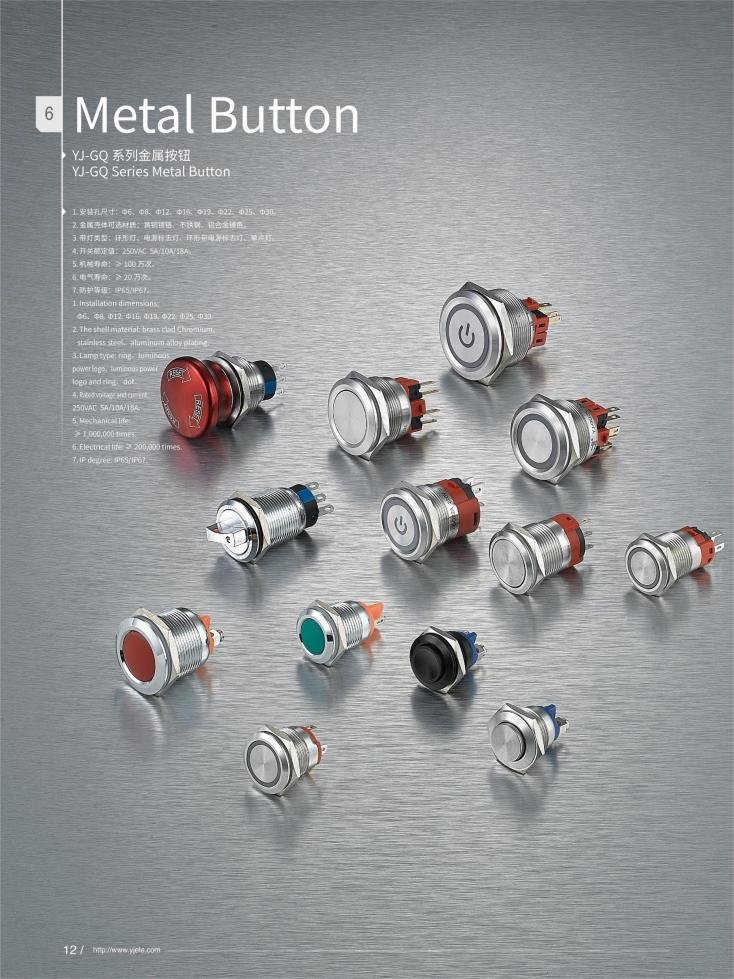
For most low‑voltage control circuits in vehicles, YJ‑type metal push button switches (16 mm, 19 mm, 22 mm, etc.) are suitable, provided their voltage, current and IP rating match the application. Many metal push buttons on the market are explicitly promoted for cars, motorcycles and boats, especially in 12 V systems.
These switches often feature stainless steel or brass housings, silver‑alloy contacts, and mechanical life up to 1,000,000 cycles with electrical life around 100,000 cycles, which meets typical automotive accessory demands. Some models are even advertised as ideal for brake light switches, start buttons and other vehicle functions thanks to their robust structure and waterproof design.
Key suitability factors
| Factor | Automotive requirement | YJ metal push button typical capability |
|---|---|---|
| Voltage system | 12 V / 24 V DC signal level | Common metal push buttons support 12 V / 24 V control circuits |
| Current (control side) | Usually ≤ 3–5 A via relay | Many models rated 3 A–5 A at 12 V, higher via external relay |
| Environmental protection | Dust, splash, and sometimes full waterproofing | IP43–IP67 depending on model and sealing structure |
| Mechanical life | Frequent pressing over years | Up to 1,000,000 mechanical cycles in typical designs |
| Electrical life | Reliable switching of low‑power loads / relays | Around 100,000 cycles with silver alloy contact materials |
If you want to be safe, treat the YJ metal push button switch as a low‑current signal device and route the actual high‑current automotive load through a relay or control module. This design approach is standard in automotive switch panels and helps extend switch life significantly.
Technical Features That Matter in Automotive Design
When an engineer or purchasing manager evaluates a YJ metal push button switch for automotive projects, four things usually come up first: dimensions, contact configuration, operation mode and sealing level. Getting these right at the RFQ stage will save you a lot of redesign and re‑wiring later.
Common mounting hole sizes include 16 mm, 19 mm and 22 mm, which fit most automotive panels and accessory switch pods. On the electrical side, variants like SPDT and DPDT support contact structures such as 1NO1NC or 2NO2NC, allowing you to switch multiple circuits or provide both power and signal feedback from a single device.
Engineering‑relevant parameters
| Parameter | Typical range / options | Design impact |
|---|---|---|
| Mounting hole size | 16 mm, 19 mm, 22 mm | Must match panel cutout and available space |
| Contact configuration | 1NO, 1NC, 1NO1NC, 2NO2NC (SPDT / DPDT) | Defines how many circuits you can control or monitor |
| Operation mode | Momentary or latching (self‑locking) | Momentary for horn/start; latching for lights or modes |
| Rated current | Typically 3–10 A at up to 250 V (AC) | In automotive, often used as low‑current control + relay |
| Contact material | Silver alloy | Low contact resistance, long electrical life |
| Mechanical life | Up to 1,000,000 operations | Suitable for frequent driver interactions |
| Electrical life | Around 100,000 operations | Enough for low‑power switching over vehicle life |
If you share basic specs like load current, head type, operation mode and LED color in your inquiry, many manufacturers can quickly help you select the right YJ metal push button switch type for your automotive system.
Environmental Protection: IP Rating and Harsh Conditions
Automotive environments are rough on components: you have temperature swings, vibration, dust, road spray and sometimes direct water jet when cleaning the vehicle. This is where a metal push button switch shows its advantages with robust housings and sealed constructions.
YJ‑type metal push button switches can be offered in different IP ratings, from basic panel protection around IP43 to more demanding waterproof designs up to IP67 or similar, which are commonly used in exterior or off‑road applications. For applications like engine bay controls, off‑road light bars or marine‑grade vehicles, you should always choose the highest practical sealing level available.
IP ratings and automotive placement
| IP rating (typical) | Suitable installation area | Notes for automotive use |
|---|---|---|
| IP40–IP43 | Dry dashboard / interior panels | Good for indoor‑style automotive cabins |
| IP54–IP65 | Cabins with occasional dust or splash | Suitable for utility vehicles, light trucks |
| IP66–IP67 | Exterior panels, off‑road, marine, engine bay | Ideal for auxiliary light switches and harsh environments |
Do not forget that the overall sealing depends on both the switch and how it is mounted. A poorly cut hole or missing O‑ring can downgrade a high‑IP YJ metal push button switch to something much less robust in real life.
Design Options: Illuminated, Colorable and Custom Symbols
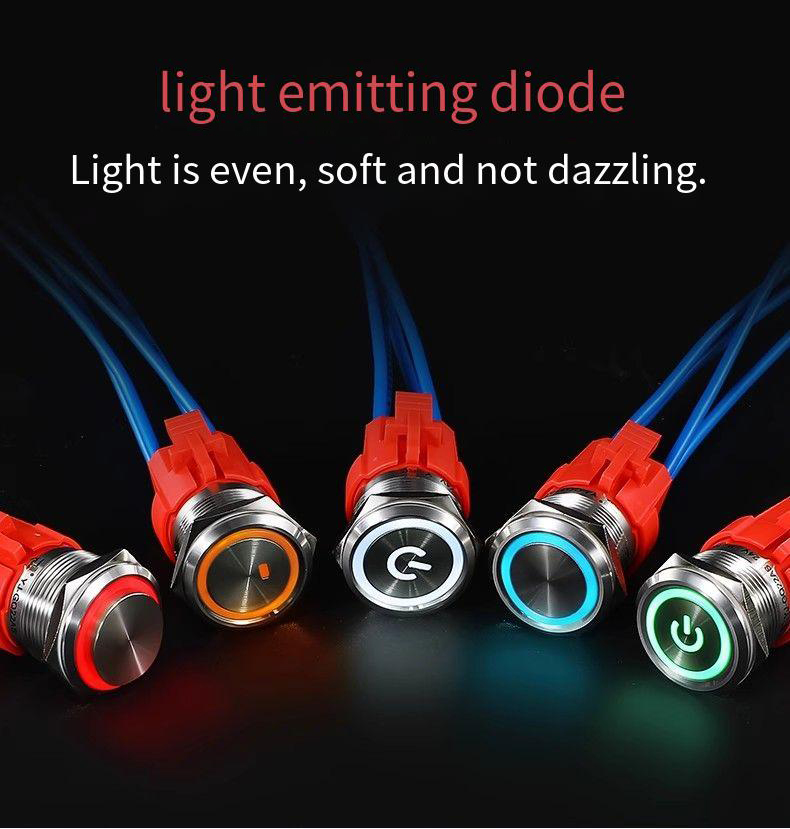
One reason YJ metal push button switches are so popular in automotive dashboards is their appearance. Many models are available with colored LED rings or backlit symbols that make the interface intuitive and stylish. Illumination can follow the vehicle’s branding color or show status at a glance.
Some suppliers of YJ‑style metal push buttons offer customizable colors and even custom icons on the button head, ideal for OEM and aftermarket dashboards that need unique branding or clear functional labeling. LED voltage options typically include 12 V and 24 V, which align perfectly with common vehicle electrical systems.
Visual and functional customization
| Option | Typical choices | Automotive benefit |
|---|---|---|
| LED style | Ring, dot, symbol backlight | Clear visibility in day and night |
| LED color | Red, green, blue, white, yellow, bi‑color | Status indication, matches OEM branding |
| Head shape | Flat, high, rounded, with symbol | Improved ergonomics and easy recognition |
| Shell material/color | Stainless steel, black anodized, chrome‑plated brass | Matches interior trim or racing panel design |
| Custom symbol/logo | Laser engraving, printed icons | Tailored for HVAC, fog, winch, start, etc. |
If you already have a dashboard layout, sharing your panel design and vehicle brand color with the supplier can help them propose a matching YJ metal push button switch solution for your series production.
Integrating YJ Metal Push Button Switches in 12 V and 24 V Systems
Most passenger cars use 12 V systems, while trucks, buses and some industrial vehicles use 24 V. Fortunately, metal push button switches are commonly rated for both control voltages. The key is to verify LED voltage, contact rating and insulation level before finalizing the drawing.
For high‑current loads such as fans, heating elements or big LED light bars, the YJ metal push button switch should be connected to the coil of a relay, rather than directly in series with the load. This is standard in automotive panel design and helps avoid overloads and contact welding.
12 V vs 24 V considerations
| Aspect | 12 V automotive system | 24 V truck / bus system |
|---|---|---|
| LED voltage | Use 12 V LED variant to avoid extra resistors | Use 24 V LED variant or external resistor |
| Coil / relay | 12 V relay coil, controlled by push button contact | 24 V relay coil, same wiring principle |
| Contact stress | Higher current for same power rating | Lower current, but higher voltage |
| Wire harness | Usually shorter, smaller cross‑section | Longer runs; pay more attention to voltage drop |
If you are not sure which variant of YJ metal push button switch fits your harness and load, sending your schematic to the supplier for a quick review is often the fastest path to a safe design.
Choosing the Right YJ Metal Push Button Switch for Your Project
The B‑side decision process often involves balancing cost, performance and lead time. For automotive switch sourcing, a simple step‑by‑step checklist makes vendor communication easier and reduces sampling rounds.
Consider your installation environment, panel thickness, expected duty cycle and any OEM standards you must meet. Then define a basic specification including size, current, operation mode, LED requirements and special options like laser‑etched icons or harness connectors.
Practical selection checklist
| Question to answer | Typical engineering choice |
|---|---|
| Panel cutout size? | 16 mm / 19 mm / 22 mm metal push button switch |
| Load current and type? | Low‑current control with external relay |
| Momentary or latching? | Momentary for horn/start; latching for lights/modes |
| LED needed? Voltage and color? | 12 V or 24 V LED ring in red/green/blue/white |
| Contact structure? | 1NO1NC for status + control; 2NO2NC for dual circuits |
| Environmental conditions? | IP65–IP67 for exterior/off‑road; lower for interior only |
| Any custom symbol, logo or harness? | Custom engraved symbol + pre‑wired socket for easy assembly |
Once you have these answers, it becomes very easy to send a clear RFQ and get accurate pricing and lead time for your automotive YJ metal push button switch solution.
By the way, if you already have a BOM or drawing, feel free to send it together with your inquiry so that the technical team can suggest a 1:1 replacement or optimized configuration for you.
If you are working on a new vehicle platform, retrofit kit or custom dashboard and need YJ metal push button switches that fit your drawings, you can send your panel cutouts, electrical specs and quantity plan to get a tailored quotation and technical recommendation.
FAQ
Yes, many metal push button switches are strong enough for low‑current circuits, and some are advertised as suitable for brake light switches, but using a relay is recommended for higher‑current loads to protect the contacts.
Many metal push button switches offer IP‑rated sealing, and versions around IP67 are commonly used in off‑road and marine projects where dust and water exposure are frequent.
Panel cutout sizes of 16 mm, 19 mm and 22 mm are the most popular for automotive dashboard and accessory panels, giving a good balance between visibility and compactness.
Yes, as long as you choose the correct LED voltage version; typical options include 12 V or 24 V, matching standard automotive and truck systems.
Many suppliers support custom shell colors, LED colors and engraved symbols, which is ideal for OEM dashboards and branded switch panels.