When you’re specifying control components for industrial machinery, the choice between a Normally Open (NO) and Normally Closed (NC) momentary push button switch might seem straightforward at first glance—but this decision carries significant implications for safety, reliability, and operational efficiency. Whether you’re designing an emergency stop system, managing production lines, or building control panels for complex automation, understanding the fundamental differences between NO and NC configurations is essential.
This guide walks you through the technical distinctions, practical applications, selection criteria, and best practices that will help you make informed decisions when choosing the right momentary push button switch for your specific requirements.
What Makes a Momentary Push Button Switch Different?
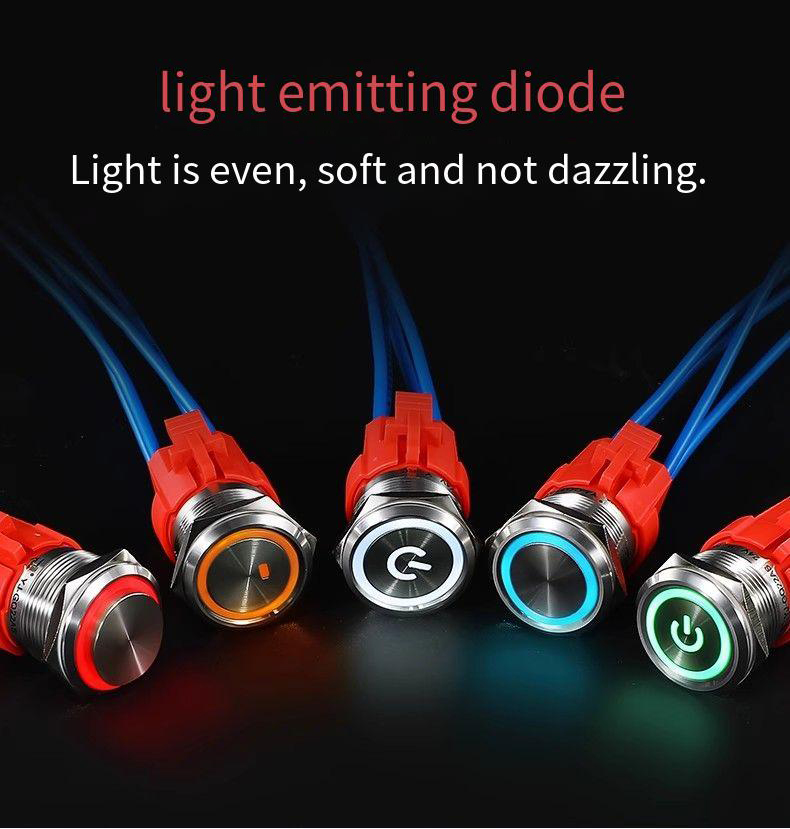
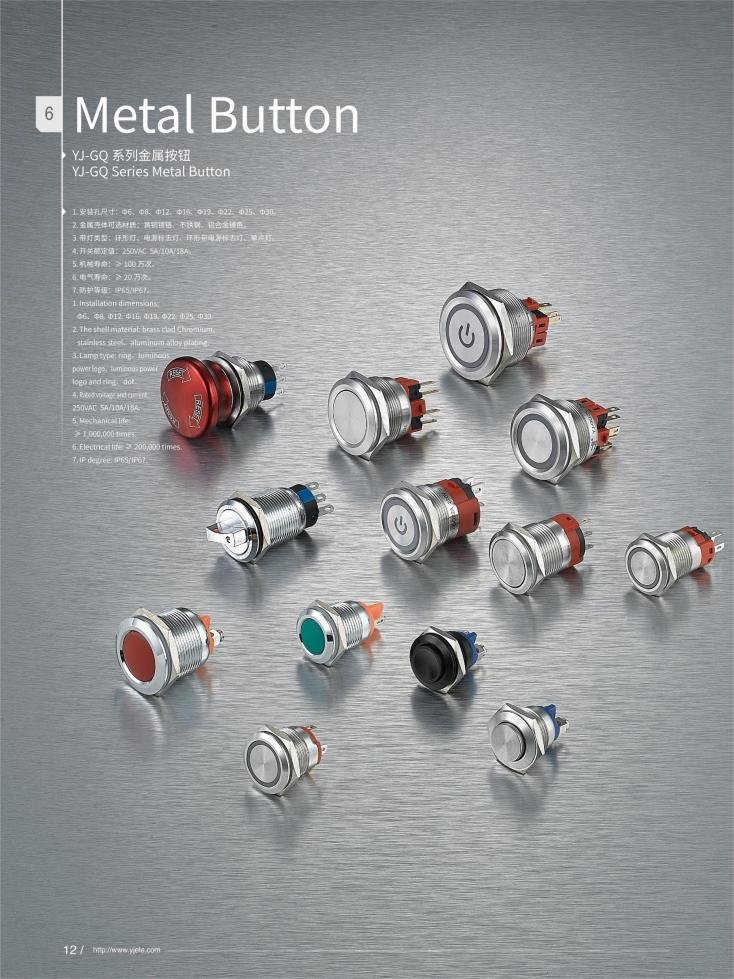
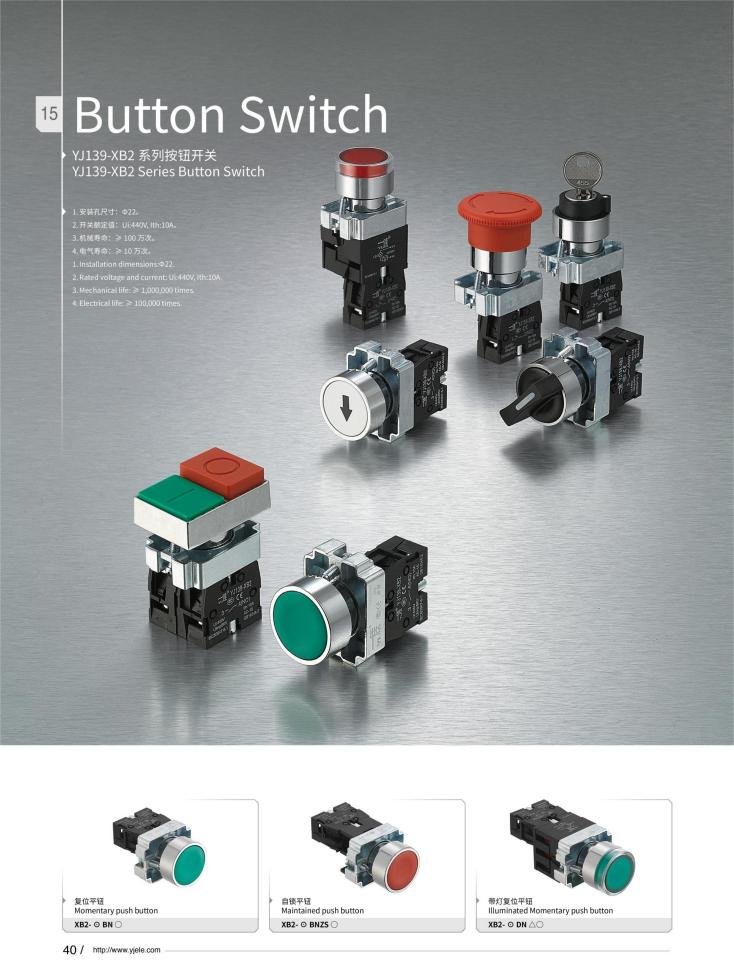
Before diving into the NO versus NC distinction, let’s establish what makes a YJ-GQ22B momentary push button switch unique compared to other switch types. A momentary switch is designed to activate a circuit only while it is being physically pressed, then automatically return to its resting state the moment you release it. This self-resetting behavior is fundamentally different from latching switches, which maintain their state after being toggled. Think of it like the difference between holding down a doorbell button—the chime sounds only as long as you press, but stops the instant you let go.
The spring mechanism inside a momentary push button switch is what enables this functionality. When you depress the button, internal contacts physically move and change the state of the circuit. Upon release, the spring pushes everything back to the original position. This reliable mechanical action makes momentary push button switches indispensable in industrial settings where you need precise, predictable control over machinery activation and deactivation.

| Aspect | Momentary Switch | Latching Switch |
|---|---|---|
| Operation | Active only while pressed | Remains in last position |
| Spring Mechanism | Yes, returns to resting state | No, stays where left |
| Use Cases | Start buttons, emergency stops, testing | On/off lights, power selectors |
| User Action | Continuous pressure required | Single toggle action |
| Safety Features | Fail-safe inherent design | Requires additional logic |
The Core Difference: NO (Normally Open) vs. NC (Normally Closed)
Here’s where it gets critical: the designation “NO” or “NC” refers to the default electrical state of the contacts when the button is not being pressed. This seemingly simple distinction fundamentally changes how the switch behaves in your circuit and determines where it’s appropriate to use it.
Normally Open (NO) Momentary Push Button Switch
A Normally Open (NO) momentary push button switch keeps the circuit open when unpressed—no current flows through it. When you press the button, the internal contacts close together, completing the circuit and allowing electricity to flow. The moment you release the button, the contacts separate again, and the circuit opens.
Think of an NO switch like a door that’s locked shut by default. Pressing the button is like inserting a key—it temporarily unlocks the door and lets electricity pass through. Release the button, and it locks back up immediately.
| Characteristic | Details |
|---|---|
| Resting State | Circuit is open (OFF) |
| When Pressed | Circuit closes (ON) |
| Common Use | Start buttons, activation triggers |
| Safety Implication | Cannot cut power by itself |
| Default Behavior | Safe inaction state |
Normally Closed (NC) Momentary Push Button Switch
A Normally Closed (NC) momentary push button switch does the opposite. It keeps the circuit closed when unpressed, allowing current to flow continuously. When you press the button, the contacts separate, breaking the circuit and stopping current flow. Releasing the button allows the contacts to reconnect, and the circuit closes again.
Using our door analogy, an NC switch is like a door that’s open by default—electricity flows freely. Pressing the button slams it shut, cutting off the current. Release the button, and it swings back open.
| Characteristic | Details |
|---|---|
| Resting State | Circuit is closed (ON) |
| When Pressed | Circuit opens (OFF) |
| Common Use | Stop buttons, emergency shutdown |
| Safety Implication | Can immediately cut power |
| Default Behavior | Safe action state |
How NO and NC Momentary Push Button Switches Work: The Mechanical Reality
To truly understand the difference between NO and NC configurations, you need to visualize what’s happening inside the switch. Both types contain the same basic components: an actuator (the button you press), a spring mechanism, and electrical contacts. The fundamental difference lies in how these contacts are arranged and which configuration represents the “normal” or resting state.
When you press an NO momentary push button switch, you’re overcoming the spring tension and forcing two contacts together. This creates a temporary electrical connection. The spring pushes back with enough force to separate the contacts the instant you release pressure, breaking the connection. This design means the switch is inherently fail-safe—if anything goes wrong (cable damage, spring failure), the default state is disconnected.
An NC momentary push button switch works in reverse. The contacts are held together by default, with current flowing freely. When you press the button, you’re moving a physical barrier between the contacts, forcing them apart. This interrupts the circuit. Again, the spring brings everything back to the closed (connected) state when you release the button.
Both designs use the same types of contact materials—typically silver alloy or copper alloy—but the internal geometry differs. For industrial applications involving high current loads, momentary push button switches often use silver alloy contacts for superior conductivity and corrosion resistance. The contact pressure and mechanical design must be precise to ensure reliable operation across millions of actuations without degradation.
Want a hands-on recommendation?
Contact our Metal Momentary Push Button Switch experts to discuss NO/NC configurations, IP ratings, actuator styles, and pre-wired options.
Practical Applications: Where NO and NC Momentary Push Button Switches Excel
Understanding the technical differences is one thing; knowing where to apply them is another. Different industries and machinery types favor one configuration over the other based on their specific control logic and safety requirements.
NO Momentary Push Button Switch Applications
NO momentary push button switches are the go-to choice whenever you need to trigger an action. The button initiates an event that continues through other control mechanisms. Common applications include:
- Machine Start Buttons: In manufacturing equipment, pressing an NO button sends a signal to a contactor or programmable logic controller (PLC) that energizes the motor or hydraulic system. The machine continues running even after you release the button because the control circuit maintains the signal through a relay or PLC logic.
- Testing and Diagnostic Triggers: Engineers and technicians use NO buttons to activate temporary test routines. The momentary contact ensures the test runs only as long as needed.
- Light Activation in Control Panels: Operator interface lights often use NO switches to activate indicator functions or operator acknowledgment signals.
- Horn or Alert Activation: In vehicles and industrial environments, NO buttons activate warning systems. Think of a truck horn—it sounds only while you press the button.
- PLC Digital Inputs: Modern industrial automation systems rely on NO momentary buttons feeding pulse signals into PLC input modules, where ladder logic or structured text programming determines how the machine responds.
NC Momentary Push Button Switch Applications
NC momentary push button switches are specialists in stopping, shutting down, or disconnecting. They excel in safety-critical applications where immediate power removal is essential:
- Emergency Stop (E-Stop) Buttons: This is perhaps the most critical application. When an operator or automated safety system presses an emergency stop button, it must immediately cut power to all machinery. NC buttons are standard here because they break the circuit on demand, regardless of any other system status. This fail-safe behavior is mandated by international safety standards like IEC 60204-1.
- Door Interlock Systems: When a machine enclosure door opens, an NC button is often installed so that opening the door (which activates the NC switch) immediately stops the machinery. This prevents accidents where someone reaches into a running machine.
- Fail-Safe Control Circuits: In chemical processing, food production, or other hazardous environments, NC switches maintain constant operation until a stop command is given. If any wire becomes severed or the control system fails, the NC circuit naturally opens, stopping the process safely.
- Monitoring and Alarm Functions: NC switches can serve dual purposes—they maintain normal operation while actively monitoring a condition. The moment an abnormal condition occurs (detected by auxiliary logic), the NC circuit opens, triggering a shutdown.
| Application Type | NO Switch | NC Switch | Why? |
|---|---|---|---|
| Machine Start | ✓ | ✗ | Initiates action through relay logic |
| Emergency Stop | ✗ | ✓ | Must cut power immediately |
| Interlock Protection | ✗ | ✓ | Safety requires power removal |
| Test Trigger | ✓ | ✗ | Temporary activation only |
| Fail-Safe Design | ✗ | ✓ | Default safe state is critical |
Dual-Contact NO/NC Configuration: The Versatile Solution
Many modern momentary push button switches for industrial applications come with both NO and NC contacts built into a single unit. This dual-contact design, sometimes called a “changeover” or “SPDT” (Single Pole, Double Throw) configuration, offers maximum flexibility.
Inside this switch, you’ll find a single button actuator that controls two sets of contacts. When you press the button:
- The NO contact closes (completing one circuit)
- The NC contact opens (breaking a different circuit)
This simultaneous action allows engineers to design circuits where pressing a single button triggers multiple functions. For example, in a motor control application, the same button press might simultaneously:
- Close the NO contact, sending a start signal to a contactor
- Open the NC contact in a monitoring circuit, confirming the button was pressed
Dual-contact momentary push button switches are especially valuable in complex machinery where you need coordinated control actions. However, they cost more than single-contact versions and require careful circuit design to ensure both contacts work in harmony.

Technical Considerations for Selecting Momentary Push Button Switches
Choosing the right momentary push button switch goes beyond just deciding between NO and NC. Several engineering factors influence performance, reliability, and total cost of ownership.
Contact Materials and Durability
The internal contacts of your momentary push button switch carry the actual current and determine how long the switch lasts. Contact material selection is crucial:
Silver Alloy Contacts offer superior electrical conductivity (about 7% better than copper) and exceptional corrosion resistance. They maintain reliable operation in humid, contaminated, or corrosive environments—think factory floors with oil mists, outdoor installations, or marine applications. Silver alloy contacts can typically handle over 1 million actuations reliably and show excellent performance in high-current applications. The tradeoff? Silver alloy costs significantly more than copper.
Copper Alloy Contacts provide excellent wear resistance and mechanical strength, making them ideal for high-stress applications with frequent pressing. They’re more affordable and sufficient for many industrial applications, particularly where environmental conditions are controlled (dry, room-temperature environments). Copper contacts work well in applications like elevator buttons or keypads where the switch gets pressed hundreds of times daily in benign conditions.
For outdoor installations or chemically challenging environments, specify silver alloy contacts in your momentary push button switch order. For cost-sensitive indoor applications with controlled environments, copper alloy provides adequate performance at lower cost.
Environmental Protection Ratings
The IP (Ingress Protection) rating on your momentary push button switch specification sheet tells you how well it resists dust and water. This becomes critical in real-world industrial environments:
| IP Rating | Dust Protection | Water Protection | Best For |
|---|---|---|---|
| IP40 | Basic (>1mm particles blocked) | None | Clean indoor environments |
| IP65 | Dust-tight | Resistant to water jets | Factory floors, light washdown |
| IP67 | Dust-tight | Temporary immersion (15cm-1m for 30+ min) | Outdoor equipment, high-wash areas |
| IP68 | Complete protection | Continuous underwater operation | Marine, chemical plants, extreme environments |
If your momentary push button switch is installed outdoors, near washdown areas, or in chemical plants, specify at least IP67. The slightly higher cost of sealed switches pays for itself many times over by eliminating premature failure due to water or dust ingress.
Current and Voltage Ratings
Every momentary push button switch has electrical limits. Pushing too much current through the contacts generates excessive heat and can cause welding or pitting of the contact surfaces, destroying the switch prematurely. Always verify:
- Rated Current: How many amperes can the switch handle continuously?
- Rated Voltage: What’s the maximum voltage the switch can safely break?
- Power Rating: The product of voltage × current gives the power rating in watts.
For 24V DC control circuits (common in modern industrial PLCs), you’re typically switching small currents (a few hundred milliamps). These low-voltage applications are forgiving. But if your momentary push button switch connects directly to higher-voltage AC circuits (110V, 220V, 480V), the contact erosion happens faster, and you might need specially designed switches with arc suppression features.
When in doubt, overspec slightly—choose a momentary push button switch rated for 20-30% more than your actual load. This safety margin extends switch life significantly and reduces field failures.
Color Coding and Industry Standards
Industrial safety standards dictate specific colors for different button functions on a momentary push button switch panel:
- Green buttons = Start or activate (typically NO contact)
- Red buttons = Stop or emergency stop (typically NC contact)
- Yellow backgrounds = Caution or auxiliary functions
- Blue buttons = Emergency operations or auxiliary functions
These color conventions exist across IEC 60204-1, NFPA 79, and other international standards. They provide visual safety—even in noisy, chaotic factory environments, operators instantly recognize what each button does. When you specify your momentary push button switch orders, always include the appropriate color coding. It’s a small detail that significantly impacts workplace safety culture.

Installation, Testing, and Integration Best Practices
Once you’ve selected your momentary push button switches and they arrive at your facility, proper installation and testing are essential for reliable performance. Here’s what your engineering team should know:
Wiring a Momentary Push Button Switch Correctly
For an NO momentary button controlling a simple load (like a lamp), the wiring is straightforward: connect one wire from your power source through the button to the load, then back to complete the circuit. When pressed, current flows; when released, it stops.
But for machinery control involving contactors or PLCs, wiring gets more sophisticated. A typical start/stop circuit combines an NO start button with an NC stop button in a clever configuration:
- Power enters the circuit through the NC stop button (so pressing it opens the circuit and stops everything)
- Exits the stop button into the NO start button
- Exits the start button into a holding contact on a contactor relay
- This holding contact (connected in parallel with the start button) keeps the contactor energized even after you release the start button
- When you press the stop button, it opens the circuit, de-energizing the holding contact and the contactor, which stops the machinery
This arrangement ensures that:
- Pressing start activates the machine
- The machine stays running even after you release start (through the holding relay)
- Pressing stop immediately cuts power to the machine
- If anything fails electrically, the default state is “stopped”—fail-safe operation
Testing for Proper Operation
After installation, always verify proper operation of your momentary push button switch using a multimeter:
- For an NO switch: Set your multimeter to continuity (beeper) mode. Touch the contacts when the button is unpressed—you should hear nothing (open circuit). Press the button and touch the contacts again—now you should hear a beep (closed circuit).
- For an NC switch: Same procedure, but the results are reversed. Unpressed = beep (closed), pressed = no beep (open).
- For dual-contact switches: Test each contact set independently following the above steps.
Integration with Modern Control Systems
In contemporary industrial automation, your momentary push button switch likely connects to a PLC or dedicated control module rather than directly controlling machinery. The switch provides a digital input signal—typically a 24V pulse—that the PLC processes using ladder logic or other programming languages.
When integrating momentary push button switches with PLCs:
- Specify 24V DC industrial-rated switches designed for PLC input compatibility
- Use shielded twisted pair cabling to prevent electrical noise from interfering with signals
- Include status feedback—program your PLC to light an indicator when a start button is successfully registered
- Implement debouncing logic—the momentary contact might bounce slightly as it closes, creating multiple signals. Your PLC program should recognize this and count only one actual press
- Design with redundancy—critical stop functions often use dual-channel safety PLCs where two independent NO/NC switches must both confirm a stop command
Common Mistakes and How to Avoid Them
Even experienced engineers occasionally make errors when specifying momentary push button switches. Here are the pitfalls to watch for:
Mistake 1: Using an NO switch for emergency stop applications. An NO button for emergency stop creates a dangerous situation where a cable break or connector failure leaves machinery running. Always use NC switches for any safety-critical shutdown function. This is non-negotiable.
Mistake 2: Ignoring environmental conditions. A standard IP40 momentary push button switch installed in a washdown area fails within months from water infiltration. Match your IP rating to your actual environment. The small cost increase pays enormous dividends in reliability.
Mistake 3: Overloading the contacts. Connecting a momentary push button switch directly to high-power circuits without a contactor or relay intermediary causes rapid contact wear and premature failure. Always use a relay or contactor as an intermediate step when switching high currents.
Mistake 4: Failing to test before deployment. Taking five minutes to verify NO/NC function with a multimeter before installation prevents embarrassing field failures. It’s standard practice for a reason.
Mistake 5: Poor documentation and labeling. When your momentary push button switch panel isn’t clearly labeled with function and contact type, maintenance staff might wire it incorrectly during repairs. Use clear, durable labels with color coding and terminal diagrams.
Mistake 6: Specifying the wrong contact material. Choosing copper alloy contacts for an outdoor industrial application in a humid coastal environment will result in corroded switches and frequent failures. Match contact material to environment—silver alloy for harsh conditions, copper alloy for benign environments.
The difference between NO and NC momentary push button switches boils down to a fundamental principle: NO buttons activate circuits, while NC buttons interrupt them. This simple distinction carries profound implications for machine safety, operator control, and system reliability.
By thoughtfully addressing these questions, you’ll specify momentary push button switches that provide years of reliable operation. And when you’re ready to source high-quality, industrial-grade switches engineered for demanding applications, consider exploring your options with suppliers who understand B2B manufacturing requirements. Quality components, proper installation, regular maintenance, and adherence to safety standards create control systems that keep production lines running smoothly and safely—month after month, year after year.
The choice between NO and NC might seem technical, but it fundamentally shapes how your machinery responds to operator commands and handles emergencies. Choose wisely, and your production facility will thank you with consistent uptime and safe operations.
FAQ
NO means normally open: the circuit is open when the button is not pressed and closes briefly when pressed. NC means normally closed: the circuit is closed when not pressed and opens when pressed. This distinction guides which function the button will perform in your control system.
Use NO when you want a signal or action to occur only while the button is pressed (start triggers, test buttons, elevation of a transient signal). It’s common where the “actuator” should not sustain a state after release.
Use NC when you need a safe, fail-closed default condition that opens only on press (emergency stops, safety interlocks, door interlocks). This configuration is favored for stopping or interrupting power quickly.
Yes. Many momentary switches combine NO and NC contacts (often with a common terminal) to support start/stop logic or multi-function control. Proper circuit design ensures the NO contact and NC contact operate as intended.
They do. NC configurations are typically used for safety-critical stops because they default to a safe off state if a problem occurs. NO configurations support active signaling or starting actions when pressed. Always align with your safety standards and risk assessment.
NC is more common for emergency stops due to the requirement to cut power quickly if a fault or operator action occurs. Certification and safety norms often drive this choice.
Yes, many panels use both types to implement comprehensive control logic (start/stop sequences, interlocking, and safety checks). Ensure wiring, labeling, and documentation reflect the intended behavior.
Perform a straightforward functional test: for NO, verify that the circuit closes only while pressed; for NC, verify that the circuit opens when pressed and closes when released. A multimeter in continuity mode is a quick, reliable check.
Want a hands-on recommendation?
Contact our Metal Momentary Push Button Switch experts to discuss NO/NC configurations, IP ratings, actuator styles, and pre-wired options.