A single current number does not describe every switching condition. When a buyer selects an LA36 push button, the contact duty must be matched to the circuit voltage, AC or DC operation and the type of load being switched.
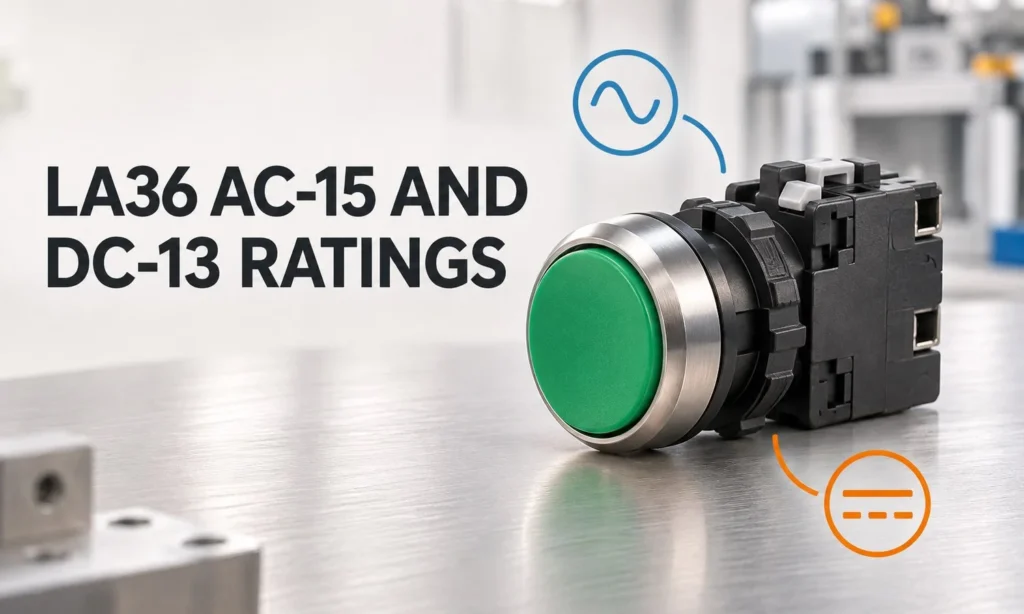
YIJIA’s LA36A product page demonstrates this clearly. Its switch-rating table separates AC-15 and DC-13 duties and provides different rows for resistive and inductive loads at different voltages. The table should be read by condition, not reduced to one headline current value.
Start with the Actual Circuit
Identify what the contact will switch. Typical control-circuit duties may include a PLC input, relay coil, contactor coil, signal circuit or another device. Each presents a different electrical condition.
Record:
AC or DC.
Operating voltage.
Normal operating current.
Load type.
Starting, inrush or transient behavior where relevant.
Expected switching frequency.
Without these details, a supplier cannot reliably match the application to the correct row of a rating table.
Do Not Confuse Thermal Current with Switching Capacity
The LA36A page publishes a thermal current value as well as rated operating currents. These figures serve different purposes. A thermal current figure should not be treated as permission to switch that same current under every voltage and load condition.
The applicable operating rating depends on the stated duty. A contact switching a DC inductive load, for example, should be checked against the corresponding DC and inductive-load information rather than a resistive-load or thermal-current figure.
Why Inductive Loads Need Separate Attention
Coils and other inductive loads store energy. When the contact opens, that stored energy can create electrical stress. This is why a rating table may show different permitted values for resistive and inductive loads.
The buyer should describe the actual device being switched instead of writing only “control load.” If the load is a relay or contactor coil, provide its supply voltage and relevant coil information. The circuit designer should also determine whether suppression is required and how that suppression affects the complete control system.
AC and DC Are Not Interchangeable
Contact behavior differs between AC and DC switching. The LA36A page therefore separates AC-15 and DC-13 data. A value listed for one category should not be copied into the other.
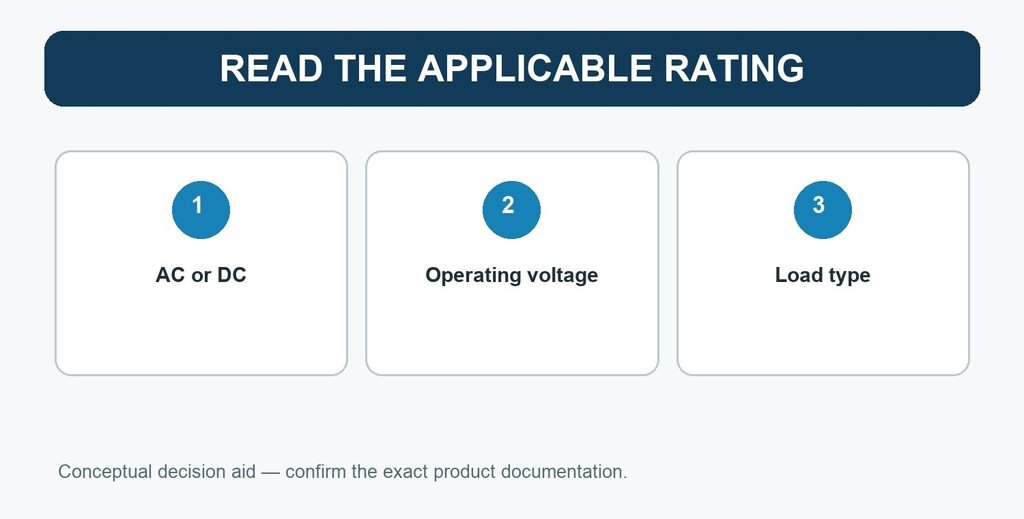
Conceptual decision flow; confirm the exact model documentation.
When reviewing the table:
1. Select AC or DC.
2. Select the actual operating voltage.
3. Select resistive or inductive duty.
4. Compare the required current with the applicable listed value.
5. Confirm the exact complete model with the supplier.
If the application condition is not represented clearly, request clarification rather than estimating from another row.
Consider an Interface Relay
A push button often works best as a control device rather than a direct power-switching component. If the intended load exceeds the applicable contact duty, has significant inrush or requires electrical separation, the system designer may use an interface relay or another properly selected switching device.
This does not remove the need to rate the push button. It changes the load seen by the button contact, so both the button circuit and the interface device must be specified.
Read Each Rating in Its Stated Context
A rating table is a set of conditional values. The number in one cell applies to the voltage, current type and load category represented by that row and column. Moving the value to another condition removes the context that makes it useful.
When preparing a quotation request, identify the exact condition rather than writing “10 A button” or another single-number description. A buyer should be able to point to the applicable row after the proposed model is confirmed.
If the required duty falls between listed conditions or uses a different load, ask for clarification. Do not interpolate a value or choose the nearest higher number without engineering support. The product page is a selection source, not permission to invent an unlisted operating point.
Distinguish Operating Current from Inrush
Some loads draw a higher current during energization than during steady operation. A nameplate or system summary may show only the running current, which is not always enough for contact selection.
Ask for the load’s starting or inrush information when relevant. This is particularly important when a control contact energizes a coil, lamp or another device whose initial condition differs from its steady state. The complete switching duty should be reviewed rather than comparing only normal current with a table value.
Where the button operates an interface relay, the push button contact sees the relay coil rather than the final machine load. The relay itself must then be selected for the downstream duty. Keep those two selection steps separate in the documentation.
Consider Switching Frequency and Service Conditions
Electrical life depends on the stated test conditions. A circuit that switches frequently can accumulate electrical operations much faster than one used only during setup or maintenance. The surrounding temperature, contamination and installation quality can also affect the complete assembly.
Do not convert a published life figure into a service-year promise without knowing the switching rate and applicable conditions. Instead, estimate the expected number of operations from the machine cycle and use the product data as one part of the maintenance review.
The LA36A page also distinguishes mechanical and electrical life. Mechanical life concerns the operating mechanism under its stated conditions, while electrical life includes the effect of switching the rated circuit. The lower relevant limit may control the maintenance decision.
Document the Selected Duty
After selecting the configuration, record the electrical duty in the approved parts list or engineering note. Include the supply, voltage, load description, contact arrangement and the rating category used for review.
This record helps when the same button is later proposed for a different machine. A component approved for one control circuit should not automatically be carried into another duty simply because the part number is familiar.
For repeat purchasing, compare any proposed replacement with the same recorded condition. If the supplier offers a different LA36 version, check both its complete code and its applicable rating data before approval.
Questions to Send with the RFQ
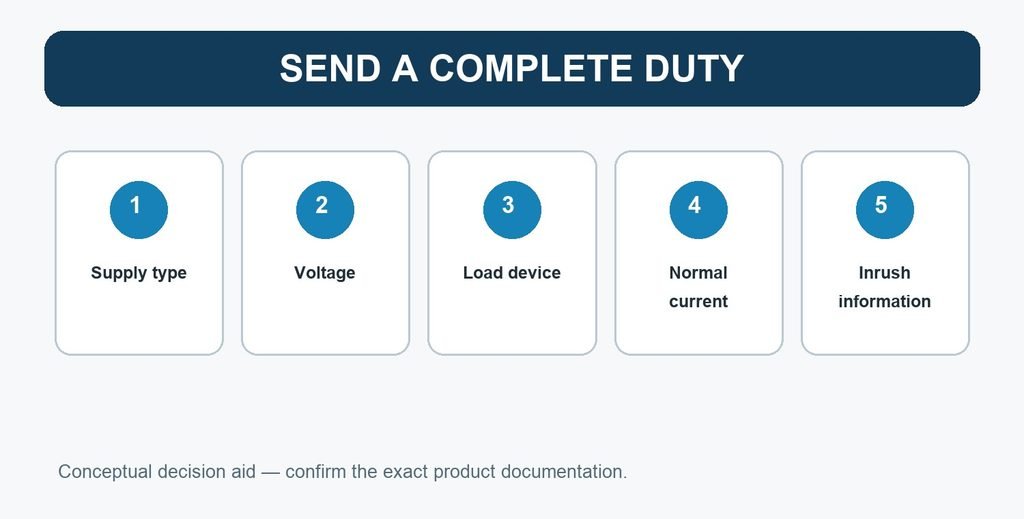
Instead of asking only for a price, send a short electrical-duty statement:
The contact will switch a specified device.
The circuit uses a stated AC or DC voltage.
Normal current and available inrush information are provided.
The load is identified as resistive, inductive or another defined type.
The required NO/NC arrangement and operating action are stated.
Ask the supplier to identify the applicable product rating and complete model. This creates a traceable selection decision and reduces the chance that sales and engineering are comparing different duties.
Review Protection Devices and Circuit Consequences
The contact rating is one part of the complete circuit. The control designer should also review the circuit protection, conductor selection, suppression components and the consequences of a contact that fails open or closed. A button that is electrically suitable under normal conditions may still be inappropriate if the complete control architecture does not handle the required failure behavior.
This review is application-specific. The article should not prescribe a fuse, suppression device or safety arrangement without the full circuit and applicable requirements. Instead, provide the system designer with the selected LA36 data and the actual load information.
When a contact is used in a safety-related function, a general product rating table is not sufficient evidence of suitability. The equipment assessment must address the required architecture, diagnostics and applicable standards using confirmed product documentation.
For ordinary control functions, keep the same discipline: identify the duty, select the applicable rating, confirm the model and document the decision. This avoids using a familiar component outside the conditions originally reviewed.
Recheck When the Load Changes
A later machine revision may replace a relay, contactor, lamp or controller input. Even if the push button remains physically unchanged, its electrical duty may have changed. Reopen the rating review whenever the connected device or supply changes.
Do not rely on the fact that the previous circuit worked. Compare the new voltage, current and load behavior with the applicable LA36 information, then update the drawing and parts approval if necessary.
Procurement Checklist
Question
Required Information
Supply
AC or DC and operating voltage
Load
PLC input, coil, lamp or other device
Load behavior
Resistive, inductive or another defined condition
Current
Normal current and relevant inrush information
Contacts
Required NO/NC arrangement
Product
Complete LA36 model and applicable rating row
Conceptual procurement checklist; not a product test or installation drawing.
FAQ
Can I use the highest current shown on the page for every LA36 application?
No. Use the value that matches the voltage, AC or DC category and load type. Do not replace the applicable operating rating with a thermal-current figure.
Why is the inductive-load rating different?
An inductive load can create additional stress when the circuit opens. The applicable product rating must be checked under the intended duty.
Is a PLC input an inductive load?
Do not classify it from the name alone. Use the PLC input specification and confirm the required minimum switching conditions for the selected contact.
When should an interface relay be considered?
Consider one when the button should carry only a control signal, when the load duty is unsuitable for direct switching or when the system requires another contact arrangement or separation. The final circuit should be reviewed by the system designer.
Discuss Your Requirements
Provide the load device, AC or DC voltage, operating current, load behavior, required contact arrangement and quantity. YIJIA can then identify the applicable LA36 product information for review.
Yijia High Ring lamp stainless steel 5-pins metal button YJ-GQ16BH-11E/N, YJ-GQ16BH-11EZ/NInstallation dimensions: φ16MMLamp type: High Ring lampRated voltage and current: 250VAC 5AOperation: momentary, maintainedLED color: Red Green Blue Yellow WhiteLED Contact: 1NO1NC(5pins) / 2NO2NC(8pins)LED voltage: 1.8V、3V、6V、12V、24V、36V、48V、110V、220Vshell material: Brass-clad Chromium / Stainless steel / Aluminum alloy plating Request A Quote See More The YJ-GQ16BH series presents […]
When you design or source components for vehicles, you need switches that can survive vibration, dust, moisture and constant use. YJ metal push button switches are well‑suited for many automotive applications, from engine start buttons to light control, as long as you select the proper rating, sealing and installation method for your project. Why Automotive […]
What is a Door Limit Switch Door Limit Switch, also known as door limit switch, is an electrical switch device used to detect the door position. When the door opens or closes to a predetermined position, the limit switch triggers the circuit action, thereby realizing the monitoring and control of the door status. It is usually […]
We use cookies to enhance your browsing experience, serve personalised ads or content, and analyse our traffic. By clicking "Accept All", you consent to our use of cookies.