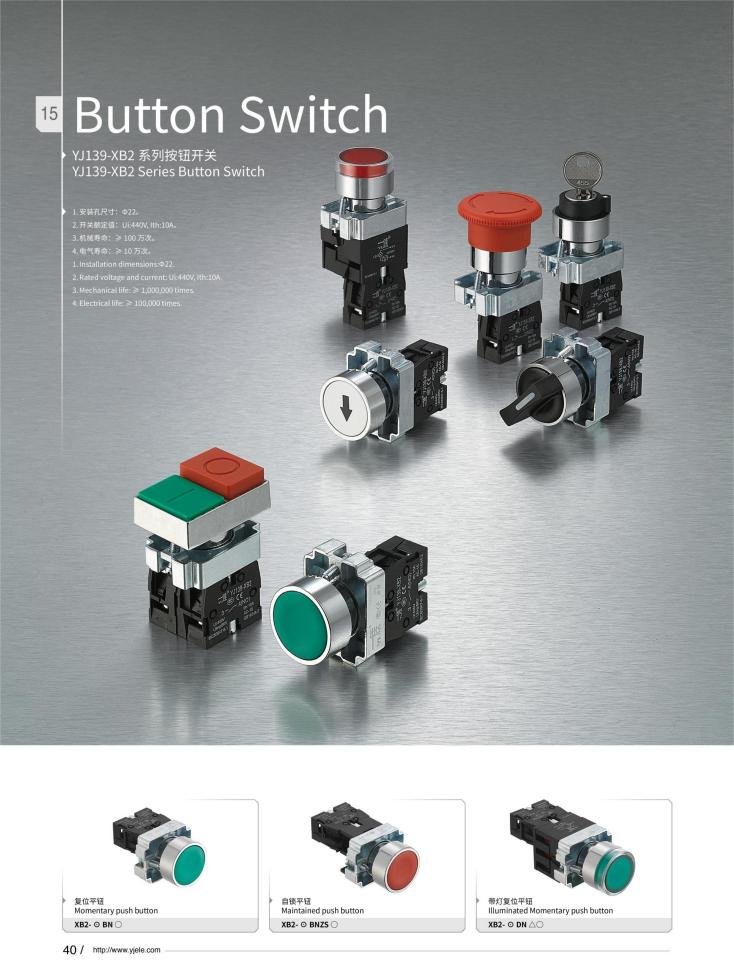
In the world of industrial controls, “push button switch” is a familiar term. But for procurement teams, maintenance engineers, and design leads, the question often arises: are momentary push button switche a category within metal push button switche? The short answer is yes — momentary switches are a major subcategory of metal push button switches. They are embraced for applications that require a temporary, return-to-normal action, such as emergency stops, start buttons, doorbells, and pulse-driven controls.
Understanding this relationship helps you compare products accurately, specify exact electrical and environmental requirements, and avoid misorders that disrupt production. If you’re evaluating a supplier for a new line of metal push button switches, this article offers a clear framework for selecting momentary variants, and it includes actionable steps to move from specification to sample requests or orders. Before diving deeper, consider: what is your most common use case? A quick mental checklist helps you decide whether momentary action best serves your safety, control, or signaling needs.
What is a Momentary Push Button Switche?
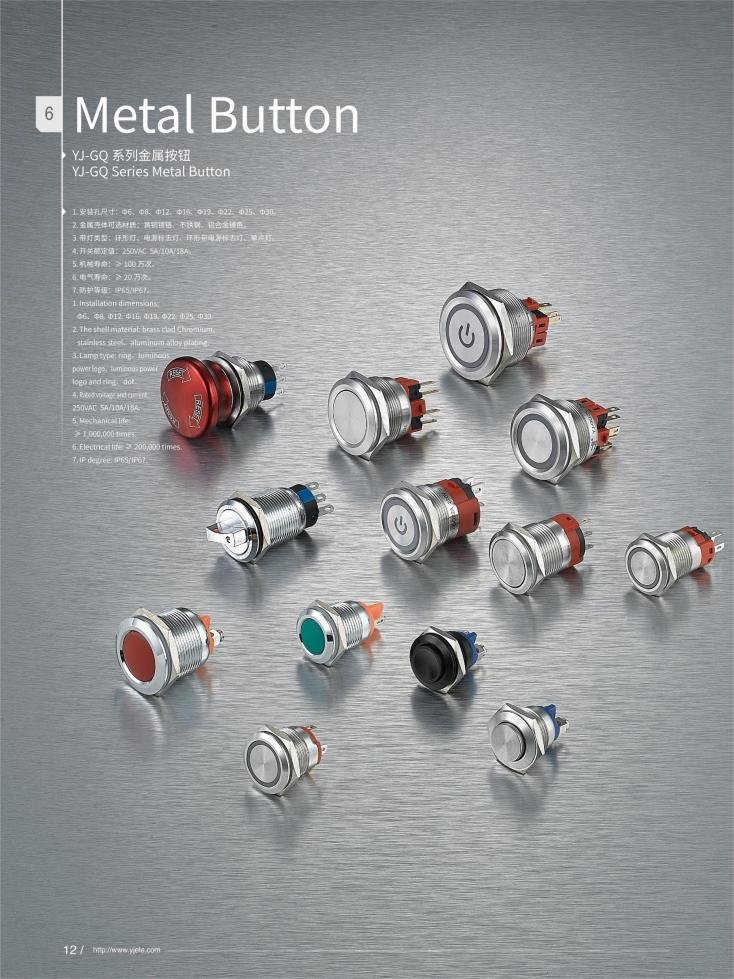
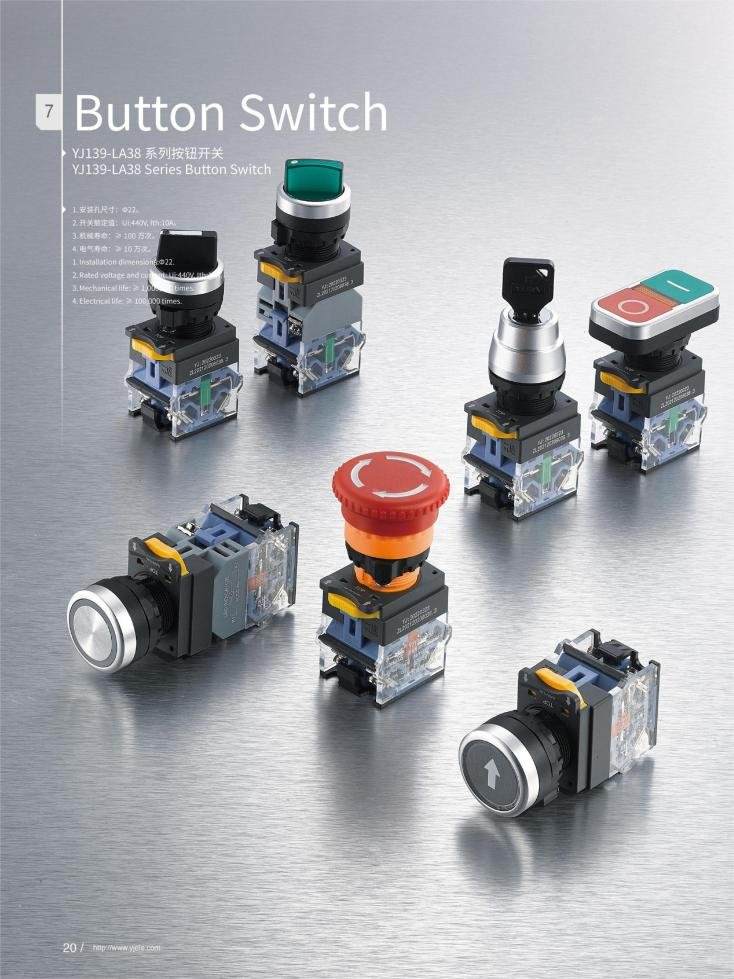
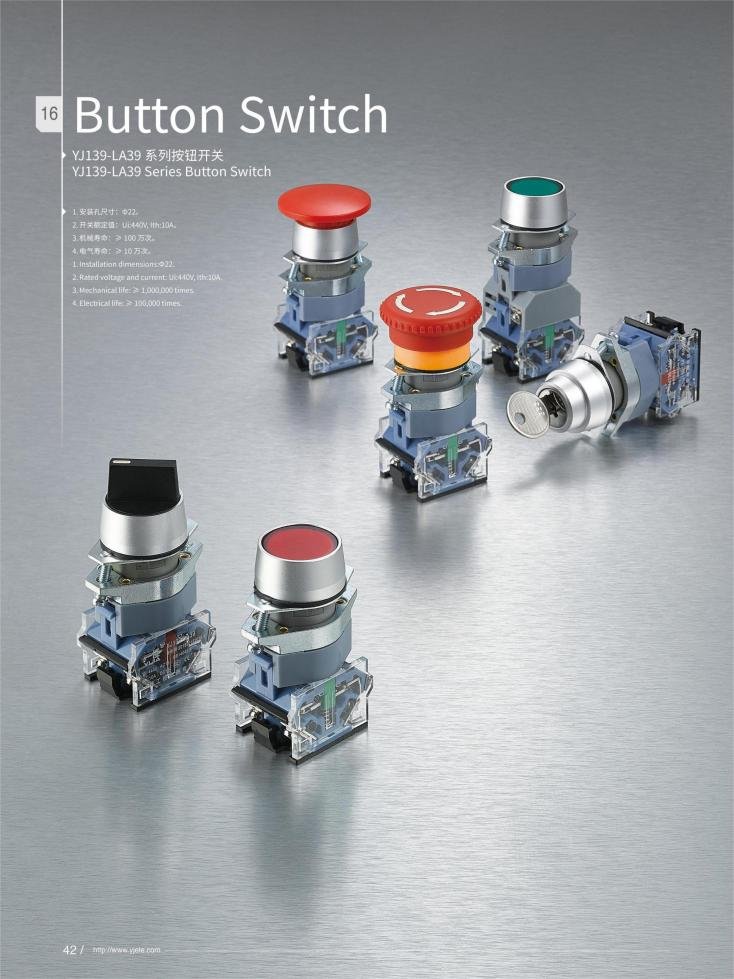
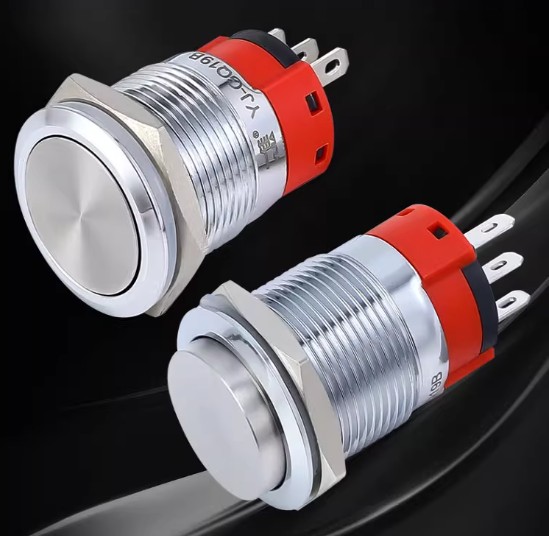
YJ-GQ22B Metal push button switches are rugged, often IP-rated devices designed for reliable actuation in demanding environments. They combine a durable metallic actuator or housing with electrical contacts that can be configured for various circuits. In practice, metal push button switches are typically categorized by two dimensions: actuation type (momentary vs. latching) and contact configuration (NO/NC, SPST, SPDT, etc.).
The metal construction adds durability, heat resistance, and wear longevity, making these devices well-suited for factory floors, machines, and control panels. In short, the metal push button switch family includes both momentary and non-momentary (latching) variants, with momentary being a prominent and widely used subcategory. If you’re mapping your bill of materials for a new panel or retrofitting an older line, knowing this relationship saves time and reduces the risk of incompatible parts.

How Momentary Push Button Switche Work (Spring Mechanism)
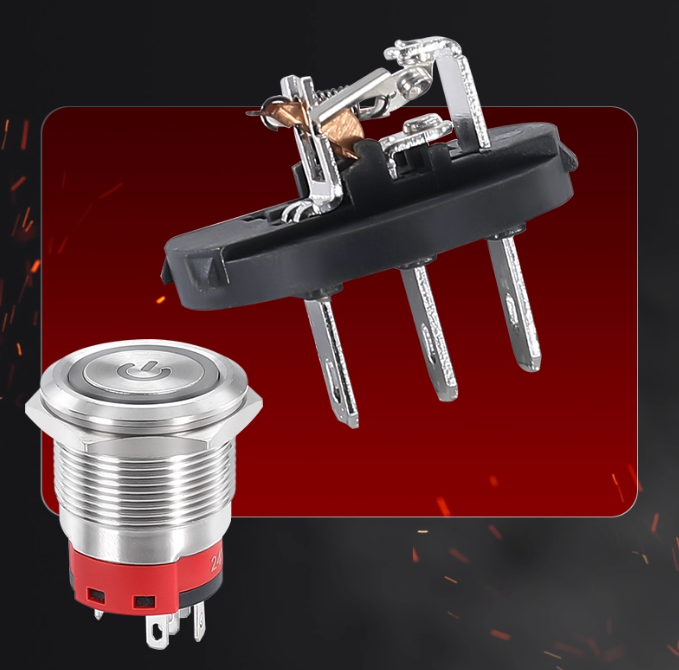
Momentary switches are spring-loaded devices. When the actuator is pressed, the internal contacts close or open, completing or breaking a circuit. Upon release, the spring returns the actuator to its resting position, and the circuit reverts to its default state. This simple mechanical principle underpins reliable tactile feedback and predictable reset behavior, which are crucial for operators who rely on immediate confirmation that a control has returned to its safe state.
For procurement teams, the predictability translates into consistent performance across batches and easier compliance with safety standards. In practice, you’ll encounter momentary metal push button switches in applications that require a press-and-release action, such as doorbells, start buttons, momentary stop functions in automation cycles, or pulse-triggered inputs.
Types of Momentary Metal Push Button Switche
NO vs NC configurations: Normally Open (NO) switches make the circuit when pressed; Normally Closed (NC) switches break or make the circuit when pressed, depending on the design. The NO/NC choice affects wiring, logic, and safety interlocks.
SPST, SPDT variants: Single Pole Single Throw (SPST) handles a single path; Single Pole Double Throw (SPDT) adds a secondary path, enabling simple control of alternate circuits.
Environmental variants: Waterproof/IP-rated models exist for washdown or outdoor use, and dust-resistant variants suit harsh factory environments.
Material and finish: Metal bodies are common, with finishes like nickel, brass, or stainless steel for corrosion resistance and durability.
actuators and travel: Actuator shape (round, square, rectangular) and travel distance influence tactile feel and actuation force.
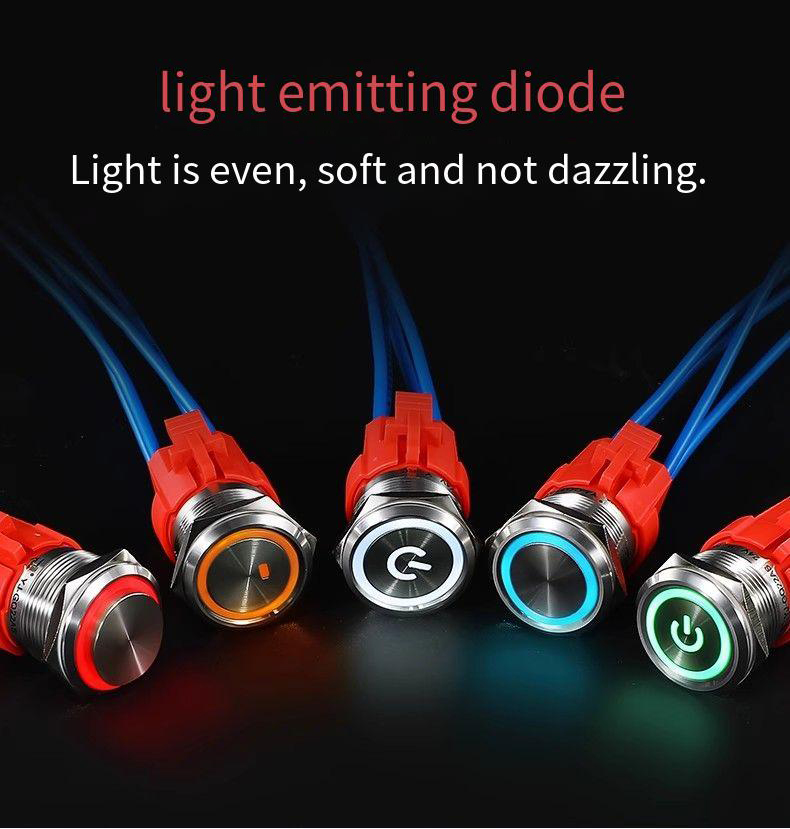
Customization options:_LED illumination, pre-wiring, and different contact materials are often available to meet your exact needs.
Technical Specifications & Metal Contact Materials
- Electrical ratings: voltage, current, and allowable duty cycles must align with your control circuit and safety requirements.
- Contact materials: silver-nickel alloys and other plated contacts offer low resistance and long life under mixed loads.
- Dielectric strength and insulation: appropriate ratings minimize arcing and improve reliability in industrial settings.
- Mechanical life: many metal momentary switches are rated for millions of cycles, but actual life depends on load type and duty cycle.
- Environmental sealing: IP ratings indicate protection against water ingress and dust, crucial for panel-mounted or exposed installations.
Key Differences Momentary vs. Latching Switches
Momentary Push Button Switche and latching are the two primary actuation modes for metal push button switches. Here’s a practical comparison to help you select the right type for your panel.
Operation
- Momentary: activates only while pressed; returns to the resting state when released.
- Latching: remains in the last state after being pressed; requires a second action to toggle back.
Internal mechanism
- Momentary: uses a spring to reset the actuator.
- Latching: includes a locking or mechanical bistable mechanism to hold position.
State behavior
- Momentary: no permanent state change (unless wired for log/flag detection externally).
- Latching: maintains state, often used for power or mode selection.
Applications
- Momentary: start buttons, reset/testing, emergency stop (where release is a deliberate action following the event).
- Latching: power on/off, memory/function selection, door interlocks with a fixed state.
User experience
- Momentary: quick, tactile press; leaves no after-state.
- Latching: deliberate press to change state; provides a durable control point for repeated use.
Why this distinction matters in practice
Control logic compatibility: Many PLCs and HMIs expect a momentary input for a start/reset action, with the downstream logic using edge detection to trigger events.
Safety and reliability: Momentary switches help ensure operators actively confirm actions by releasing after pressing, reducing accidental long holds. Latching switches are valuable when a continuous state is required, such as a main power toggle.
Wiring implications: NO/NC selection and the use of SPST vs SPDT affect how wiring diagrams are drawn and how interlocks or safety circuits are implemented.
Lifecycle considerations: In high-cycle environments, the mechanical life of the switch and its contact materials determine maintenance schedules and replacement intervals.
Need reliable, durable metal Momentary push button switch?
Contact us now for expert advice and tailored solutions!
Real-World Applications of Momentary Push Button Switche
Industrial & Manufacturing Applications
Emergency stops, start/stop controls, jog functions, and pulse triggers on automation lines.
Operator panels and machine control stations where a reset or pulse is needed without keeping the circuit energized.
Maintenance/test stations where a temporary signal is required to perform a diagnostic or calibration cycle.
Example prompts to buyers: “If you need a quick pulse to start an automated cycle, a NO momentary switch is often ideal; would you like a pre-wired sample to test with your PLC?” This is a natural segue to a sample request or quote.
Automotive and Heavy Equipment
Start/stop controls, diagnostic buttons, and maintenance resets, designed to withstand vibration and extreme conditions.
Sealed or ruggedized variants protect against dust, water, and oils common in workshop and field environments.
Consumer and Commercial Uses
Elevator call buttons, door interlocks, or control panels in shared spaces where durable metal buttons convey reliability and a premium feel.
Medical devices and laboratory equipment requiring precise, momentary actuations in controlled environments.
Application case snippet
Case: An equipment maker integrated NO momentary metal push button switches on a conveyor gate. The team used SPDT variants for fault signaling and a simple PLC input. The momentary action ensured that the gate state returned to safe idle after each cycle, reducing risk of stuck states and accidental energization. A comparison test with a latching variant showed slightly higher wear on the latching mechanism under frequent start-stop cycles, supporting the decision to choose momentary for this application.
Momentary NO vs NC in industrial panels
-NO momentary: energizes on press; ideal for start/pulse circuits.
-NC momentary: de-energizes on press; useful in fail-safe interlocks when a pressed state should break the circuit.
-Notes: The choice depends on the control strategy, safety interlock requirements, and PLC input configuration.
Why Choose Momentary Push Button Switche? Benefits and Advantages
- Safety-oriented design: Release-to-reset behavior supports explicit operator confirmation.
- Precise control: Short actuation paths and tactile feedback improve user confidence.
- Durability: Metal housings resist shock, vibration, and harsh environments.
- Customization: A wide range of actuator shapes, IP ratings, and pre-wiring options lowers integration friction.
- Cost efficiency: Simpler mechanisms and common configurations can reduce unit cost and lead times.
- Operational simplicity: Easy to wire and integrate with standard control panels and PLCs.
- Customer-friendly note: If you’re unsure about the right type, a quick consult with our switch specialists can save weeks of supply-chain friction.
How to Choose the Right Momentary Push Button Switche
Key Factors to Consider
Electrical ratings: match voltage/current with the machine’s control circuit; consider inrush and load type.
NO/NC configuration: Decide based on how your circuit should behave on press vs release.
Environmental conditions: IP rating, sealing, and material finish matter in damp or dusty environments.
Mechanical life: Confirm expected cycles under your real use-case and whether pre-wiring or cable length matters.
Actuator style and travel: Choose a shape and stroke that suits the operator’s reach and feedback preference.
Customization: LED indicators, coatings, and pre-wired harnesses can streamline panel assembly.
Common Mistakes to Avoid
Overlooking environmental sealing, leading to corrosion or ingress.
Misjudging the NO/NC wiring logic, causing false triggers or safety concerns.
Underestimating required actuation force, resulting in operator fatigue or mis-trips.
Choosing a non-suitable mounting footprint or cut-out size, complicating panel design.
Quick decision-flow for panel builders
- Step 1: List the control function (start, stop, reset, interlock).
- Step 2: Choose momentary vs. latching based on whether a state must be maintained.
- Step 3: Determine NO/NC and SPST/SPDT to fit the logic circuit.
- Step 4: Assess environmental rating and actuator style.
- Step 5: Request a pre-qualified sample with your PLC or control system for validation.
Momentary Push Button Switches vs. Other Switch Categories
A side-by-side view helps avoid confusion during procurement.
Momentary vs Latching
- Momentary: active only while pressed; returns to idle.
- Latching: stays in last position after press; requires toggle to change state.
Momentary vs Tactile/Keyboard Switches
- Tactile switches are often smaller; momentary metal push buttons provide ruggedness and higher current ratings.
Illuminated or Momentary vs Waterproof variants
- Illuminated models add LED indicators; waterproof variants shield against moisture ingress.
- Practical takeaway: For control panels in industrial settings, momentary metal push button switches offer a balance of robust construction, predictable behavior, and relatively simple wiring.
Momentary Push Button Switche represent a core subcategory within metal push button switch. They deliver precise, temporary actuation that aligns with many industrial control needs. When compared with latching variants, they offer straightforward tactile feedback, simplified wiring, and robust performance in high-cycle environments.
For panel builders and OEMs, the right momentary model can streamline assembly, reduce downtime, and improve operator confidence. If you’re designing a new control panel or upgrading an older system, coordinating with a knowledgeable supplier can help you select the ideal momentary metal push button switch, obtain samples, and finalize specifications quickly.
FAQs
A push button switch is a broad category. A momentary push button switch is a subset of that category, activated only when pressed and returning to the normal state when released. Many push button switches are momentary, but not all are. This distinction matters for your wiring and control logic.
It means the switch conducts only while the actuator is held down. Release ends the conduction. For safety-related controls, this behavior ensures the operator must maintain intent to energize the circuit.
Yes. Many momentary switches are available with waterproof or IP-rated housings suitable for washdown, outdoor, and harsh environments.
NO closes the circuit when pressed; NC opens or remains closed when pressed, depending on wiring and circuit design. Choose based on whether you want a pulse that starts a process or a stop that interrupts it.
Lifespan varies by quality and duty cycle. High-quality metal switches can provide millions of cycles under normal use, but consult datasheets for exact figures and plan preventive replacement accordingly.
Industrial automation, manufacturing equipment, automotive controls, medical devices, and some aerospace applications—where rugged metal construction and reliable momentary action are valued.
They can be used for certain emergency stop configurations, especially where a momentary reset or activation is required, but many emergency stops use specialized interlock or safety-rated devices. Always verify with safety standards and your risk assessment.
Wiring depends on NO/NC configuration and circuit requirements. Start by identifying the switch type, then connect to the appropriate input on your PLC or controller, and incorporate any required safety interlocks.
For panel mounting, confirm mount hole size, panel cut-out, actuator diameter, IP rating, and termination type (solder, quick-connect, or pigtail). For PCB mounting, confirm footprint, actuator clearance, and suitability for surface-mount or through-hole assembly.

Want a hands-on recommendation?
Contact our Metal Momentary Push Button Switch experts to discuss NO/NC configurations, IP ratings, actuator styles, and pre-wired options.