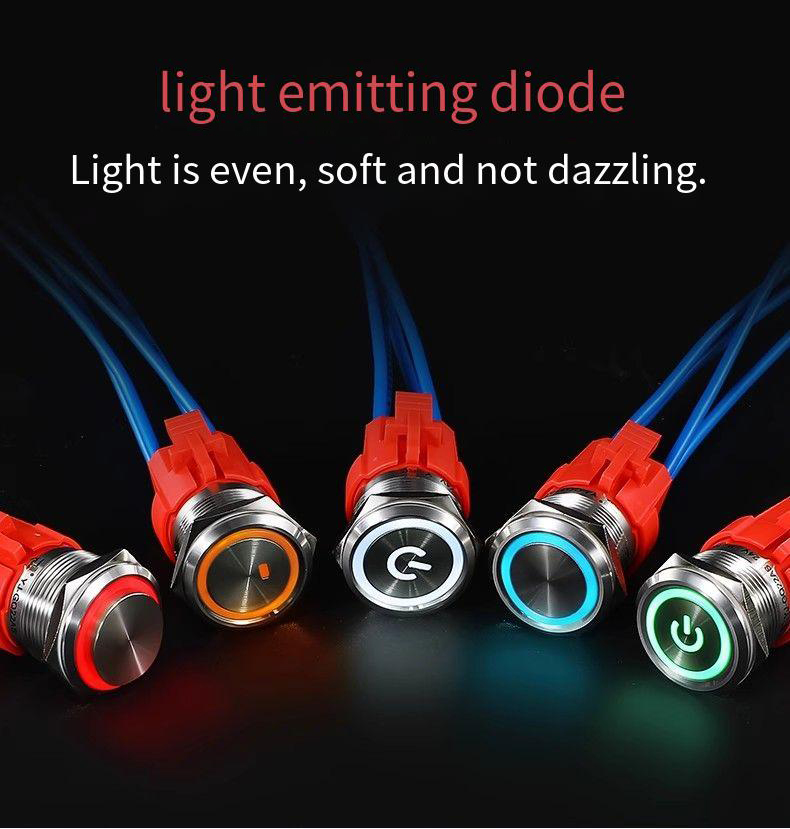
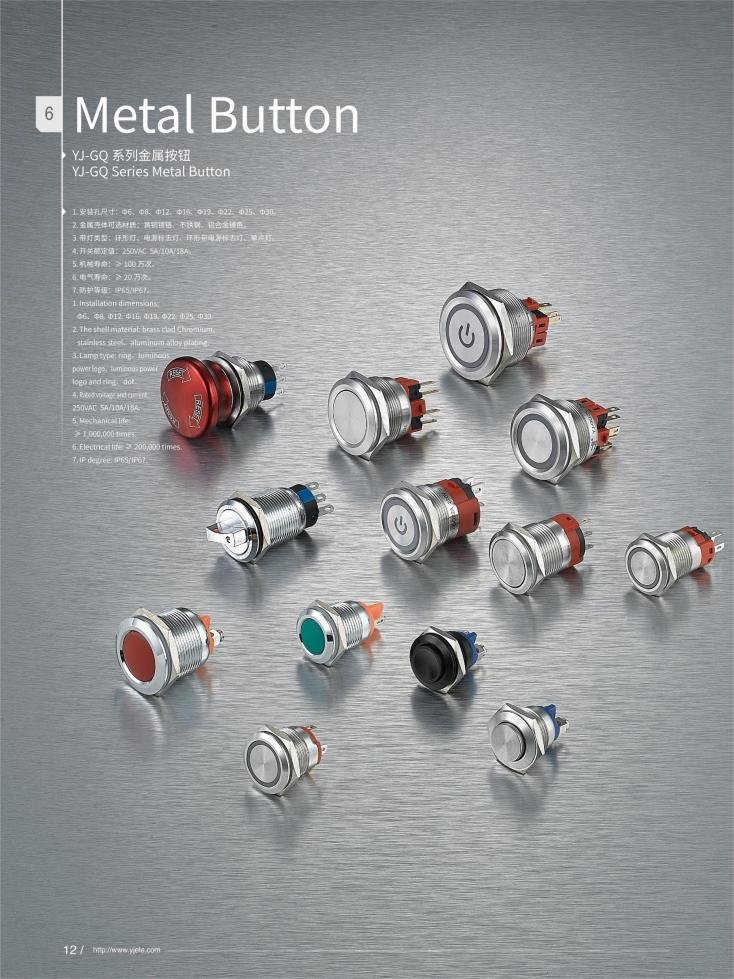
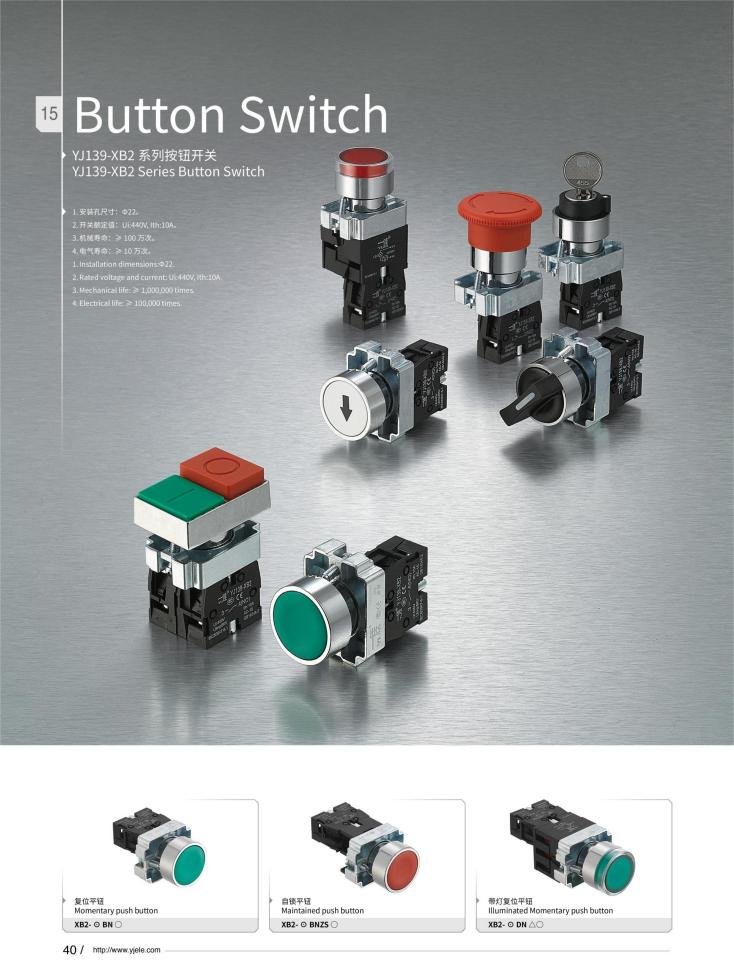
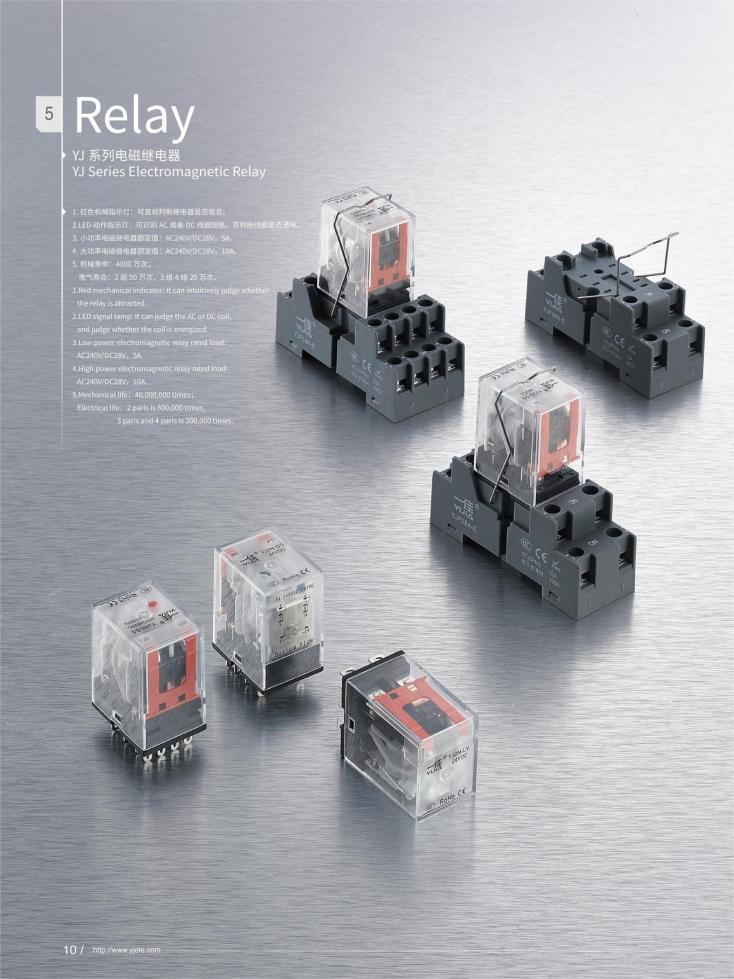
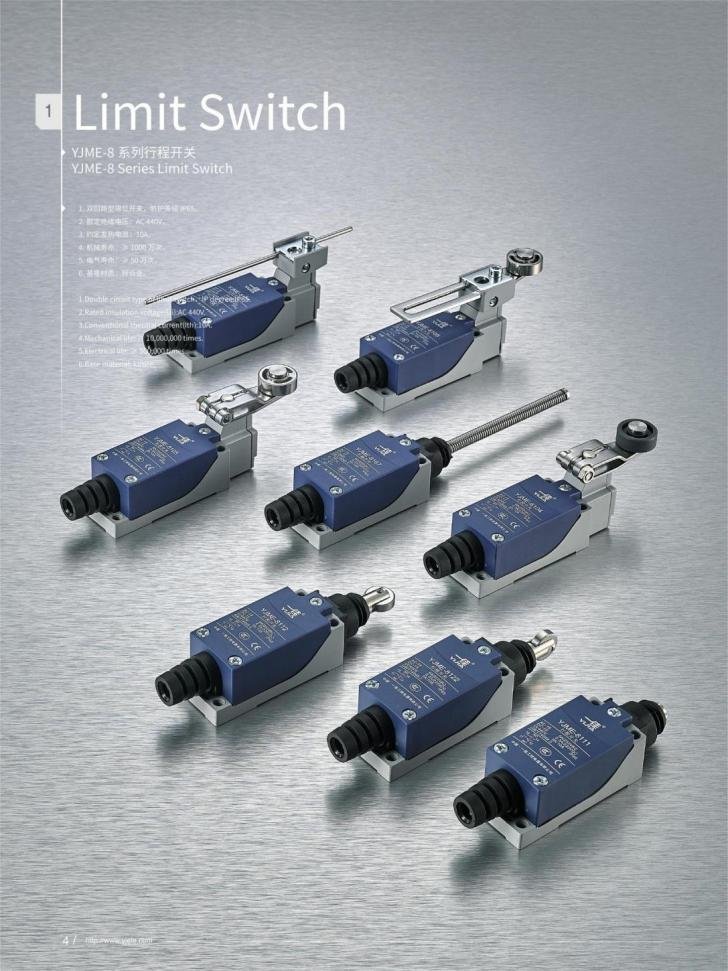
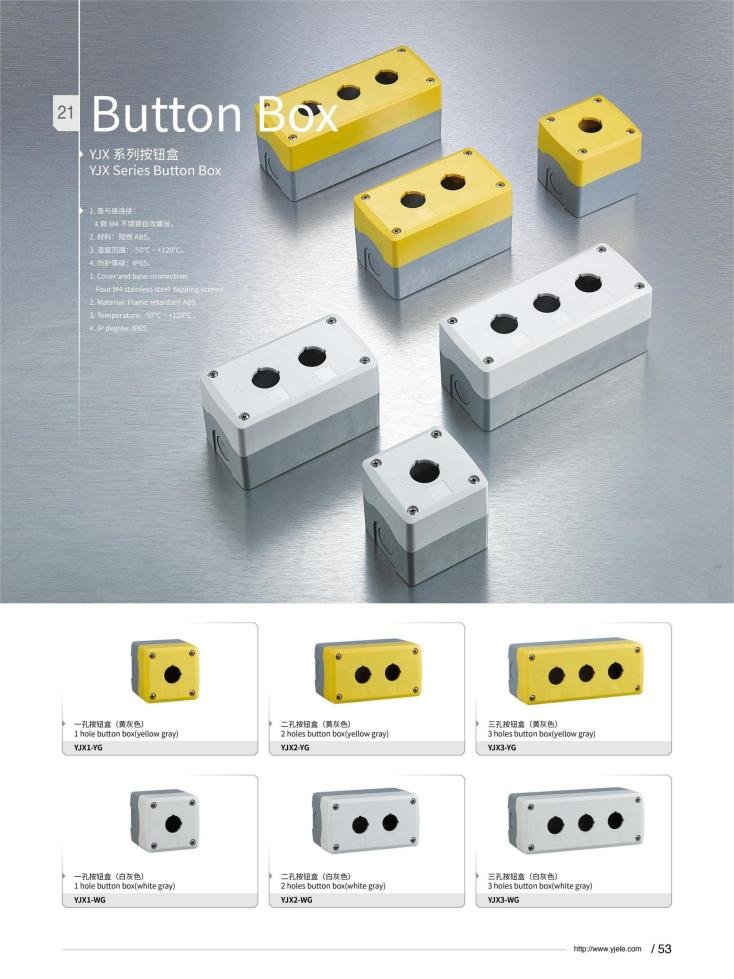
When you choose a 110V / 220V illuminated push button switch, you’re not just picking a pretty glowing button. You’re deciding how operators see status, how safely they react in an emergency, and how long your control panel runs without complaints from the production line. As an industrial buyer or engineer, you care about clear status indication, universal voltage options, and robust construction that survives dust, oil, and the occasional “hammer-finger” from maintenance. A model like the YJ-GQ22B metal push button switch is built exactly for that kind of real-world abuse and still keeps your panel looking professional and modern.
In this article, I’ll walk you through what to look for in a 110V / 220V illuminated push button switch, how YJ-GQ22B fits into typical industrial projects, and which specs you should include in your RFQ so your supplier doesn’t guess (because when suppliers guess, projects get delays).
What Is a 110V / 220V Illuminated Push Button Switch?
A YJ-GQ22B 110V / 220V illuminated push button switch is a panel-mounted control device that combines mechanical switching with a built‑in LED indicator that can operate directly at standard AC or DC control voltages such as 110V or 220V. In simple terms, it is a push button that lights up at the same voltage level as your control circuit, so you do not need extra resistors, external pilots, or complicated wiring tricks.
This kind of switch is widely used in industrial control panels, machinery start‑stop stations, elevators, automation equipment, and power distribution cabinets where operators must quickly see whether a function is active or a circuit is energized. For B2B buyers, the illuminated function is not just cosmetic; it is a low‑cost way to improve ergonomics and reduce mis‑operations in noisy plant environments.
To make it more concrete, think of a green 22 mm metal push button with a ring LED: when the circuit is energized, the ring glows at 220V AC, telling the operator “this motor is running” without needing a separate pilot lamp.

Key characteristics at a glance
If you already know you need a 22 mm metal push button with 110V or 220V LED, you’re basically in the right neighborhood for a model like YJ-GQ22B.
When you’re ready, you can send an inquiry with quantity, voltage (110V or 220V), LED color, and contact type so your supplier can recommend the exact variant quickly.
Why 110V / 220V Illumination Matters in Industrial Panels
You might ask: “Why not just use a 24V LED push button and be done with it?” Good question. In many factories, the control voltage is indeed 24V DC, but in plenty of older or heavy‑duty systems, 110V or 220V AC is still standard for control circuits and indicator lamps. Using 110V / 220V illuminated push button switches lets you keep the design simple and compatible with your existing infrastructure.
From a B2B perspective, a 110V / 220V illuminated push button switch brings a few key benefits:
- Direct connection to line or control voltage
The LED unit is designed for 110V or 220V, so you do not need extra series resistors or step‑down modules. This simplifies wiring and BOM management, especially when you deploy hundreds of panels. - Clear status indication
The illuminated ring or dot gives immediate feedback to operators: on/off, fault, ready, or emergency. Different LED colors (red, green, yellow, blue, white) help you standardize your HMI semantics across machines. - Reduced component count
In many designs, one illuminated push button replaces a separate push button plus pilot light, saving panel space and labor time for wiring. - Better design for harsh environments
Many 110V / 220V illuminated push button switches in metal housings are rated IP65 or IP67, with IK10 impact resistance, making them suitable for outdoor panels, machinery exposed to dust and dripping oil, or public‑facing applications like kiosks.

Value overview for B2B buyers
If your management loves “cost down” but operations hate unplanned downtime, choosing a robust 110V / 220V illuminated push button switch is one of those rare win‑win decisions.
YJ-GQ22B: A Practical 22 mm Metal Solution
Now let’s talk specifically about YJ-GQ22B metal push button switch, which is a short‑type 22 mm metal push button widely used as a compact illuminated control in industrial projects. While different OEMs may have their own internal coding, GQ22B‑type devices generally share some common hardware concepts.
For industrial buyers, the YJ-GQ22B series stands out because it combines a 22 mm mounting size, metal head, and LED indication in a short body design that fits shallow enclosures. That means easier retrofits in crowded control boxes and nicer aesthetics on modern panels.
Core technical features of YJ-GQ22B‑type metal push button
You’ll notice that the 110V / 220V illuminated push button switch requirement is easily satisfied by the LED voltage variants in these 22 mm metal series. So, in your RFQ or BOM, you simply specify something like:
- Model: YJ-GQ22B
- Mounting size: 22 mm
- Operation: momentary (or latching)
- Contacts: 1NO (or 1NO1NC)
- LED color: green
- LED voltage: 220V AC
And just like that, the supplier knows exactly which 110V / 220V illuminated push button switch module to configure for you.
If you’re currently finalizing a new panel design or mass production order, feel free to prepare your specification and send an RFQ with projected annual volume—this helps your supplier optimize pricing and production slots for YJ-GQ22B‑type devices.
Typical Applications and Use Scenarios
So where do 110V / 220V illuminated push button switches and YJ-GQ22B‑type 22 mm metal buttons actually work best? Let’s look at a few realistic B2B use cases.
In many factories, these switches serve as start/stop, reset, and mode selection controls in:
- Motor control panels
- HVAC systems
- Packaging and labeling machines
- Elevators and lifting equipment
- Power distribution and generator control panels
Because the LED is directly rated for 110V or 220V, integrators can wire it across the same control signal used to drive a contactor, relay, or PLC input, making status visualization very straightforward. And if your equipment is exported worldwide, using 110V / 220V LED modules means you can adapt to different regional control voltages without redesigning the whole panel.
Example application matrix
If you’re not sure whether to choose 24V DC or 110V / 220V LED versions for your project, think about where the control voltage lives today. If your existing design already uses 110V or 220V indicator lamps, an illuminated 110V / 220V push button switch is often the cleanest drop‑in upgrade.
How to Select the Right 110V / 220V Illuminated Push Button Switch
Now comes the shopping part. As a procurement professional or engineer, you don’t want to just search “110V / 220V illuminated push button switch” and hope for the best. There are several technical points that separate a good switch from a constant‑complaint generator.
I’ll break the selection into easy steps.
1. Confirm mounting size and panel space
Most YJ-GQ22B‑type devices use a 22 mm panel cut‑out, which is considered standard in industrial control panels. If you’re replacing old plastic 22 mm push buttons with metal illuminated ones, this is usually a direct swap.
- Check your drawing: 22 mm or another size?
- Check panel thickness: make sure the clamping range matches.

2. Choose operation type: momentary or latching
For start buttons, momentary (spring return) is common. For ON/OFF power functions, latching (self‑locking) can be more intuitive for operators.
- Momentary: Contact only stays changed while pressed.
- Latching: Push once to latch, push again to release.
YJ-GQ22B itself is typically short‑type and often configured as a momentary switch, while other GQ22 series variants also support latching depending on your requirement.
3. Define contact configuration and rating
Ask yourself: Do I need just one NO contact, or a combination of NO and NC? Many 22 mm metal switches offer 1NO or 1NO1NC, with Ith around 5A and Ui up to 250V.
- 1NO: Simple start command to contactor or PLC.
- 1NO1NC: Start/stop logic or feedback loops.
4. Specify LED color and voltage (110V / 220V)
This is the heart of the 110V / 220V illuminated push button switch topic. Make sure you specify:
- LED color: red, green, yellow, blue, white, etc.
- LED voltage: 110V AC, 220V AC, or AC/DC 110V/220V depending on design.
Different suppliers provide LED modules calibrated for specific voltages, so getting this right in your RFQ avoids mismatched brightness or premature LED failure.
5. Check protection level and materials
For harsh environments (dust, water splash, public use), metal push button switches with IP65–IP67 and IK10 rating are preferred. YJ-GQ22B‑type devices use metal front materials like stainless steel or chrome‑plated brass, plus PA bases, which gives good mechanical strength and corrosion resistance.
- IP65: Dust‑tight, protected against water jets.
- IP67: Can handle short‑term immersion under defined conditions.
Selection checklist table
If you’d like, you can share your panel drawing and I can list out a ready‑to‑send specification text for your purchasing team to copy into the next RFQ.
If you’re working on a new panel or upgrading existing machines and need a reliable 110V / 220V illuminated push button switch like YJ-GQ22B, you can prepare your specification (mounting hole, contact type, LED color, and LED voltage) and send an inquiry with your target quantity—this is the fastest way to get accurate pricing, samples, and lead time from your supplier.
FAQ
Usually no—you should match the LED voltage to the circuit voltage. Many 22 mm illuminated push button switches offer dedicated 110V or 220V LED modules, and using the wrong one can overdrive or under‑drive the LED. Always specify 110V or 220V clearly when ordering.
Yes, as long as the front protection rating is high enough (IP65–IP67) and the installation is done properly with a gasket. Metal anti‑vandal types with stainless steel bodies are particularly suitable for outdoor or public applications.
Quality GQ22‑series style products can reach mechanical lives of around 1,000,000 operations and electrical lives of 50,000 cycles at rated load. Actual life depends on load type, surge conditions, and how gently (or aggressively) operators press the button.
Electrically, the LED modules are designed for different working voltages, so a 24V LED module is not interchangeable with a 220V module. Functionally, 24V is common in low‑voltage control circuits, while 110V / 220V illuminated push button switches integrate more easily into mains‑level or legacy control circuits without extra power supplies.
Yes, the YJ-GQ22B metal push button switch with 22 mm mounting, short body, and optional LED voltages (including 110V / 220V) is well‑suited for OEM panels and retrofit projects. Its compact size and common cut‑out make it an easy replacement for older plastic push buttons in maintenance scenarios.