As a Metal Push Button Switch Manufacturer, I spend most of my days talking to buyers who need reliable, cost‑effective metal push button switches for industrial panels, control boxes, and OEM equipment. If you’re reading this, you’re probably asking three things: Which model fits your project, how do you wire it, and who supplies high‑quality metal push button switches?
This article is written for you, not for hobbyists. We’ll talk about real‑world specs, panel‑mount decisions, and how to interpret the kind of technical data sheets you actually see on products like YJ‑GQ12B and its family. And yes, we’ll also touch on a few “buying‑from‑China‑factory” quirks that matter to procurement teams.
Why metal push button switches matter more than you think
At first glance, a push button is just a button. In practice, it’s the first point of contact between your operator and your machine. If it fails, looks cheap, or feels mushy, that’s the only impression your customer will remember.
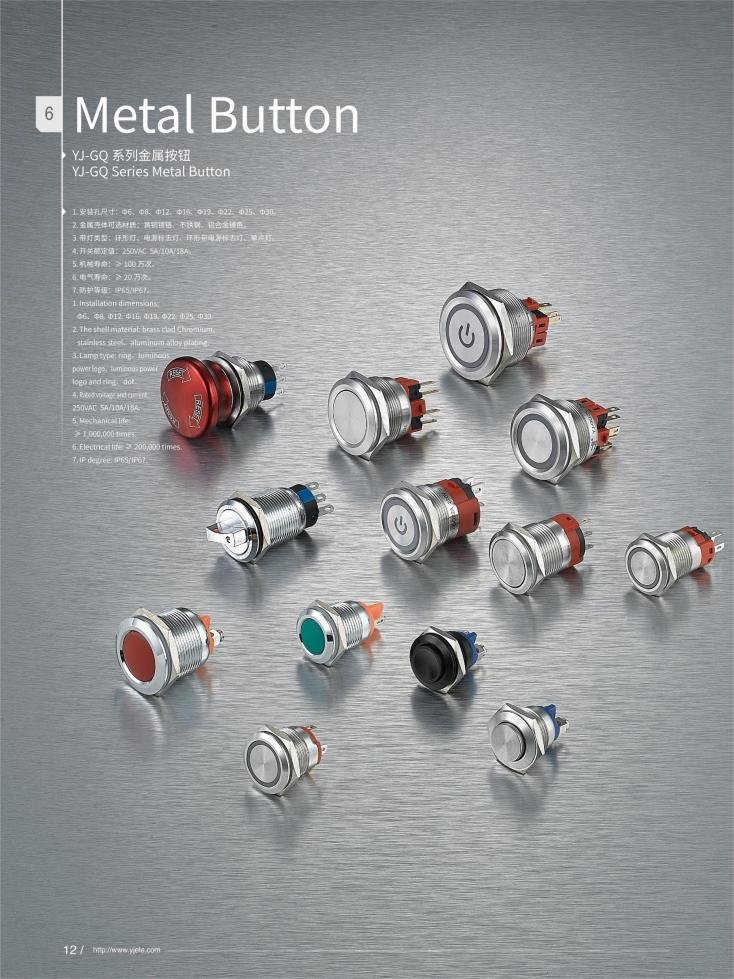
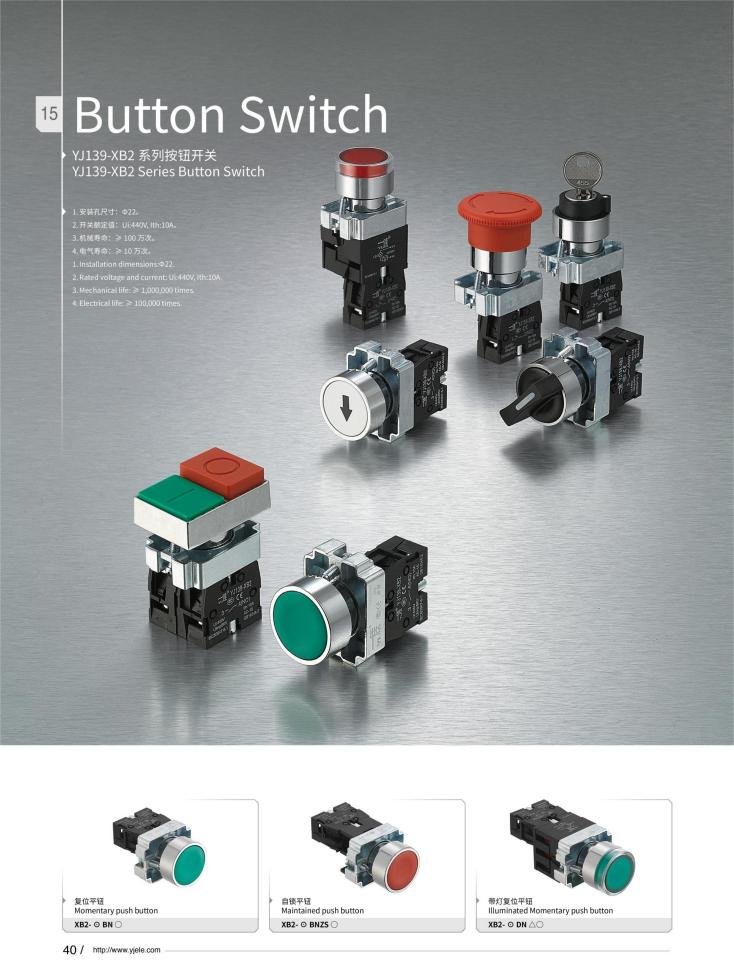
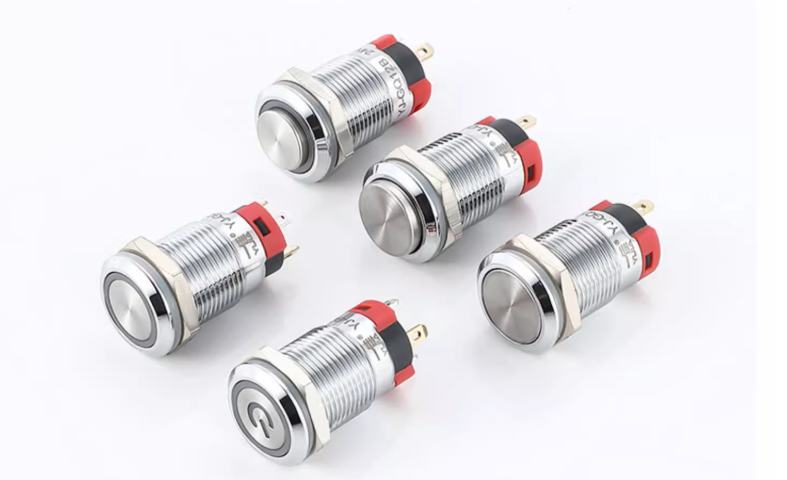
YJ Metal push button switches from a professional metal push button switch manufacturer are chosen for three main reasons: mechanical life, environmental resistance, and aesthetics. Many industrial panels use 12 mm, 16 mm, or 19 mm metal buttons because they fit standard cutouts and can be ordered in bulk.
YJ‑GQ12B‑type switches are a good example of compact, 12 mm metal pushers built for repeated use. They’re often used in control panels, medical devices, marine equipment, and even certain vending and kiosk systems. Being from a wholesale OEM push button switch supplier, coils like this can be customized for color, illumination, and IP rating, which is exactly what procurement teams care about when they’re doing a B‑end metal push button switch sourcing.
How to choose the right metal push button switch
Let’s flip this around: before you even ask “which model,” you should ask “which requirements?” Most serious buyers care about a few core things: panel cutout, mounting depth, current rating, lifetime, and protection class.
Here’s a quick checklist you can mentally tick off when you talk to a metal push button switch manufacturer:
- Panel cutout diameter (common: 12 mm, 16 mm, 19 mm, 22 mm)
- Mounting style (panel‑mount, snap‑in, threaded nut)
- Operation type (momentary vs latching)
- Contact configuration (1NO, 1NC, 1NO+1NC, etc.)
- Voltage and current rating (AC/DC, resistive vs inductive load)
- Mechanical and electrical life (cycles)
- Protection level (IP rating such as IP65 or IP67)
- Terminal style (screw, quick‑connect, pin, PCB)
If you’re comparing metal push button switch options for a B‑end project, you’ll usually see product families such as GQ12, GQ16, GQ19, and GQ22. These are all panel‑mount metal pushers, but the 12 mm versions like YJ‑GQ12B sit in the compact zone—ideal where space is tight, but reliability still matters.
Understanding the YJ‑GQ12B‑type metal push button switch
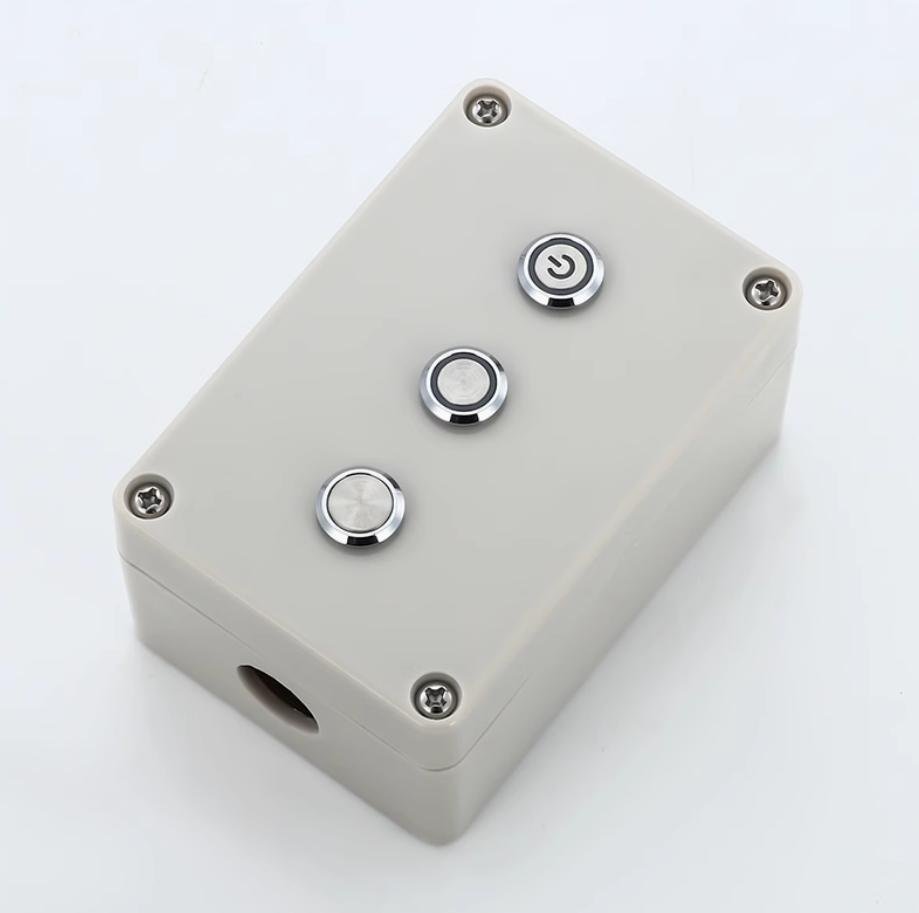
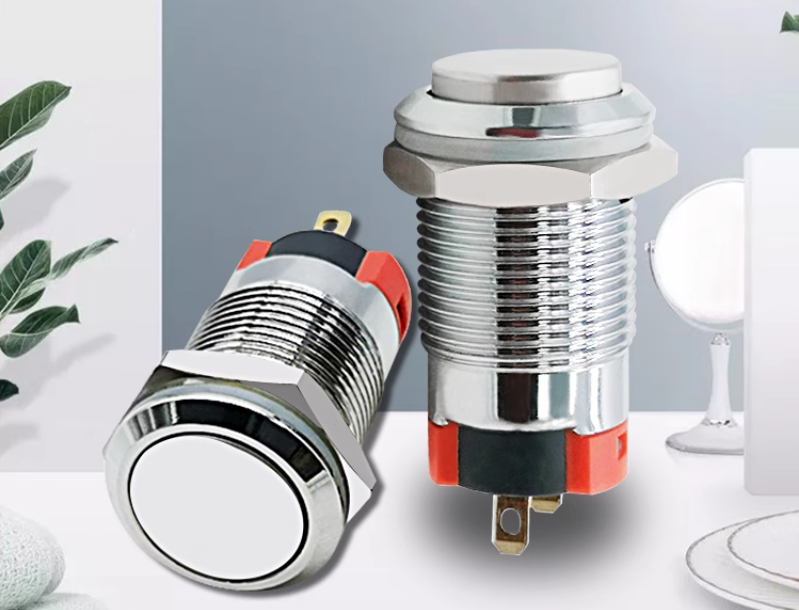
The YJ‑GQ12B category is a classic 12 mm metal push button from an OEM factory. It’s not a single “fixed” model; it’s a family with variants for different colors, illumination, and protection levels.
Here are the key typical specs you’ll see in a YJ‑GQ12B‑class product line:
- Panel cutout: ~12 mm
- Head shape: domed or flat metal actuator
- Operation type: momentary (push to operate, release to reset)
- Contact configuration: commonly 1NO (one normally open)
- Rated current and voltage: around 2–3 A at 125 V AC or 36 V DC, depending on version
- Mechanical life: often 1,000,000 cycles or more
- Electrical life: typically 200,000+ cycles at rated load
- Base material: PBT or similar thermoplastic
- Button + body: stainless steel or nickel‑plated brass
- Terminals: pin terminals or quick‑connect tabs
Factories like this are common suppliers for 12 mm metal push button switch buyers who need wholesale quantities, CE / CCC‑certified components, and some degree of customization (color, LED, logo, etc.).
If you’re sitting in a B‑end procurement team, you’ll usually care less about the glossy photos and more about:
- whether the mechanical life figure matches your expected cycles per year;
- whether the IP rating is enough for indoor vs outdoor use;
- whether the terminal type is compatible with your existing wiring harness.
Which metal push button switch should you pick for your application?
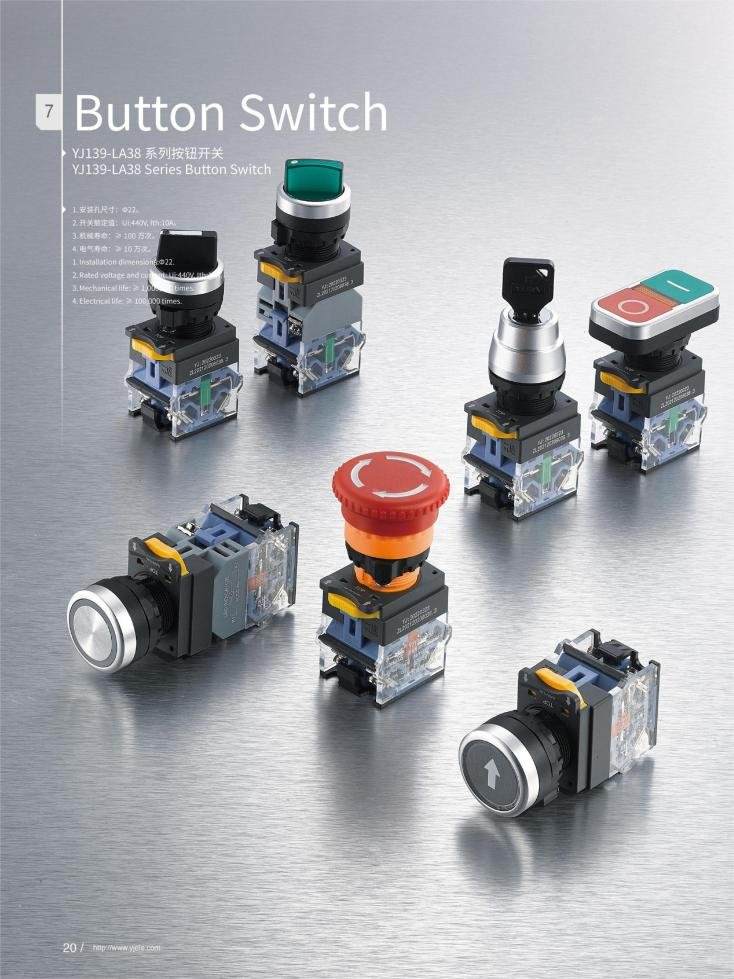
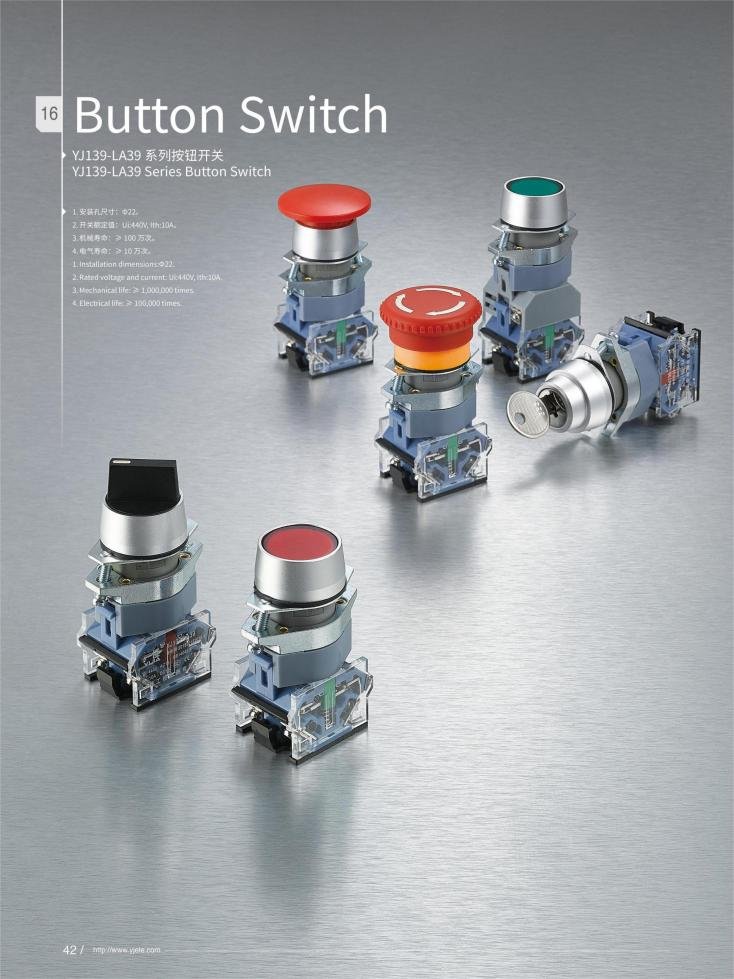
Not every machine needs the same switch. A medical device panel might need a clean, smooth, stainless‑steel button with a soft touch, while a construction machine control panel might want a rugged, high‑impact, illuminated button.
Here are some common application‑to‑switch match‑ups:
| Application type | Typical metal push button switch choice | Why it fits |
|---|---|---|
| Industrial control panels | 16 mm or 19 mm metal push button with IP65 | Robust, easy to spot, fits standard cutouts |
| Compact electronics / small panels | 12 mm metal push like YJ‑GQ12B | Saves space, still durable |
| Outdoor / harsh environments | IP67‑rated metal push button | Sealed against dust and water |
| Medical / clean‑room devices | Stainless‑steel metal push button | Hygienic surface, corrosion‑resistant |
| High‑frequency operator use | 16–19 mm with high mechanical life (≥1,000,000 cycles) | Withstands repeated pressing |
If your project is compact and uses a 12 mm cutout, YJ‑GQ12B and similar 12 mm metal pushers are a logical first candidate. You can then decide whether you need:
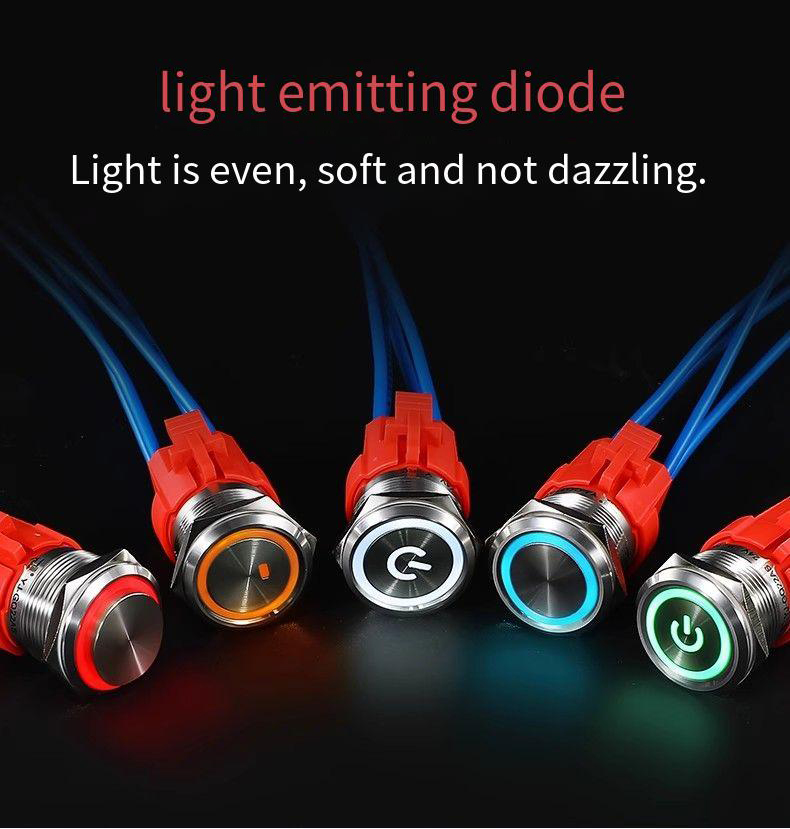
- Illuminated vs non‑illuminated: If the operator needs to see the state at a glance, pick an LED‑ring version.
- Momentary vs latching: If you’re doing a start/stop control, a latching variant keeps the circuit closed without holding the button.
- Color: Red for emergency or stop, green for start, yellow/blue for secondary functions.
If you’re evaluating a metal push button switch manufacturer, always ask for a product family table that shows all variants (12 mm, 16 mm, 19 mm, 22 mm, etc.), not just one pretty model photo. That’s what real B‑end buyers use when comparing unit price, lead time, and customization options.
And if you’d like, feel free to send over your project requirements and ask for a no‑strings‑attached quote on YJ‑GQ12B or similar 12 mm metal push buttons.
How to wire a metal push button switch (practical tips)
Wiring a metal push button is not magic, but it can go wrong if you mismatch load type or forget the IP‑class seal. Let’s keep it simple and practical.
1. Identify the contact type
Most 12–16 mm metal push buttons are 1NO (normally open) or 1NO+1NC (one normally open, one normally closed). On the datasheet, you’ll see a small symbol:
- 1NO: closed only when the button is pressed.
- 1NC: closed when the button is not pressed, opens when pressed.
If you’re designing a start button, use 1NO. If you’re designing an emergency stop, many standards prefer 1NC, so the circuit breaks if the button jams or the wire falls off.
2. Match terminals and wiring
Most YJ‑GQ12B‑type switches use pin terminals or quick‑connect tabs. In a factory, you’ll either:
- crimp quick‑connect lugs onto 0.5–1 mm² wires, or
- solder pin‑style wires into the terminal slots.
Always check the maximum torque limit on the datasheet (often around 0.3–0.5 Nm). If your technician over‑tightens the nut, you can crack the plastic base or damage the internal contacts.
3. Keep the panel seal intact
If your metal push button switch is IP65 or IP67, the rubber gasket and the front‑nut are critical. The usual sequence is:
- pre‑assemble the button into the panel cutout;
- tighten the front nut enough to compress the gasket, but not enough to deform it;
- double‑check IP rating by asking the metal push button switch manufacturer for test reports or photos of the gasket design.
If you’re buying in bulk, request a small wiring diagram PDF that shows:
- which pin is NO, which is NC,
- which one is the common terminal,
- and how to wire it to a relay or PLC input.
Once you have that, your engineering team can copy‑paste it into the panel manual, and your QA team can use it for incoming inspection.
How to evaluate a metal push button switch manufacturer
When you’re sourcing metal push button switches for an OEM project, you’re not just buying a component. You’re buying a supplier relationship. Here are a few quick checkpoints:
- Certifications: Do they have CE / CCC / RoHS? If they can’t show test reports, ask for at least third‑party‑certified samples.
- Production volume: Are they just a small trader, or a real factory with injection‑molding lines and switch‑assembly lines? Real manufacturers can give you minimum order quantities (MOQ) and lead times without guessing.
- Customization capability: Can they change button color, LED voltage (12 V, 24 V, etc.), and engraving? If they say “no,” you’re limited to catalog parts.
- Lifetime data: Do they specify mechanical life and electrical life in writing? If they only say “long life,” ask for numbers.
- Technical support: Can their engineers answer questions about compatibility with your PLC or relay?
When you’re looking at a B‑end metal push button switch manufacturer, you should also ask for:
- a model family table (12 mm, 16 mm, 19 mm, 22 mm, etc.);
- datasheets with terminal diagrams;
- sample pricing for 100 / 1,000 / 10,000 pcs.
If you’re in procurement or product management, you’re probably not the one soldering the button. But you are the one negotiating unit price, lead time, and warranty terms. Here’s a simple way to structure your first inquiry:
- Mention your application (industrial, medical, marine, etc.).
- State the panel cutout size (12 mm, 16 mm, 19 mm, etc.).
- Specify operation type (momentary or latching) and contact configuration (1NO, 1NO+1NC).
- Ask for IP rating, mechanical life, and electrical life.
- Indicate quantity (sample / 100 pcs / 1,000 pcs / 10,000 pcs).
- Ask about customization (color, LED, logo, engraving).
If the metal push button switch manufacturer responds quickly with clear specs and pricing, you’re likely talking to a true factory‑level supplier rather than a reseller. And if you’d like, feel free to send over your project requirements and ask for a no‑strings‑attached quote on YJ‑GQ12B or similar 12 mm metal push buttons.
FAQ
The main difference is panel cutout size and actuator feel. A 16 mm metal push button is easier for operators to hit quickly and feels more “industrial.” A 12 mm metal push button is more compact and fits in smaller panels. From a supplier’s perspective, both are usually part of the same product family, so you can often share the same datasheet structure and certifications.
For durability and impact resistance, metal pusher heads are usually better. Metal is harder to crack or deform, and it looks more professional on industrial panels. Plastic push buttons are cheaper and lighter, but they may not last as long in high‑use environments. If you’re weighing cost vs life, metal push buttons often win in the long run.
It depends on the IP rating. Standard 12 mm metal push buttons are often rated IP65, which protects against dust and water jets. For full submersion or outdoor marine use, you’ll want a version with IP67 or higher. Always confirm the exact rating with the metal push button switch manufacturer before deploying in harsh environments.
Use momentary when you only need a “pulse” signal (start, reset, doorbell). Use latching when you want the circuit to stay closed or open after pressing (on/off power, mode selection). Some metal push button switches offer both variants in the same 12 mm or 16 mm family, so you can keep the same cutout and just change the model.
Many 12–16 mm metal push buttons are rated for 1,000,000 mechanical cycles or more. Electrical life is usually lower (often 200,000–500,000 cycles at rated load), because internal contacts wear faster than the mechanical part. If your operator might press a button hundreds of times per day, you need to factor cycles into your B‑end procurement math.
Yes, if you’re buying from a custom‑oriented metal push button switch manufacturer. Common options include red, green, yellow, white, blue LEDs and 12 V DC, 24 V DC, or 110/220 V AC versions. You’ll usually pay a small premium for custom colors or voltages, but it’s worth it for OEM branding and panel consistency.