When it comes to controlling heavy electrical loads safely and efficiently, the unsung hero inside most systems is the AC relay switch. Whether in industrial automation, air conditioning units, or smart control panels, this small but powerful component decides when power should flow—and when it should stop. For businesses that deal with electrical system integration, understanding how an AC relay switch works is fundamental to choosing the right control solution.
In this article, we’ll break down what an AC relay switch is, how it works, its types, applications, and how to select the most efficient model for your electrical project. If your company is sourcing high‑quality relays at competitive prices, our team is ready to support your needs—just send an inquiry today.
What Is an AC Relay Switch?
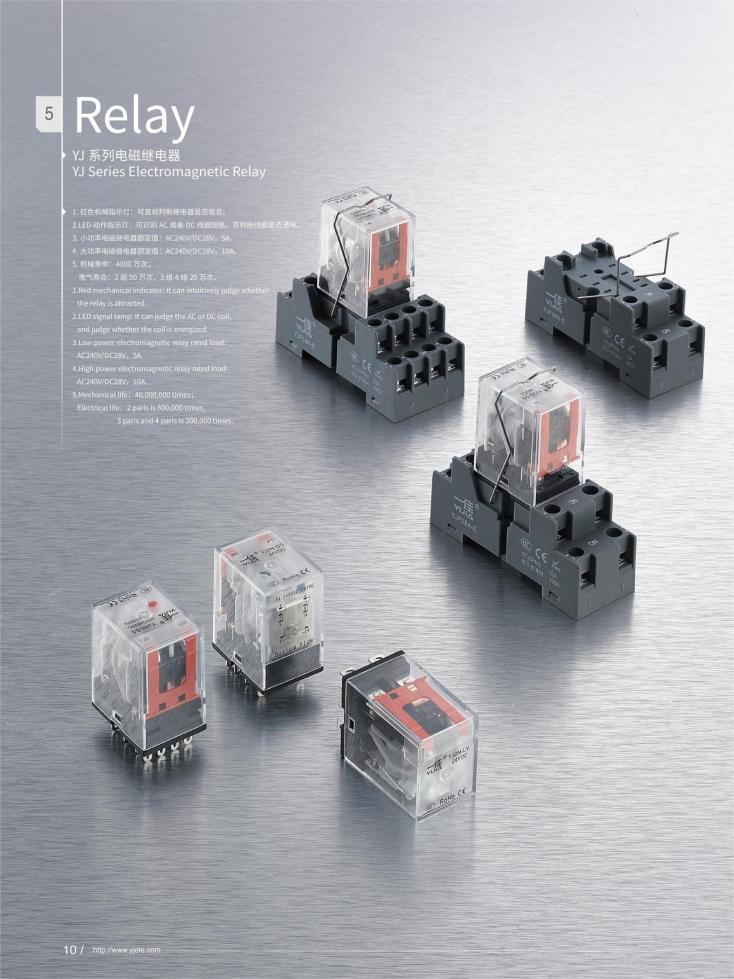
At its core, an AC relay switch is an electrically operated switch used to control alternating current (AC) circuits. It acts like a gatekeeper between the low‑power control signal and the high‑power load. The relay allows a small electrical current to control a much larger one—from an air compressor motor to industrial lighting or HVAC systems.
Think of it as a traffic signal for electricity. When the control voltage energizes the relay coil, it creates a magnetic field that closes (or opens) the circuit, allowing AC power to pass through. This mechanism ensures electrical isolation between control and load circuits, improving safety and reliability.

How Does an AC Relay Switch Work?
The working principle of an AC relay switch lies in electromagnetic induction. Here’s a simple breakdown of the process:
- A low‑voltage signal energizes the relay coil.
- The magnetic field activates the internal armature.
- The armature moves the contacts, either closing (normally open) or opening (normally closed) the circuit.
- When the signal stops, the coil demagnetizes, and the contacts return to their original state.
Essentially, it allows control of high‑voltage AC loads using safe, low‑voltage signals—ideal for energy management systems and remote control circuits.
Key Components of an AC Relay Switch
| Component | Description |
|---|---|
| Coil | Creates the magnetic force needed to actuate the contacts. |
| Armature | Mechanically moves contacts when the coil is energized. |
| Contacts | Conduct or interrupt the flow of AC current. |
| Spring | Ensures contacts return to default when the coil de‑energizes. |
| Enclosure | Provides insulation and protection from dust and heat. |
This simple mechanism enhances electrical control while reducing manual intervention.
Types of AC Relay Switches
Different applications require different types of AC relay switches. Below are the main categories found in industrial and commercial systems.
1. Electromechanical Relays (EMR)
These are traditional relays using moving parts to switch circuits. They are reliable, cost‑effective, and widely used in HVAC, lighting, and motor control setups.
2. Solid‑State Relays (SSR)
Unlike electromechanical models, solid‑state AC relays use semiconductor switching components. They offer faster switching, longer lifespan, and silent operation, making them ideal for sensitive automation systems.
3. Time‑Delay Relays (TDR)
These relays enable load control with timing functions—useful for staged equipment startup or shutdown to prevent power surges.
| Relay Type | Key Feature | Common Applications |
|---|---|---|
| Electromechanical | Cost‑effective and durable | HVAC, pumps, lighting |
| Solid‑State | Fast and noiseless operation | Automation, electronics |
| Time‑Delay | Adjustable switching intervals | Generator or motor control |
When selecting a relay for your system, consider voltage, current rating, load type, and environmental conditions.
Main Applications of AC Relay Switches
The versatility of AC relay switches makes them essential in almost every industrial sector. Here are some examples of how they are used in real‑world systems:
1. HVAC Systems
AC relays control compressors, fans, and thermostats, ensuring precise temperature regulation and protection from overload.
2. Industrial Automation
Used in PLCs (Programmable Logic Controllers) and motor starters, AC relay modules simplify control logic in manufacturing lines.
3. Smart Home and Energy Management
In modern IoT systems, AC relay modules enable smart lighting, appliance automation, and energy‑saving circuits.
4. Power Distribution and Load Control
In switchboards and distribution panels, relays safeguard circuits by isolating faults and controlling startup sequences.
| Application Area | Function of AC Relay Switch |
|---|---|
| HVAC Systems | Controls motors and compressors |
| Automation | Connects PLC outputs to high‑power devices |
| Energy Management | Reduces energy waste via timed switching |
| Smart Homes | Enables remote appliance control |
Advantages of Using AC Relay Switches
Adding an AC relay switch into your system brings significant advantages beyond simple control:
- Electrical isolation between control and load circuits increases safety.
- Reduced maintenance thanks to fewer manual operations.
- Enhanced efficiency by optimizing energy flow.
- Compatibility with microcontrollers, PLCs, and timers.
- Extended equipment life, since relays prevent current spikes and overloads.
These benefits make relay switches a smart investment for engineers, OEMs, and facility managers seeking cost‑effective automation and protection solutions.
How to Choose the Right AC Relay Switch
Selecting the appropriate AC relay switch can affect equipment longevity and energy efficiency. Consider the following factors before making your purchase:
- Voltage and Current Ratings: Match the relay’s ratings with your load requirements.
- Contact Configuration: Choose between SPST, SPDT, DPDT based on control needs.
- Operating Environment: Verify if the relay can handle temperature, vibration, and humidity.
- Load Type: Inductive loads (motors) may need relays with higher surge protection.
- Mounting and Size: Choose PCB, DIN rail, or plug‑in models depending on your panel design.
| Selection Criteria | Why It Matters |
|---|---|
| Voltage/Current Rating | Prevents overloading or short circuits |
| Contact Type | Determines switching flexibility |
| Coil Voltage | Matches control circuit requirements |
| Load Type | Ensures reliable operation with motors or resistive loads |
| Design & Mounting | Improves space efficiency and maintenance |
If you are unsure how to select the best relay switch for your system, feel free to contact our technical team for guidance—we’ll help you find cost‑effective AC switching solutions for your specific application.
AC Relay Switch vs. AC Contactor: What’s the Difference?
Many confuse AC relays and AC contactors, but each serves a distinct role in power control:
| Feature | AC Relay Switch | AC Contactor |
|---|---|---|
| Current Capacity | Up to ~20A | 20A and above |
| Application | Control and signal circuits | Motor and heavy load control |
| Size | Compact | Larger and more durable |
| Function | Switching and automation | Power distribution and protection |
In short, use AC relay switches for low to medium power circuits and AC contactors for larger motors or industrial power systems. Some applications may even combine both.
Maintaining and Troubleshooting AC Relay Switches
Like any electromechanical device, AC relays require basic maintenance to extend performance:
- Keep enclosures clean and free from dust.
- Check for carbon buildup on contacts.
- Ensure tight wiring connections to prevent arcing.
- Replace worn‑out relays promptly to avoid circuit faults.
Faulty relays often cause intermittent failures or overheating. For streamlined system reliability, consider scheduling regular inspection cycles or upgrading to solid‑state AC relays for heavy‑duty operations.
An AC relay switch may be a small component, but its importance in safe and efficient electrical control is massive. From air conditioners to industrial machinery, it ensures that power flows smoothly and reliably—without manual effort. Choosing the right type enhances performance, extends equipment lifespan, and simplifies system management.
Whether you need electromechanical, solid‑state, or time-delay AC relays, our professional manufacturing team provides customized solutions tailored to your operational needs.
Contact us today through cnjpm.com to request a quote or sample—we’ll help you source the perfect AC relay switch for your next project.
FAQ
To control a high‑voltage AC load using a low‑power signal, ensuring safety and circuit isolation.
No. AC relays are specifically designed for alternating current. For direct current circuits, use DC‑rated relays.
A relay module integrates multiple relay channels with protective components, making it easier to interface with controllers or PLCs.
Electromechanical relays typically last around 100,000 to 1 million cycles, while solid‑state relays can exceed 10 million.
HVAC, industrial automation, home automation, power distribution, and energy management systems.