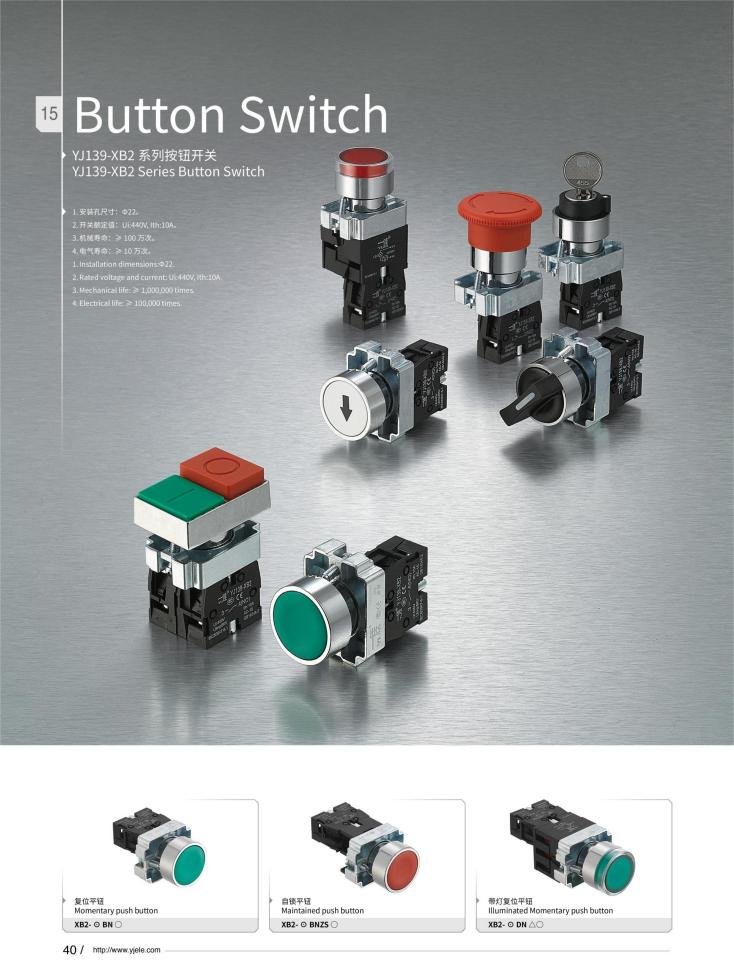
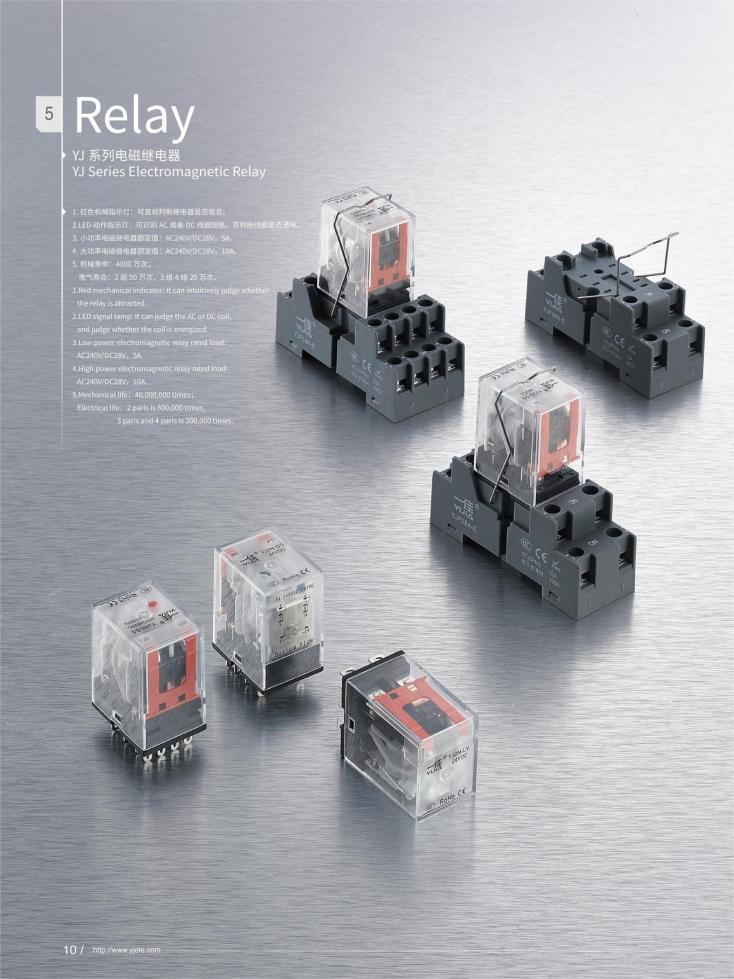
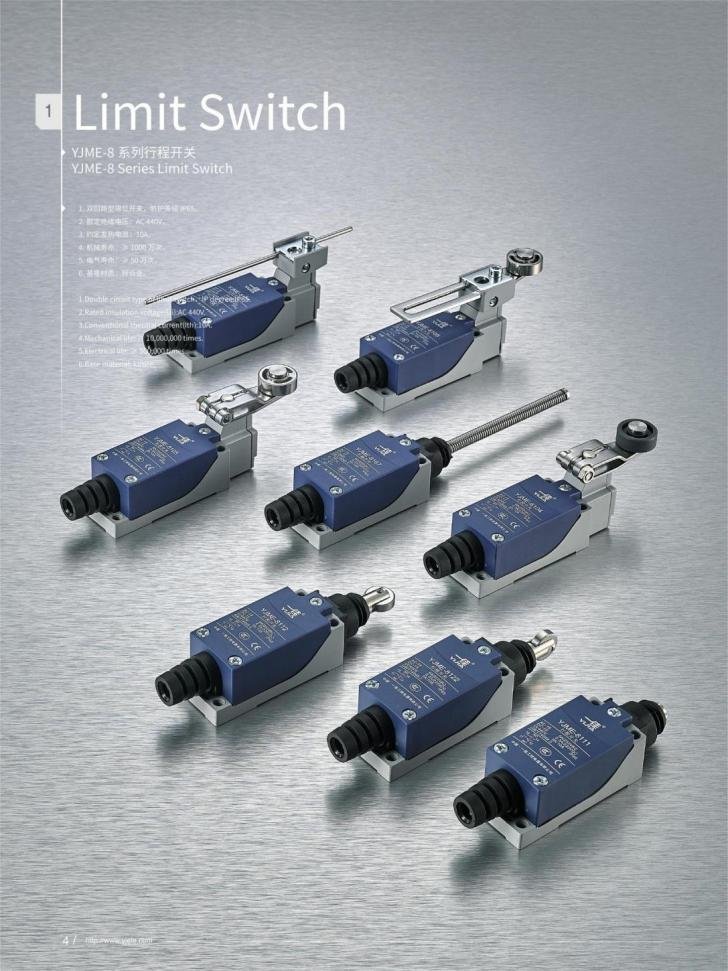
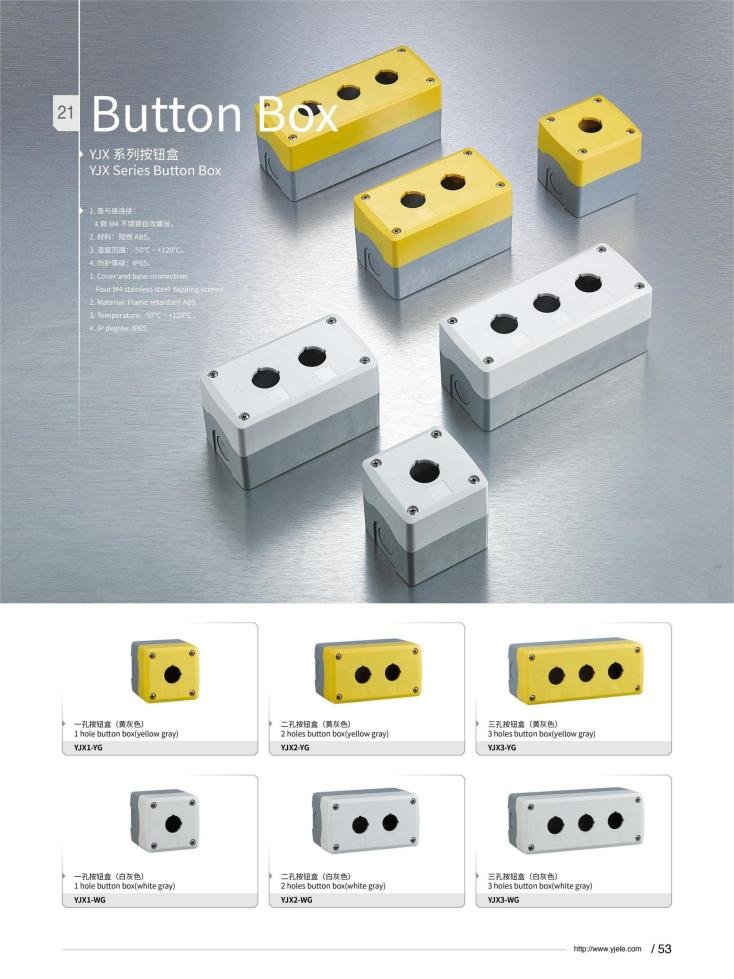
Why you should care about an industrial push button switch supplier
If you’re designing control panels, industrial machines, or automation lines, the push button you choose is more than a decoration. It’s the first point of contact between the operator and the system. As an industrial push button switch supplier for control panels, I’ve seen projects delayed or even recalled because someone skimped on a 50‑cent button.
When you’re in the market for a push button switch supplier for automation panels, you want more than just a part number. You want repeatable quality, clear specs, and a supplier that will answer your email when a line is down.
What kind of industrial push button switch supplier should you trust?
Not every catalog‑style vendor is built for real industrial use. When you’re looking for a long‑term industrial push button switch supplier, ask yourself:
- Can they support your prototypes and mass production under the same quality?
- Do they actually explain ratings and life cycles, not just show colors?
- Are they comfortable with OEM‑style customization (logo, color, special markings)?
If you’re sourcing for machinery, you’re likely using phrases like “12mm metal push button switch supplier OEM” or “OEM push button switch supplier for industrial equipment” in your RFQs. Those are the exact terms that signal you’re after a serious partner, not a one‑off distributor.
How to choose the right 12mm industrial push button
Key specs that matter (not just the catalog)
When you’re dealing with an industrial push button switch supplier for control panels, the difference is in the numbers. For a typical 12mm metal push button, you should expect:
- Voltage and current rating
Many 12mm metal push buttons are rated around 2A/36V DC up to 5A/250V AC. If you’re switching PLC inputs or relay coils, that’s usually enough. If you’re switching higher‑power loads (contactors, small motors), you’ll need a higher‑rated switch or duplicate contacts. - Electrical and mechanical life
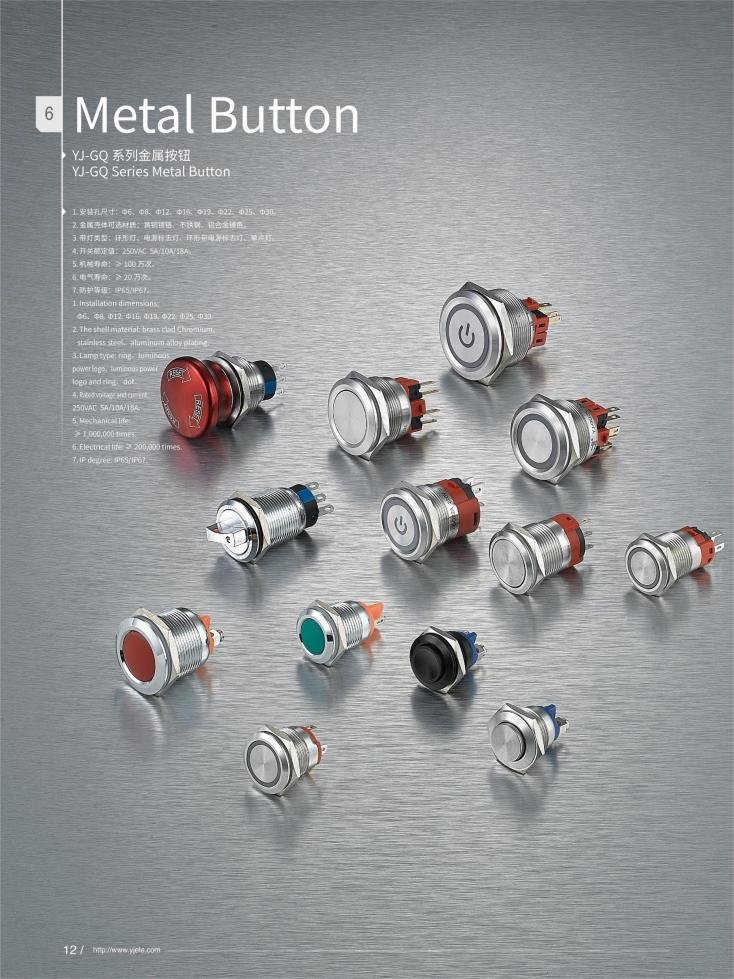
A good industrial push button switch supplier with high‑durability push button switch will quote ≥200,000 electrical cycles and ≥1,000,000 mechanical cycles. That’s critical if operators are hitting the same button thousands of times per day. - Protection rating and build quality
Look for IP65 or IP67‑rated variants if the panel is exposed to dust, humidity, or wash‑down conditions. The body and button are usually nickel‑plated brass or stainless steel, with silver‑alloy contacts for stable, low‑resistance switching.
If you’re evaluating a metal push button switch supplier for machinery, you’ll quickly notice that the IP67‑rated and high‑durability options perform better in the long run.
Mini comparison table (standard 12mm vs generic plastic)
| Feature | 12mm metal industrial push button | Generic plastic push button |
|---|---|---|
| Contact rating (example) | Up to 5A/250V AC or 2A/36V DC | Often 1A/24V DC or less |
| Electrical life | ≥200,000 cycles | 50,000–100,000 cycles |
| Mechanical life | ≥1,000,000 cycles | 100,000–300,000 cycles |
| Protection rating (front) | IP65–IP67 | Often IP40–IP54 or none |
| Material (button/body) | Nickel‑plated brass or stainless | Plastic or chrome‑plated |
| Typical use case | Control panels, machinery, automation | Consumer devices, low‑cost panels |
If you’re comparing a high‑durability push button switch manufacturer versus a general‑electronics supplier, this table is exactly what your engineering team will care about.
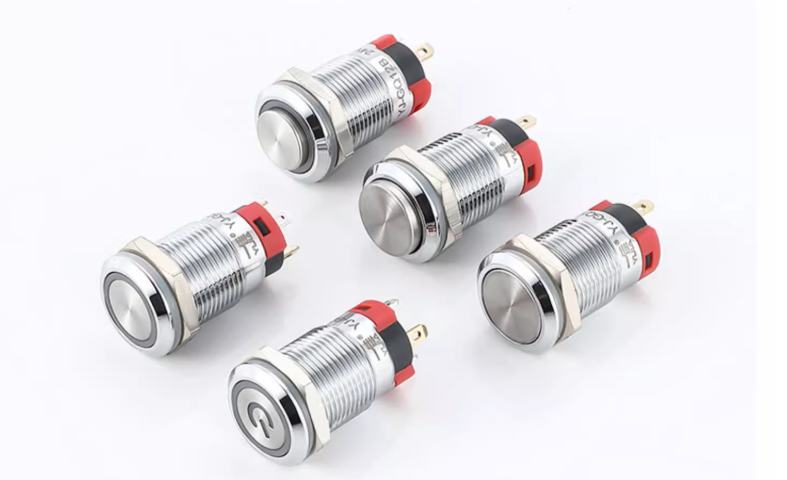
How to read the model code (YJ‑GQ12B)
Model codes like YJ‑GQ12B‑10 are not decorations. They tell you what you’re buying. For example:
- YJ – Brand / series prefix
- GQ12 – 12mm metal push button platform
- B – Operating and contact type (often 1NO, momentary, convex head)
If you’re sourcing for OEM push button switch supplier for industrial equipment, you’ll want to confirm:
- Button head color (red for stop, green for start, yellow for warning).
- Terminal type (screw, solder, quick‑connect).
- Contact configuration (1NO, 1NC, 2‑pole, etc.).
When you talk to your industrial push button switch supplier with CE and RoHS certification, you can also ask for CE‑ and RoHS‑compliant documentation, which is essential for machinery sold in the EU and many other regions.
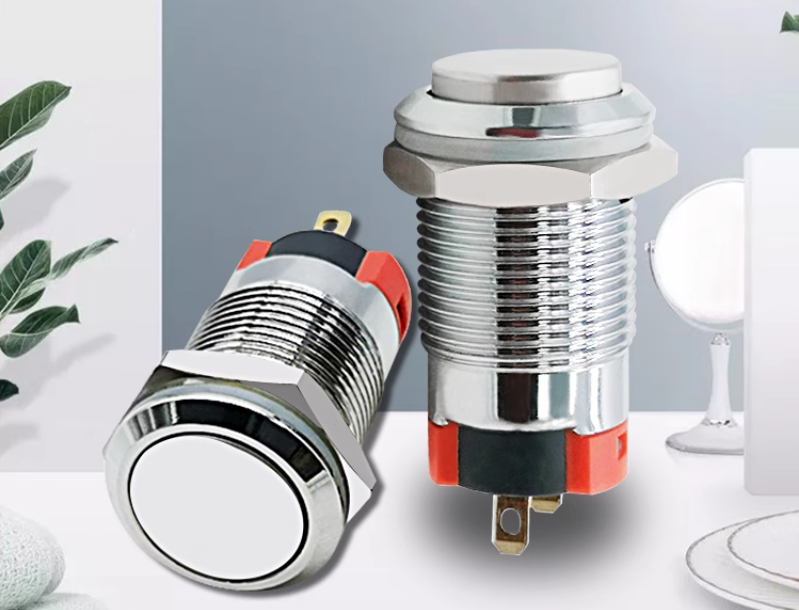
And if you’d like, feel free to send over your project requirements and ask for a no‑strings‑attached quote on YJ‑GQ12B or similar 12 mm metal push buttons.
How to wire and connect an industrial push button switch
Now let’s get practical. You’ve picked a 12mm metal push button from your industrial push button switch supplier for control panels. How do you wire it?
Basic internal logic
Most 12mm GQ‑style push buttons are single‑pole, normally open (1NO / SPST‑NO), momentary. That means:
- At rest, the contacts are open.
- When pressed, they close.
- When released, they return to open.
If you’re controlling a relay or contactor coil, you:
- Connect one terminal to control power (e.g., 24V DC +).
- Connect the other to the coil input.
- The coil common goes to the return (e.g., 0V DC −).
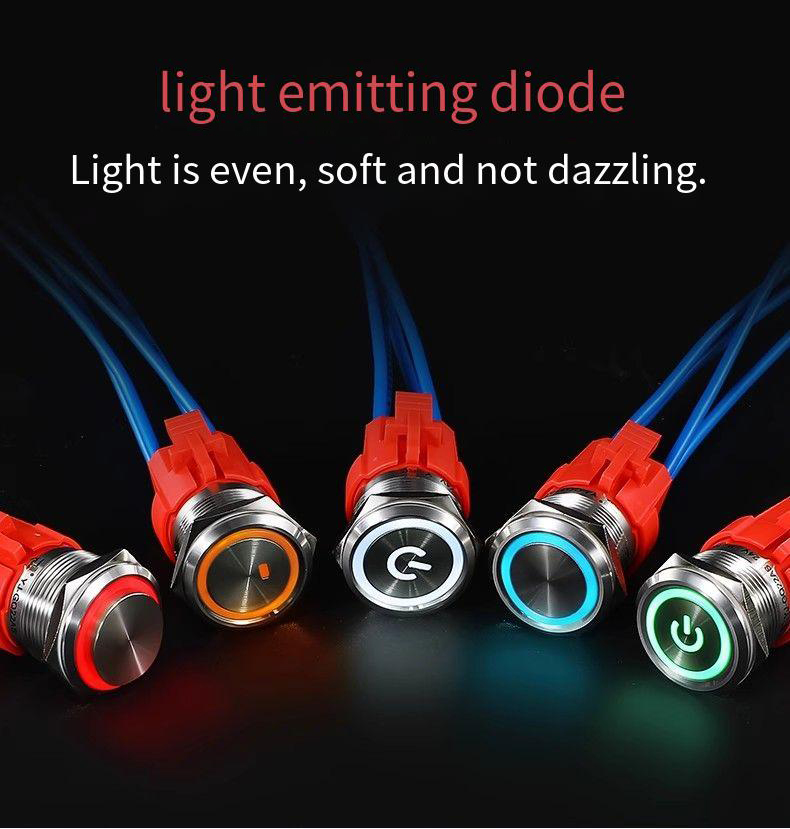
If you’re working with a push button switch supplier for automation panels, you may also get illuminated versions with built‑in LEDs. In that case, check the LED voltage (12V DC, 24V DC, 240V AC) and wiring diagram closely.
Wiring‑style reference table (for 12mm GQ‑style push buttons)
| Variant / terminal type | Typical use case | Notes for procurement |
|---|---|---|
| Screw terminal (e.g. GQ12B‑10P) | Control panels, easy field replacement | Great for service teams; easy to swap in the field |
| Pin terminal (solder) | PCB‑mounted or compact electronics | Needs soldering setup; not for last‑minute wiring changes |
| Illuminated versions (LED) | Machines needing status indication | Check voltage matching; useful in automation panels |
| Non‑illuminated standard | Simple start/stop, reset, limit controls | Lowest cost; good for high‑volume projects |
If you’re sourcing from a waterproof industrial push button switch supplier, you can also request IP67‑rated 12mm metal push button switch supplier options that are sealed at the front and terminals.
How to decide “which model fits our project”
Step 1: Map the function
Ask yourself:
- Is this a start, stop, reset, emergency stop, or mode switch?
- What is the load type (relays, LEDs, PLC inputs, small solenoids)?
- What is the environment (dusty factory, outdoor cabinet, wash‑down area)?
If it’s a simple start/stop on a conveyor, a basic 12mm GQ12B‑style 1NO momentary push button is usually enough. If it’s a reset button on a high‑vibration machine, you might want a latching version or a high‑durability push button switch manufacturer option.
Step 2: Match ratings to your control circuit
- For 24V DC control circuits (PLC, small relays): look for 2A/36V DC or 5A/250V AC‑rated push buttons.
- For 240V AC control circuits (older contactor coils): you need a higher‑rated switch or duplicate contacts.
- For signal‑only circuits (PLC digital inputs via dry contacts): you can often use a lower‑current rated push button.
A good industrial push button switch supplier with CE and RoHS will help you cross‑check these ratings and suggest alternatives if you’re close to the limit.
Step 3: Think about long‑term maintenance
Ask your internal team:
- Who will service this panel?
- Will they change wiring or just replace the whole button?
If technicians are likely to swap the button in the field, screw‑terminal variants are easier. If you’re building millions of identical units, PCB‑mounted pin‑terminal versions can speed up assembly. This is exactly the kind of guidance you get from a metal push button switch supplier for machinery who understands OEM production.
Step 4: Consider vandalism and environment
If your equipment is exposed to rough handling, many buyers specifically search for “12mm anti‑vandal push button switch supplier” or “waterproof industrial push button switch supplier”. These variants are built with thicker metal bodies, recessed buttons, and better sealing to resist accidental damage and harsh conditions.
If you’re already considering a 12mm metal push button switch for your next panel, now is a good time to send an inquiry to your industrial push button switch supplier with IP67 rating or 12mm anti‑vandal push button switch supplier that matches your environment. Mention your panel type, voltage, expected life, and whether you want screw terminals, illuminated variants, or custom colors. A good supplier will respond with a clear quote and confirmation that their push buttons can handle your use case.
By choosing the right OEM push button switch supplier for industrial equipment and the right 12mm metal variant, you turn a simple button into a reliable, low‑maintenance part of your control system. After all, in the world of industrial controls, the smallest components can cause the biggest headaches—or the smoothest operation.
FAQ
Short answer: size, aesthetics, and sometimes current rating. A 12mm GQ12B‑style push button is compact and ideal for dense panels where space is tight. The 16mm and 19mm metal push buttons are more visible and easier to actuate with gloves, but they take up more panel area. From a technical side, the 16mm and 19mm versions often support higher current ratings (up to 10A or more) and are used in higher‑power industrial control panels.
Many 12mm GQ‑style metal push buttons are rated for both AC and DC, but the maximum switching current for DC is usually lower than for AC. For example, a button rated at 5A/250V AC may be limited to 2A/36V DC. Always check the datasheet from your industrial push button switch supplier before using it in DC circuits.
Look for the front‑panel IP rating in the datasheet. Many 12mm GQ12B‑style units are rated IP65 at the front and can be ordered with IP67 options for harsh environments. If you’re deploying in outdoor enclosures or wash‑down areas, explicitly request “IP67‑rated 12mm metal push button switch” from your supplier.
A good industrial push button switch supplier will quote ≥1,000,000 mechanical cycles and ≥200,000 electrical cycles for 12mm GQ‑style metal push buttons. That’s enough for years of operation in most industrial environments. If your project involves very frequent button presses (e.g., testing rigs), you can ask for high‑cycle variants or latching buttons to reduce wear.
Screw terminals are better for panels where wiring may change in the field or when you have multiple technicians.
Solder terminals (pin‑type) are ideal for PCB‑mounted designs where you want compact size and high‑volume assembly.
Ask your industrial push button switch supplier for a sample configuration that matches your production line setup.
Yes. Many industrial push button switch suppliers offer laser‑engraved symbols or logos on the button head. You can mark “START”, “STOP”, or your company logo so operators can quickly identify the function on crowded panels.