When your HVAC system fails to start or runs irregularly, the culprit is often a small but critical component — the relay switch AC. Engineers and procurement managers know that the right relay determines not just system reliability but also long-term maintenance costs. But with so many types and specifications available, how do you ensure that your chosen AC relay switch is the perfect match for an HVAC motor?
Let’s break it down in plain language and professional insight, so whether you’re a supplier, engineer, or systems integrator, you’ll know exactly what to look for before making that next bulk order.
Understanding the Function of a Relay Switch AC
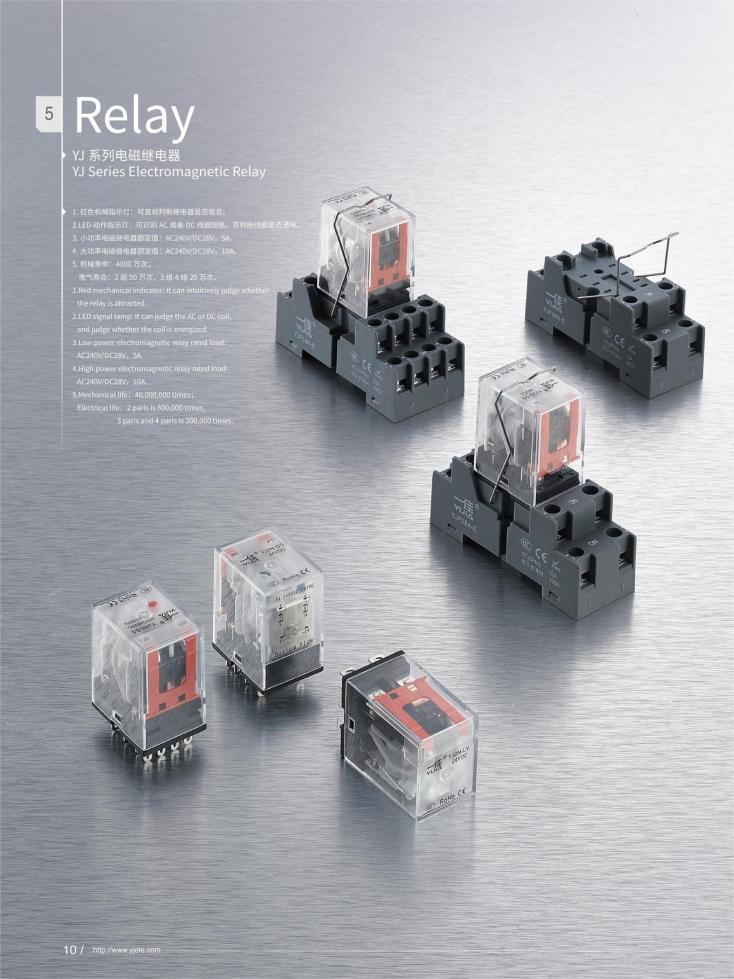
An AC relay switch acts as an electronically controlled switch that opens or closes a circuit. It allows a small control signal (often DC) to manage a much larger AC load. In HVAC systems, it’s typically used to start and stop the motor compressor or fan, ensuring seamless automation.
For example, in a large commercial air conditioner, the relay controls whether the motor receives power from the AC supply. If the relay fails, the motor can’t start – leading to system downtime and possible damage.

Here’s a quick look at how it works:
| Component | Function | Example Use |
|---|---|---|
| Coil | Generates magnetic field when energized | Controls switching mechanism |
| Contacts | Open or close electrical circuit | Connects or disconnects HVAC motor |
| Spring | Returns to resting position when coil unpowered | Ensures automatic reset |
| Housing | Insulates and protects the relay | Ensures safety and durability |
Why the Right Relay Switch AC Matters for HVAC Systems
In industrial or commercial HVAC setups, motors must handle high current loads and operate under continuous stress. Selecting the wrong relay switch can lead to overheating, short-circuits, or premature failure.
Key benefits of matching the correct relay switch AC include:
- Improved energy efficiency — minimizing heat loss and reducing power consumption.
- Enhanced system reliability — fewer breakdowns and less maintenance downtime.
- Safety compliance — meeting standards like UL, CE, or RoHS certification.
- Longer component lifespan — protecting your HVAC motor and downstream equipment.
For procurement teams, choosing the right relay switch AC helps optimize inventory and ensures compatibility with various motor models — from scroll compressors to centrifugal fans.
Key Factors to Consider When Selecting a Relay Switch AC
Selecting the right component should always start with understanding your application requirements.
1. Voltage and Current Rating
The relay’s contact current rating must match or exceed the HVAC motor’s operational load. For instance, if your motor draws 15A on startup, choose an AC relay that can safely handle at least 20A to ensure margin and safety compliance.
| Motor Type | Typical Voltage Range | Recommended Relay Rating |
|---|---|---|
| Fan Motor | 110–240 V AC | 10–15 A |
| Compressor Motor | 220–480 V AC | 20–40 A |
| Blower Motor | 110–220 V AC | 15–25 A |
2. Coil Voltage
Make sure the coil voltage matches the control circuit (usually 12 V DC, 24 V DC, or 230 V AC). Incorrect coil voltage can cause switching delay or failure.
3. Contact Type
Relay contacts are typically classified as:
- SPST (Single Pole Single Throw) — simple on/off control.
- SPDT (Single Pole Double Throw) — allows switching between two circuits.
- DPDT (Double Pole Double Throw) — provides high flexibility for complex motor setups.
4. Ambient Temperature and Humidity
HVAC motors in outdoor units require relays that can handle harsh environments. Always check operating temperature range — some relays are rated from −40 °C to +85 °C.
5. Mounting and Size
Compact designs with DIN rail or PCB mounting support easy installation in limited spaces. Make sure to verify relay dimensions in your system layout or control cabinet.
6. Contact Material
Contact materials like silver alloy (AgSnO2) offer superior conductivity and arc resistance, vital for high-power HVAC applications where frequent on/off cycles occur.
Common Relay Switch AC Types Used in HVAC Systems
Different HVAC systems demand different relay designs. Below is a comparison table to help engineers and purchasing teams quickly evaluate options.
| Relay Type | Description | Typical Application |
|---|---|---|
| Electromagnetic Relay (EMR) | Traditional design using magnetic coil | General HVAC motor switching |
| Solid State Relay (SSR) | Uses semiconductor switching | Silent operation, longer life |
| Time Delay Relay | Adds programmable delay before switching | Compressor protection, staging control |
| Thermal Relay | Provides overload protection | Motor temperature compensation |
| Contactor Relay | Handles larger loads | Commercial or industrial HVAC systems |
Common Problems and Troubleshooting
Even with a high-quality relay switch AC, issues can still arise due to wiring faults or overloads. Common causes include:
- Chattering or buzzing: Often due to insufficient coil voltage or relay wear.
- Burnt contacts: Caused by excessive current spikes or poor contact material.
- Relay not releasing: Can happen when the coil remains magnetized or stuck.
Preventive measures:
- Use snubber circuits for protection.
- Choose appropriate contact materials for inductive loads.
- Regularly inspect relays during scheduled HVAC maintenance.
Performance Testing and Certification Standards
When purchasing for industrial projects, compliance and quality verification are non-negotiable. Look for relays certified under:
| Certification | Description | Importance |
|---|---|---|
| UL / cUL | Safety standard in the U.S. and Canada | Confirms product safety |
| TÜV / CE | EU compliance | Ensures safe integration into systems |
| RoHS / REACH | Environmental standards | Prevents restricted substances |
| ISO9001 | Quality management system | Supplier reliability assurance |
Working with certified relay switch AC suppliers ensures lower risk and consistent quality — a critical point during audits or installation approvals.
How to Source Reliable Relay Switch AC Components
Whether you are an HVAC system OEM, a parts distributor, or an industrial procurement specialist, consider the following sourcing strategy:
- Choose a manufacturer with technical support. Engineering assistance ensures compatibility during system design.
- Request datasheets and sample tests. This confirms performance before bulk orders.
- Ensure stable supply chains. For B2B projects, continuity of supply is crucial — avoid small resellers with no stock guarantee.
- Evaluate pricing vs. lifecycle cost. Sometimes a slightly more expensive relay with longer endurance saves far more in downtime.
Looking for bulk or OEM custom relay switch AC components? Contact us today for technical consultation or sample requests — our engineers can help select the most efficient model for your HVAC system.
Choosing the ideal relay switch AC for an HVAC motor is more than just matching specs — it’s about ensuring system efficiency, reliability, and safety. Whether you’re designing new equipment or replacing components, understanding coil voltage, contact type, and current rating makes all the difference between a flawless installation and repeated breakdowns.
In the competitive B2B HVAC market, precision and reliability are key. Don’t just buy a relay switch — invest in a partnership with a technical supplier who understands your application.
Ready to specify your next batch of HVAC relay switches? Reach out to our team — we’ll help you find the right model with expert advice and competitive factory pricing.
FAQ
A DC relay switch uses direct current for control, while an AC relay switch is designed for alternating current applications. In HVAC, AC relays are preferred for handling motor startup currents.
In commercial environments, always consult a qualified technician. Improper installation may cause circuit failure or safety issues.
Mechanical lifespan ranges from 100,000 to 1 million cycles, depending on load and operating environment.
No. Each motor’s voltage, current, and control method determine the correct relay type.
Look out for clicking sounds, inconsistent motor activation, or visible burns on the relay casing.