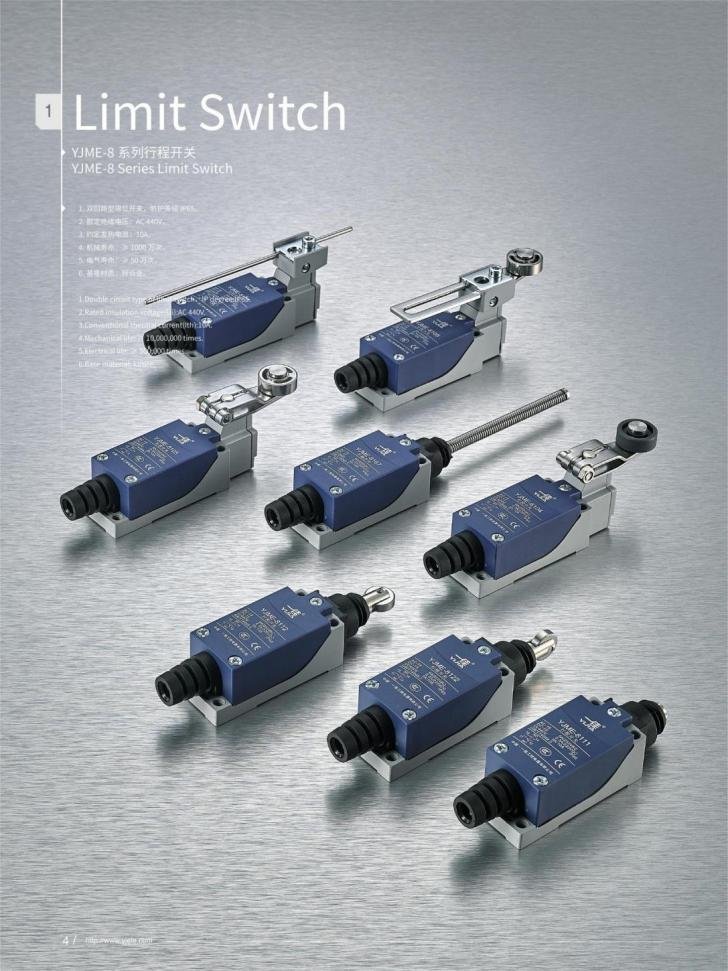
A limit switch may look like a simple component, but choosing the right limit switch type can make or break the performance of your industrial automation project. For B2B buyers, the right decision means higher machine uptime, safer operation, and a much lower total cost of ownership. This guide will walk you through how to select the best position switch for your application and how to match different mechanical position switch types to real industrial scenarios.
What is a limit switch?
A limit switch is an electromechanical device that detects the presence, absence, or position of a moving object when it reaches a defined limit. It converts that mechanical movement into an electrical signal that can be used for control, interlock, or safety functions in industrial automation systems.
Typical B2B use cases for limit switches include machine tools, packaging lines, material handling systems, elevators, conveyor systems, and safety interlocks on guards and doors. Because limit switches are robust, cost-effective, and easy to integrate, they remain a standard choice in OEM equipment and industrial control panels worldwide.

Common limit switch applications
If your factory or OEM project needs reliable position feedback, a correctly selected position switch is often the simplest and most economical answer.
Main types of limit switches
There are several main limit switch types used in industrial automation, each designed for different operating conditions and mechanical motions. Understanding these categories helps B2B buyers shortlist the right series before going deep into part numbers.
The broad groups are:
- Mechanical limit switches (with physical actuators)
- Non-contact limit switches (often called proximity or electronic limit switches)
- Rotary limit switches for angular motion and hoisting systems
- Miniature and subminiature limit switches for compact equipment
Mechanical limit switches (contact type)
Mechanical limit switches use physical contact between an actuator and the moving target to change electrical contacts inside the housing. They are widely used because they are rugged, affordable, and available in many actuator styles such as plunger, roller lever, wobble stick, and adjustable lever.
Mechanical limit switches are a strong choice when electrical loads are relatively high, environmental conditions are harsh, and physical contact with the target is acceptable.
Non-contact and proximity-style limit switches
Non-contact limit switches use magnetic, inductive, or other sensing principles to detect position without mechanical contact. In many catalogs they appear as proximity switch limit solutions for food, beverage, pharmaceutical, or high-speed equipment.
These switches are preferred where frequent mechanical contact would cause fast wear, or where contamination and cleaning requirements are strict, such as food-processing or chemical plants.
Rotary limit switches
Rotary limit switches track angular movement using a shaft connected to gears or cams. They are widely used in cranes, hoists, wind turbines, and other applications where angle, turns, or lift height must be monitored precisely.
If your project description includes phrases like “rotary hoist mechanical position position switch” or “crane travel limit solution,” you are likely looking for this category.
Miniature and subminiature limit switches
Miniature limit switches pack all the essential functions into a very small footprint for tight spaces. They are common in compact machinery, robotics, smart logistics equipment, and small actuators.
For OEM buyers designing compact equipment for export, miniature limit switches help keep panels small while still meeting international safety and performance standards.
Key selection criteria for B2B limit switch projects
Choosing a limit switch is not just about the basic type. For B2B and OEM buyers, the real challenge is matching the specification to the exact working conditions, expected lifetime, and regional standards.
Mechanical travel and actuation method
You always start with how the machine moves and how the actuator will be hit or approached. This directly determines which actuator style and housing you can use.
If your motion is linear and slow, a plunger or roller plunger limit switch will usually be enough. For lateral movement, a lever or roller arm position switch is generally more reliable and tolerant to misalignment.
Electrical ratings and control system
Limit switches are part of the electrical control chain, so matching their contacts to your PLC, relay, or motor starter is critical. Overloading the contacts reduces life, while underutilizing them can waste budget.
For PLC-only signals, many buyers now choose low-current limit switch contacts or even solid-state outputs to extend service life. For direct motor control or higher loads, a heavy-duty industrial position switch with robust contacts is still recommended.
Environmental conditions and protection
Environment is one of the main reasons limit switches fail early, so it must be part of every B2B RFQ or technical specification. Factors like dust, oil, chemicals, vibration, and washdown determine which housing and sealing you need.
If your project involves food and beverage, “washdown limit switch” and “stainless steel non-contact position switch” are important long-tail phrases to consider in technical specifications and procurement documents.
Matching limit switch types to common industries
Each industry tends to favor specific limit switch solutions based on standards, safety requirements, and typical machine layouts. Knowing these patterns makes it easier for procurement managers and engineers to align on a shortlist quickly.
Factory automation and packaging
In general factory automation, limit switches are used for position feedback, jam detection, and safety interlock functions. Packaging lines in particular demand compact, repeatable, and often high-speed actuation.
B2B buyers often search for terms like “industrial mechanical position switch for packaging machine,” “conveyor limit switch with roller lever,” or “safety limit switch for guard door” when defining project needs.
Material handling, cranes, and hoists
Cranes, hoists, and lift systems rely heavily on rotary and end-of-travel limit switches for safe operation. Here, reliability and compliance with safety standards are essential.
Key long-tail phrases in this segment include “crane limit switch for hoist control,” “rotary limit switch supplier,” and “heavy-duty limit switch for material handling systems.”
Food, beverage, and pharmaceutical
In hygienic industries, the main concerns are washdown, corrosion, and avoiding product contamination. Non-contact and stainless-steel limit switches are therefore very popular.
RFQs often mention phrases such as “washdown-rated limit switch,” “IP69K food grade limit switch,” or “stainless limit switch for bottling line.”
Practical buying checklist for OEM and B2B customers
When you prepare a new machine design or send out an RFQ to limit switch manufacturers, a structured checklist saves time and avoids back-and-forth emails. The following items should be clear in your specification or inquiry.
Technical specification checklist
When you send this information to a mechanical position switch supplier, you get faster quotations and better-matched options, which is crucial for OEM production schedules. A clear checklist also reduces the risk of choosing a switch that seems cheaper but fails early under real field conditions.
Commercial and lifecycle considerations
Beyond the pure technical side, B2B buyers must balance cost, logistics, and lifecycle planning. Long-term availability and global support matter just as much as unit price.
If you are preparing a new sourcing project, this is the perfect moment to contact your preferred mechanical position switch partner with your annual volume and technical requirements to secure the best commercial terms.
The right limit switch is not just a catalog item; it is a strategic component in your automation, safety, and maintenance strategy. By understanding the different position switch types, from mechanical and non-contact to rotary and miniature designs, and by carefully matching them to your mechanical motion, electrical system, and environment, you can dramatically improve reliability and reduce lifecycle cost in your plant or OEM equipment.
If you are planning a new project or want to optimize your existing machines, this is the ideal time to send your limit switch requirements, drawings, and target quantities to a trusted supplier and request a tailored quotation for your application. With a clear specification and the right partner, your next mechanical position switch decision can deliver both technical performance and solid commercial value.
FAQ
Choose a mechanical limit switch when you need high switching capacity, simple wiring, and the environment does not excessively wear the actuator. Choose a non-contact mechanical position switch when you want zero mechanical wear, hygienic design, or when the target must not be physically touched, as in food processing or high-speed equipment.
For ordinary indoor industrial environments without heavy washdown, an IP65–IP67 position switch is often enough. For outdoor use, frequent high-pressure cleaning, or direct water jets, you should look for IP67 or IP69K-rated limit switches made from corrosion-resistant materials.
Some safety-rated limit switches are designed and certified to provide reliable position feedback for safety circuits and general control. However, for critical safety functions it is best practice to use dedicated safety limit switches with positive opening contacts and the required safety category or performance level.
Limit switches should be inspected as part of your regular preventive maintenance schedule, typically aligned with the main machine service interval. In harsh environments or high-cycle applications, many plants perform additional visual checks and function tests to detect wear before it leads to unplanned downtime.
Your RFQ should include mechanical drawings or photos, electrical requirements, environmental conditions, required standards, and expected annual volume. Adding target long-tail descriptions such as “crane limit switch for outdoor hoist” or “IP69K food grade position switch with cable gland” helps suppliers quickly match the right product families.