In every electrical control system, one small yet indispensable component ensures safety, precision, and automation: the AC relay switch. Whether in industrial machinery, HVAC units, or smart home systems, this tiny device quietly handles the big job of switching and protecting AC circuits. If you’re sourcing relay switches for manufacturing, energy systems, or control cabinets, understanding how they work—and what to look for—can help you build more stable and efficient systems.
What Is an AC Relay Switch?
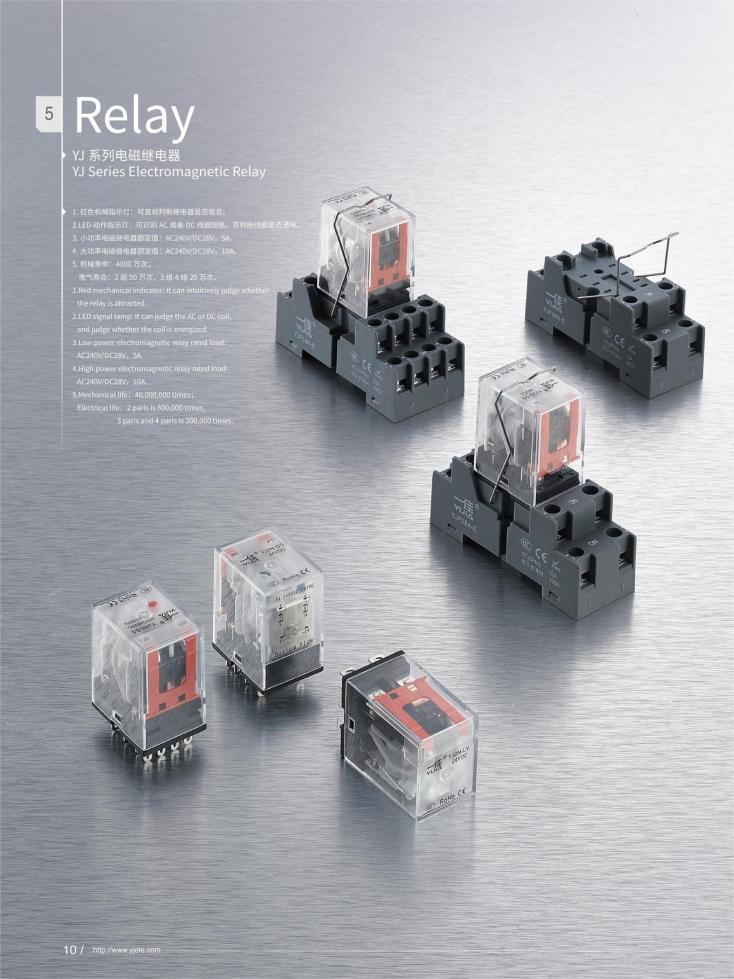
An AC relay switch is an electrically operated switch used to control an alternating current (AC) circuit. It uses a low-power input signal to open or close contacts, allowing larger currents to pass safely through the circuit. In simpler terms, a relay acts as a bridge between a control system (like a microcontroller or PLC) and the power-hungry equipment it needs to manage.
These switches are key components in automation. They let you control high-voltage loads using low-voltage signals, maintaining isolation between control and power circuits.
Common applications include:
- Air conditioners and refrigerators
- Industrial automation systems
- Lighting control
- Motor starters
- Smart appliances
When your system demands reliability and safety, a good-quality AC relay switch can make all the difference.

How an AC Relay Switch Works
At its core, a relay switch consists of a coil, movable contacts, and a spring. When an electrical current passes through the coil, it creates a magnetic field that attracts the movable armature, thereby changing the contact state—either opening or closing a circuit.
Here’s a simple overview:
| Component | Function | Description |
|---|---|---|
| Coil | Induces a magnetic field | Energized by a control signal |
| Armature | Moves to open/close contacts | Mechanically linked to spring |
| Contacts | Carry electrical load | Switch between ON/OFF states |
| Spring | Restores the initial position | Ensures safety and reset feature |
This system enables precise control of AC power without directly handling high voltages. The result? Less wear, more safety, and longer device lifespan.
Types of AC Relay Switches and Their Applications
Depending on your needs, you can choose from various types of AC relay switches. Each design serves a specific purpose, balancing response time, current capacity, and durability.
| Relay Type | Typical Voltage | Application | Benefit |
|---|---|---|---|
| Electromechanical Relay (EMR) | 120V–240V AC | Industrial machines | Cost-effective, simple structure |
| Solid State Relay (SSR) | 110V–220V AC | Automation & precision instruments | Fast response, long lifespan |
| Time-delay Relay | Adjustable | HVAC systems, pumps | Programmable delays for smarter control |
| Automotive AC Relay Switch | 12V–24V AC | Vehicle electronics | Compact and vibration-resistant |
| Thermal Overload Relay | 220V–480V AC | Motor protection circuits | Prevents overcurrent damage |
For industrial buyers or OEMs, the right selection depends on load type, environment, current capacity, and switching frequency. If you’re unsure which one suits your project, our engineering team can help recommend compatible models based on your control voltage and load conditions.
Why Choose an AC Relay Switch Over a Manual Switch?
Manual switches have their place, but AC relay switches are replacing them in most industrial and automated applications because they offer:
- Remote control capability—switch circuits without direct human intervention.
- Improved safety—full electrical isolation between control and load circuits.
- Automation-ready design—perfect for IoT and smart manufacturing systems.
- Energy efficiency—precise switching reduces unnecessary power loss.
- Durability—especially in solid-state designs with no mechanical wear.
In today’s connected world, automation is no longer a luxury; it’s a necessity. AC relay switches form the backbone of smart power management across industries—from HVAC and manufacturing to renewable energy systems.
Key Buying Factors: What to Look for in an AC Relay Switch
Selecting the right AC relay switch requires more than looking at voltage ratings. For B2B procurement teams and engineers, here are the main criteria to consider:
- Voltage and Current Ratings – Match your load requirements precisely to avoid overheating or overloads.
- Coil Voltage Compatibility – Ensure your control circuit voltage matches the relay coil (e.g., 12V, 24V, 110V AC).
- Switching Life Expectancy – For continuous operations, solid state relays usually offer longer endurance.
- Contact Form – Choose among SPST, SPDT, DPDT configurations depending on control complexity.
- Environmental Resistance – Sealed or dustproof relays are ideal for outdoor or high-humidity environments.
- Mounting Style – Choose panel mount or PCB mount depending on your design.
| Selection Factor | Recommended Range | Tip |
|---|---|---|
| Control Voltage | 12V–240V AC | Match your system control voltage |
| Load Capacity | 5A–40A | Higher loads need SSRs |
| Switching Type | SPST / SPDT | Depends on circuit design |
| Ambient Temp | -20°C to 80°C | Pick according to installation environment |
| Mounting | DIN rail / Board mount | Depends on equipment layout |
If you are purchasing in bulk or looking for OEM customization, our technical consultants can provide datasheets, samples, and performance tests before finalizing your order.
Benefits of a Reliable AC Relay Switch Supplier
For B2B customers, supplier reliability matters as much as product quality. When sourcing AC relay switches in bulk, consider these benefits of working with a trusted manufacturer:
- Consistent quality assurance with full performance testing.
- Fast lead times and stable inventory for large-scale production.
- Custom options for voltage, contact form, and housing size.
- After-sales support to handle technical consultations and warranty claims.
If you need a dependable partner to provide long-lasting, safety-certified AC relay switches, contact our team today. Send an inquiry to get a quotation and free sample evaluation.
From household appliances to heavy-duty manufacturing equipment, AC relay switch power countless systems worldwide. They’re compact, cost-efficient, and indispensable for protecting electrical loads while simplifying automation. Choosing the right model ensures smoother operations and longer equipment life—and partnering with the right supplier guarantees reliability from prototype to production.
If your project demands certified AC relay switches, get in touch today to request a quote or technical consultation. Let’s build a safer, smarter power control solution together.
FAQ
An AC relay is designed specifically for alternating current, while a DC relay handles direct current. The main distinction lies in the coil design—the AC version resists voltage fluctuations better and uses shading coils to reduce buzzing noise.
Generally, no. AC relays can overheat or fail in DC circuits. Always choose a model meant for your specific current type.
A time-delay AC relay is ideal for HVAC systems. It allows controlled starting and stopping to prevent short cycling and equipment damage.
Solid state relays often last more than 10 million cycles since they have no mechanical parts to wear out.
Indirectly, yes. Their precise control and quick switching reduce idle power consumption and optimize energy flow, helping both cost and sustainability goals.
Absolutely. Many manufacturers—including us—offer custom coil voltages, load ratings, and enclosures tailored to your design requirements.