In every industrial electrical system, control and reliability are the unsung heroes behind machine performance and safety. Among these components, the AC contactor relay switch stands out as one of the quiet giants of modern automation. Whether you’re a purchasing manager searching for cost-effective components, or an engineer designing a reliable control system, selecting the right AC contactor relay switch can significantly impact your project’s success.
This article breaks down what an AC contactor relay switch is, how it works, its applications across industrial sectors, and key factors to help you make the right procurement decision. Let’s dive in.
What Is an AC Contactor Relay Switch?
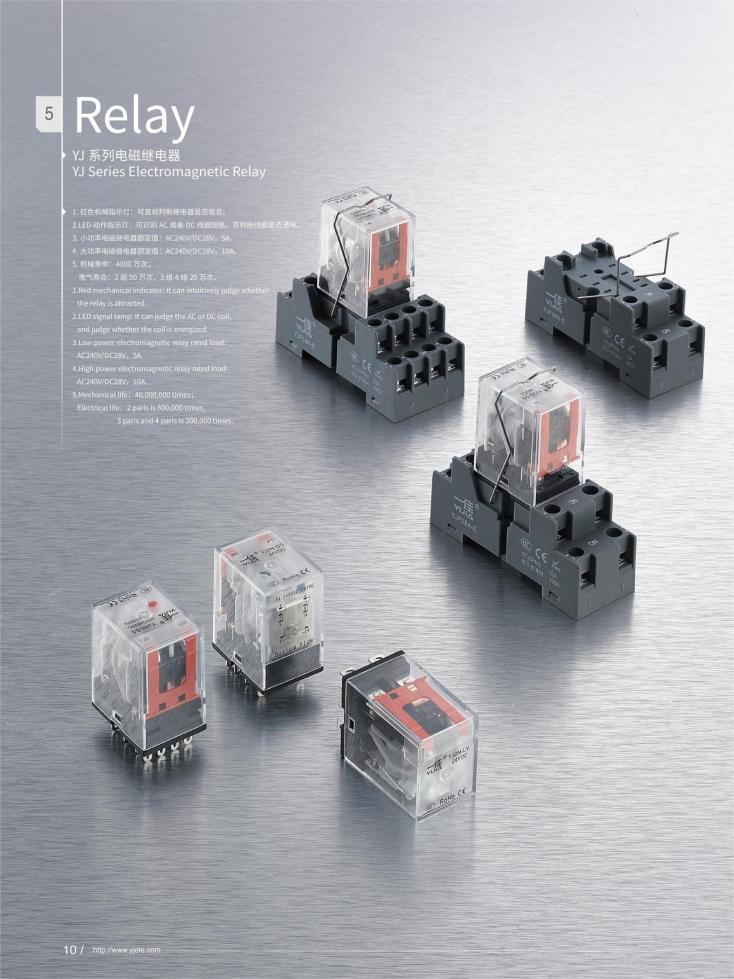
An AC contactor relay switch is an electrically operated switch designed to control high-current circuits, usually in HVAC systems, motors, compressors, or lighting networks. In simpler terms, it acts as a bridge between a low-power control circuit and a high-power load, ensuring safe and efficient operation.
While “contactor” and “relay” are often used interchangeably, they are not identical. A relay typically handles lower current loads, while a contactor is built for higher voltage (AC) applications. The hybrid nature of an AC contactor relay switch combines both: the contactor’s high-load capacity and the relay’s precision control.
| Comparison Criteria | Relay Switch | AC Contactor Relay Switch |
|---|---|---|
| Load capacity | Low to medium | High (up to hundreds of amps) |
| Application type | Signal control circuits | Power circuits and motors |
| Coil voltage range | 5V–48V DC | 24V, 110V, 220V, 380V AC/DC |
| Lifespan | Moderate | Extended (mechanical & electrical) |
| Typical use case | Control panels, sensors | HVAC, pumps, industrial machinery |
The contactor and relay combination ensures efficiency—switching large electrical loads through a small control signal, which is essential in automated systems and industrial manufacturing.

How Does an AC Contactor Relay Switch Work?
At its core, an AC contactor relay switch operates through electromagnetic induction. When a control voltage is applied to the switch coil, it magnetically pulls a set of contacts together, completing the circuit and allowing current to pass. When the control voltage is removed, the magnetic field collapses, and the contacts return to their default open position.
This electromagnetic mechanism provides several advantages:
- Isolation: The control and power circuits remain safely separated.
- Efficiency: Minimal manual intervention for repetitive operations.
- Durability: Designed for long-term industrial duty cycles.
A crucial aspect to note is the load type—resistive vs. inductive. For example, resistive loads like lighting systems draw steady current, while inductive loads like motors cause surges. Therefore, choosing an AC contactor relay switch rated for inductive loads (AC3 or AC4) is essential for performance stability.
Key Applications Across Industries
The AC contactor relay switch plays a critical role in a wide range of industrial and commercial systems. Here are some sectors where it’s indispensable:
- HVAC and Refrigeration Systems: Used for switching compressors, condensers, or fan motors. For example, in air conditioning units, it ensures the compressor engages only when the thermostat demands cooling.
- Industrial Automation: Central to motor control centers (MCC), conveyors, and production lines.
- Renewable Energy Systems: In solar power inverters and battery storage systems, it manages power distribution and load protection.
- Building Management Systems (BMS): Facilitates centralized control of lighting, elevators, and water pumps.
- Machine Tool Equipment: Enables start/stop and safety interlocks for CNC machines and press systems.
| Industry | Common Application | Key Feature Requirement |
|---|---|---|
| HVAC | Compressor and fan control | Thermal endurance and compact design |
| Manufacturing | Motor starters, conveyor systems | High durability and arc suppression |
| Renewable Energy | Load distribution | Low power loss |
| Construction | Lighting control panels | Compact footprint and silent operation |
If your project involves any of these sectors, sourcing AC contactor relay switches from reliable suppliers ensures performance consistency and long-term cost savings. Reach out to our team to request samples or a customized quotation suited to your application.
Choosing the Right AC Contactor Relay Switch
Selecting the right switch is not just about voltage or current ratings—it’s about matching performance to your operational environment. Below are the key factors engineers and buyers should consider:
- Rated Operating Current (Ie): Determines how much electrical load the contactor can handle safely.
- Coil Voltage: Choose based on your control circuit (e.g., 24VDC, 110VAC, or 220VAC).
- Number of Poles: Three-pole for 3-phase motors; four-pole for neutral connections or specific load requirements.
- Mechanical Durability: The number of switching cycles before wear—important for continuous operations.
- Thermal Overload Protection: Integrating thermal relays helps protect motors from overheating.
- Mounting Options: DIN rail or screw-type, depending on your control panel design.
- Certifications and Compliance: UL, CE, RoHS, or IEC standards are vital for international procurement.
| Specification | Recommended Range | Notes |
|---|---|---|
| Current rating | 9A – 800A | Based on system design |
| Coil voltage | 24V DC – 380V AC | Match control voltage |
| Frequency | 50/60Hz | Universal compatibility |
| Contact material | Silver alloy | High conductivity and anti-weld |
| Mechanical life | >1 million operations | Industrial-grade design |
Benefits of Using AC Contactor Relay Switch
For industrial automation or HVAC systems, the advantages of using AC contactor relay switches include:
- Increased safety: Enables low-voltage control of high-voltage devices.
- Reduced downtime: Quick maintenance and replacement minimize production loss.
- Improved energy efficiency: Contacts with low resistance reduce power waste.
- Modular integration: Compatible with auxiliary contacts, timers, and overload relays.
- Custom adaptability: Available in different configurations for specialized circuits.
In short, a well-chosen AC contactor switch not only increases operational efficiency but also provides long-term stability to your entire control system.
The AC contactor relay switch might seem like a simple component, but its role in electrical systems is absolutely fundamental. From HVAC compressors to automated conveyor systems, these switches ensure that power is delivered consistently, safely, and efficiently.
For engineers, understanding technical parameters and application fit is key. For buyers, evaluating certifications, reliability, and supplier credibility matters most. Whether you’re upgrading existing systems or designing from scratch, choosing a trusted manufacturer of AC contactor relay switches can save you both cost and downtime.
Need assistance selecting the right model? Send us your application details or request an instant quote—our engineering team is ready to help you find the optimal solution.
FAQ
An AC contactor is designed for switching high-current AC circuits, while a relay typically handles low-current or signal applications.
Some models can handle DC, but only if rated for dual current systems. Always check product specifications before installation.
With proper use, industrial-grade contactors can last over 1 million mechanical operations.
Buzzing noise, burned contacts, or irregular motor operation often indicate contactor wear or coil failure.
For large-scale orders or OEM projects, contact our sales team directly. We offer volume discounts and customized sourcing solutions for engineering and procurement departments.